History
Origin and Legendary Foundation
The ruling dynasty of Sarangarh belonged to the ancient Raj Gond clan. According to historical traditions and state chronicles, their ancestry traces back to the Central Provinces, specifically the Lanji tract in the Bhandara district (modern-day Maharashtra). The migration and subsequent establishment of the clan in the Chhattisgarh region was catalyzed by military alliances and feudal loyalty to the Haihaiyavanshi Rajput rulers of Ratanpur. Over successive generations, the rulers preserved their administrative autonomy over the Sarangarh tract, maintaining a balance of power between the larger kingdoms of Ratanpur and Sambalpur.
Maratha Influence and Geopolitical Shift
During the 18th century, the expansion of the Maratha Empire under the Bhonsles of Nagpur radically altered the political landscape of Chhattisgarh. Kalyan Sai (r. 1736–1777 AD) demonstrated astute diplomacy and military prowess by assisting both the Maratha subahdar of Nagpur and the Gond Raja of Sambalpur in various campaigns. In recognition of his valuable military assistance, the traditional title of *Diwan* was elevated to that of Raja. This era marked Sarangarh's transition from a feudal dependency into a distinct territorial state, albeit one that paid tribute to the Marathas until the advent of British intervention in central India.
British Suzerainty and the 1857 Uprising
With the defeat of the Marathas in the Anglo-Maratha Wars, the British East India Company gradually extended its protectorate over the Chhattisgarh feudatory states. During the reign of Raja Sangram Singh (r. 1829–1872 AD), the British formally recognized the ruler's status. Raja Sangram Singh played a crucial role during the Indian Rebellion of 1857. He remained loyal to the British administration and provided valuable assistance in suppressing local insurrections, particularly in the adjoining Sambalpur region, which was led by the revolutionary leader Surendra Sai. In recognition of this allegiance, the British Crown later granted a *Sanad* in 1867, formally recognizing Sarangarh as a Feudatory State under the British Raj.
The Era of Modernization and Key Reformers
The late 19th and early 20th centuries ushered in an era of administrative reforms, modern education, and public welfare under the guidance of visionary rulers. Among them, Raja Bahadur Jawahir Singh (r. 1890–1946 AD) stands out as the chief architect of modern Sarangarh. Under his long and enlightened reign:
- Education: He established numerous primary and secondary schools, including the famous Jawahir High School, to promote literacy among the tribal and rural populations.
- Infrastructure: Roads, bridges, and public offices were constructed. Significant emphasis was laid on developing irrigation tanks and agricultural reforms to mitigate droughts.
- Public Health: Modern dispensaries and veterinary hospitals were introduced to the state.
- Social Reforms: He actively worked towards the eradication of social evils, introduced cooperative societies, and streamlined the revenue administration.
In recognition of his exemplary governance and public service, the British government conferred upon him the personal title of Raja Bahadur.
Post-Independence and the Modern Era
Following India's independence in 1947, the last ruling chief of Sarangarh, Raja Naresh Chandra Singh (r. 1946–1948 AD), signed the Instrument of Accession on 1 January 1948, merging the state into the Dominion of India. The territory was initially integrated into the Central Provinces and Berar, which later became the state of Madhya Pradesh.
Raja Naresh Chandra Singh transitioned successfully into democratic politics. He served as a cabinet minister in the Madhya Pradesh government for several terms, holding portfolios such as Forest and Tribal Welfare, and briefly served as the Chief Minister of Madhya Pradesh in March 1969. His family continued to remain highly respected leaders in public service and state politics.
In November 2000, with the reorganization of Madhya Pradesh, Sarangarh became part of the newly formed state of Chhattisgarh. To further accelerate regional development and administrative efficiency, the Government of Chhattisgarh officially declared the creation of the joint Sarangarh-Bilaigarh District in August 2021, which came into formal existence in September 2022. Today, Sarangarh is celebrated for its rich cultural heritage, historical temples, and its legacy as one of the progressive princely states of central India.
References
- Sarangarh State - Wikipedia
- Raja Naresh Chandra Singh - Wikipedia
- Official Portal of Sarangarh-Bilaigarh District, Government of Chhattisgarh
Genealogy
- Raja UDEBHAN SINGH, Raja of Sarangarh
- Raja BIRBHAN SINGH, Raja of Sarangarh
- Raja UDHO SAI SINGH, Raja of Sarangarh -/1736
- Raja KALYAN SAI, Raja of Sarangarh 1736/1777
- Raja VISHWANATH SAI, Raja of Sarangarh 1777/1808
- Raja SUBHADRA SAI, Raja of Sarangarh 1808/1815
- Raja BHIKHAN SAI, Raja of Sarangarh 1815/1828, died .
- Raja TIKHAN SAI, Raja of Sarangarh in 1828
- Raja GAJRAJ SINGH, Raja of Sarangarh 1828/1829, died .
- Raja SANGRAM SINGH, Raja of Sarangarh 1829/1872
- Raja BHAWANI PRATAP SINGH, Raja of Sarangarh 1872/1889, born about 1865, died in .
- Raja RAGHUBIR SINGH, Raja of Sarangarh 1889/1890, married and had issue. He died .
- Rani Man Kunwar Devi, Zamindarani of Pandaria, married Raja Raghuraj Singh of Pandaria. She died sp?.
- Raja Bahadur Jawahir Singh (qv)
- Raja Bahadur JAWAHIR SINGH, Raja of Sarangarh 1890/1946, born and succeeded 5th August 1890 (2nd October 1890), C.I.E., educated at Rajkumar College, Raipur; married and had issue. He died .
- Raja Naresh Chandra Singh (qv)
- Rani Basant Mala Devi, married Raja Chakradhar Singhji of Raigarh, and had issue.
- Raja NARESH CHANDRA SINGH, Raja of Sarangarh 1946/1987, born , educated at Rajkumar College, Raipur; M.L.A. (Madhya Pradesh), Former Chief Minister of Madhya Pradesh in 1969, married 1stly, 15th April 1935, Rani Shrimati Tulsi Manjari Devi, eldest daughter of Diwan Narayan Singh, Zamindar of Fatehpur, married 2ndly, 1945, Rani Lalita Devi of Phuljhar (later the Rajmata of Sarangarh after 1987), she had the distinction of being the first unopposed lady Member of the Legislature in M.P. (and till now the only one in M.P. and later in Chhattisgarh), and had issue, four daughters and a son. He died .
- Rajkumari Shrimati Rajni Gandha Devi (by first wife), Member of the Lok Sabha 1967/1970, married Col. (ret'd.) Virendra Singh of Imlai Zamindari near Jabalpur in M.P., and has issue.
- Nandita Singh
- Kumari Kanak Nandini Singh
- Chandravir Singh
- Akshata Veer Singh
- Nandita Singh
- Rajkumari Shrimati Kamla Devi, born , Member of the Legislature and minister in the State of Madhya Pradesh for 18 years (1972/1990). Presently a member of the Public Service Commission, Madhya Pradesh; married Dr. Lal Bhupal Singh of Malkharoda Zamindari, died in , and had issue, a daughter.
- Mrinalika Singh, born .
- Raja Shishir Bindu Singh (qv)
- Rajkumari Shrimati Pushpa Devi, born Raipur, Madhya Pradesh; educated at St. Joseph's Convent, Sagar and Maharani Laxmibai College, Bhopal and Vikram University, Ujjain; She is a three term Member of Parliament representing The Raigarh constituency (Chhattisgarh) in the 7th, 8th and 10th Lok Sabha and has been an active member of the Indian National Congress Party since. She is unmarried and has adopted her sister's issue.
- Kulisha Mishra, born
- Rajkumari Shrimati Dr. Menka Devi, born , is working with an NGO named after her father in the field of Social Medicine; married Dr. Parivesh Mishra of Bhopal, and has issue.
- Kulisha Mishra, born . Adopted by Rajkumari Shrimati Pushpa Devi.
- Rajkumari Shrimati Purnima Devi, born , married Mr. Steve Ellison.
- Rajkumari Shrimati Rajni Gandha Devi (by first wife), Member of the Lok Sabha 1967/1970, married Col. (ret'd.) Virendra Singh of Imlai Zamindari near Jabalpur in M.P., and has issue.
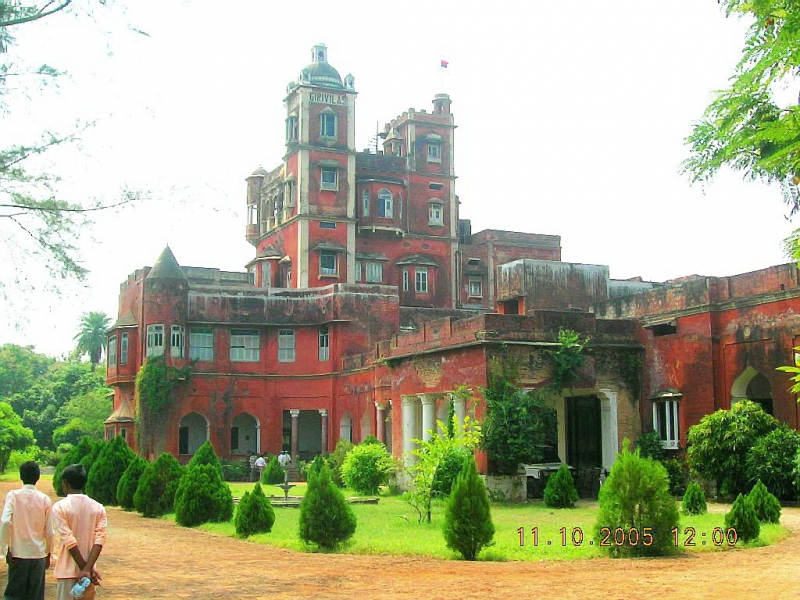
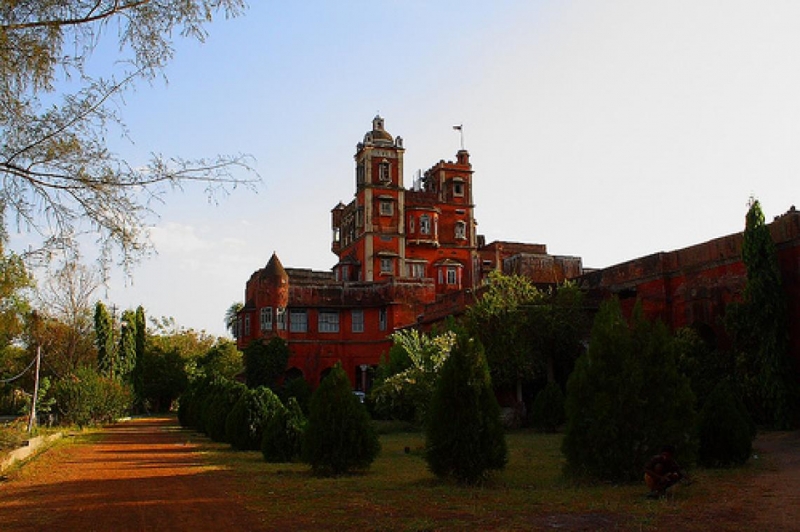
- Raja SHISHIR BINDU SINGH, Raja of Sarangarh from 11th September 1987 to 7th September 2016 (Girivilas Palace, Sarangarh, Distt. Raigarh, Chhattisgarh). Married to Rani Saroj Devi and had no issues. He died on . [Dainik Bhaskar]