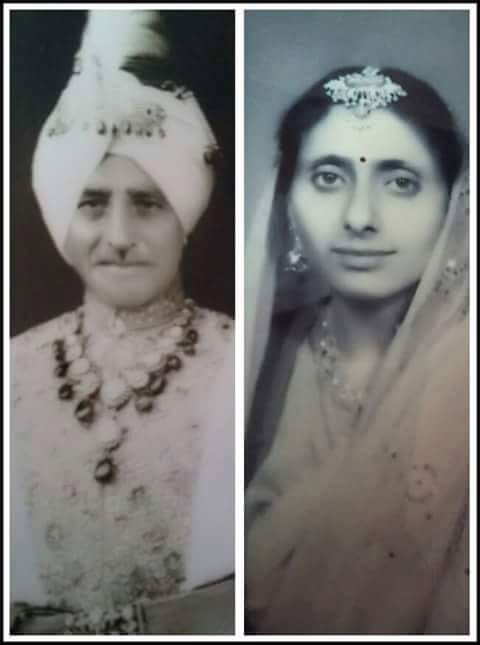
Present Head
- Kumari Meenakshi Kumari, born , married Kanwar Yog Raj Singh of Kullu, and has issue, one son and one daughter.
- Malvika Singh Rana
- Rana Madhvinder Singh
History
Origin and Foundation
The princely state of Rawingarh (historically also referred to as Rawin or Ravingarh) was founded in the early 16th century, around 1515–1527. The state owed its origin to Rana Duni Singh, a younger son of Raja Ugran Chand of Jubbal. During this period, the political landscape of the Simla Hill States was highly fragmented, characterized by numerous small chieftains (Thakurats) vying for territorial control and strategic mountain passes.
To establish his own independent domain, Rana Duni Singh carved out Rawingarh along the rugged and strategically vital left bank of the Pabbar River. Despite asserting its own local authority, Rawingarh maintained close dynastic and political ties with its parent state, remaining a tributary to the state of Jubbal for several generations.
The Medieval Period and Regional Rivalries
Situated in the lower Himalayas, Rawingarh's history is deeply intertwined with the shifting power dynamics of larger neighboring states, including Jubbal, Bushahr, Sirmour, and Garhwal. The geographical location of Rawingarh made it a natural buffer zone and a subject of frequent territorial disputes.
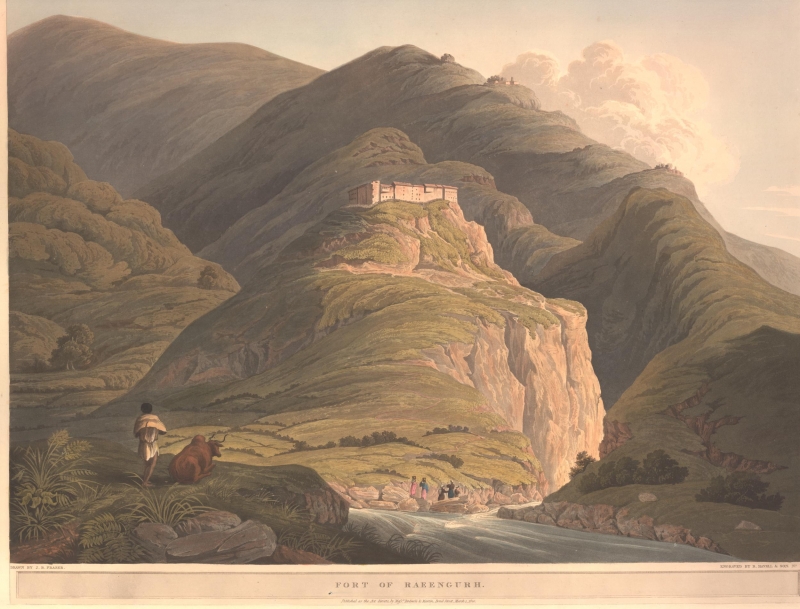
To protect the state from external invasions, a formidable stronghold known as the Rawingarh Fort was constructed. Built on a high ridge overlooking the Pabbar valley, the fort was constructed using the traditional Kath-Kuni architectural style—a resilient method utilizing alternating layers of stone and deodar wood without mortar. This fort served as both the administrative center of the Rana's territory and a vital military outpost guarding the trade routes connecting the plains of northern India with Tibet and the inner Himalayas.
The Gurkha Invasion and the Siege of Rawingarh
At the beginning of the 19th century, the expansionist Gurkha Empire of Nepal pushed westward, conquering Kumaon, Garhwal, and the Simla Hill States. Rawingarh fell under the control of the Gurkhas, who established strong garrisons across the region. The local population and the ruling elite suffered under the oppressive military rule of the Gurkha commanders.
The occupation lasted until the outbreak of the Anglo-Nepalese War (1814–1816). Seeking to expel the Gurkhas, the British East India Company allied with the displaced hill chiefs. The British forces, aided by local irregulars under the command of James Baillie Fraser and local Pahari warriors, laid siege to the strategic Rawingarh Fort in 1815. The siege was highly challenging due to the fort's precipitous location and defensive strength, but the Anglo-native alliance eventually forced the Gurkha garrison to surrender.
The British Era and Administrative Realignment
Following the expulsion of the Gurkhas and the signing of the Treaty of Sugauli in 1815, the political map of the Simla Hills was redrawn under the supervision of David Ochterlony. The British decided to retain some strategic areas for themselves while restoring others to the local rulers via Sanads (charters).
Under this settlement, the territory of Rawingarh was partitioned. The British government retained the historic fort of Rawingarh and several surrounding villages due to their strategic importance (later integrated into the British-administered Kotkhai-Kotgarh region). The remaining portions of the Rawingarh state were placed under the nominal suzerainty of the Raja of Keonthal, though the local ruling family retained their hereditary title of Rana and maintained internal administrative autonomy over their remaining lands.
Post-Independence and Modern Era
Following India's independence in August 1947, the last ruling chief of Rawingarh signed the Instrument of Accession, merging the territory into the Dominion of India. On April 15, 1948, Rawingarh, along with nearly thirty other Simla Hill States, was integrated to form the new province of Himachal Pradesh.
Today, the historical territories of the Rawingarh state are located within the Shimla district of Himachal Pradesh, primarily encompassing parts of the Rohru and Jubbal-Kotkhai subdivisions. The historic Rawingarh Fort, though weathered by time, stands as a prominent cultural heritage site and a testament to the region's rich martial history and architectural genius.
References and External Links
- Simla Hill States - Wikipedia
- History of Shimla District - Official Government Website
- Imperial Gazetteer of India - Digital Archive
Genealogy
- Rana TAR SINGH, Rana of Rawingarh 1753/1787, married and had issue. He died .
- Mian Thacha Singh
- Mian Han Singh, married and had issue.
- Mian Premu Singh
- Mian Tikmi Singh
- Mian Haru Singh
- Mian Jhina Singh
- Mian Bhudu Singh
- Mian Madho Singh
- Rana Himmat Singh (qv)
- Rana Runa Singh (qv)
- Rana HIMMAT SINGH, Rana of Rawingarh 1787/1801, married and had issue. He died .
- Rana Uchhba Singh (qv)
- Rana Bhairagi Singh (qv)
- Mian Debu Singh
- Mian Niku Singh
- Mian Negi Singh
- Mian Mahun Singh
- Rana UCHHBA SINGH, Rana of Rawingarh 1801/1803, deposed by the occupying Nepalese invaders and replaced by his uncle.
- Rana RUNA SINGH, Rana of Rawingarh 1803/1823, installed by the Nepalese, but deposed by the British in 1823; he married and had issue, the jagirdars of Nandpur.
- Mian Keru Singh, Jagirdar of Nandpur 1823/1864, married and had issue.
- Mian Balu Singh, married and had issue.
- Mian Dhian Singh, married and had issue.
- Mian Mehr Singh
- Mian Sair Singh, married and had issue.
- Kanwar Madan Singh
- Mian Dhian Singh, married and had issue.
- Mian Balu Singh, married and had issue.
- Mian Bhup Singh, married and had issue.
- Mian Man Singh, married and had issue.
- Mian Sukhdev Singh
- Mian Danu Singh
- Mian Man Singh, married and had issue.
- Mian Judh Bir Singh
- Mian Keru Singh, Jagirdar of Nandpur 1823/1864, married and had issue.
- Rana BHAIRAGI SINGH, Rana of Rawingarh 1823/1848, married and had issue. He died .
- Rana Dhian Singh (qv)
- Mian Bhim Singh, married and had issue.
- Mian Lehna Singh
- Rana DHIAN SINGH, Rana of Rawingarh 1848/1887, married and had issue.
- Thakur Hari Singh (qv)
- Thakur Kidar Singh (qv)
- Thakur HARI SINGH, Thakur of Rawingarh 1887/1904, born , died sp in 1904.
- Thakur KIDAR SINGH, Thakur of Rawingarh 1904/1950, born , married a Kumari from Khaneti, and had issue. He died .
- Kanwar Ratan Singh, died young.
- Kanwar Fateh Singh, born , overlooked in the succession; married and had issue.
- Kanwar Pratap Singh, died young.
- Thakur Randhir Singh (qv)
- Kumari Padmawati Devi, married Kanwar Prem Singh of Bilaspur.
- Kumari Shanta Devi, married Kanwar Narender Chand of Mahilog.
- Kumari Subhadra Devi, married Kanwar Gita Ram from Sirmur.
- Kanwar Pramodh Singh, married Kanwarani Manorama Devi, daughter of Kanwar Showan Singh of Kalonta in Jubbal, and his wife, Kanwarani Vidhya Devi, and has issue.
- Kiran Singh
- Rishi Singh
- Ashwarya Singh
- Kanwar Bhavinder Singh, married to Chander Rekha Singh, daughter of Shri Rana Mahander Singh of Tikari state.
- Kanwar Ajit Singh, married Kalika Kumari of Bashahr princely state of Himachal Pradesh and had issues.
- Kanwar Bhawani Singh, married a Kumari of Korkhi, and has issue.
- Kumari Satya Devi, married a Kanwar of Kotkhai.
- Kanwar Raghubir Singh, married a Kumari of Kotkhai, and has issue.
- Kanwar Narbir Singh, married Kumari Prabha of Ritesh princely state of Himachal Pradesh and had issue, two daughters and a son.
- Kumari Priyanka Singh
- Kumari Ruchika Singh
- Kanwar Shubham Singh
- Kanwar Shiv Singh
- Kanwar Atar Singh, married and had issue.
- Kanwar Shamsher Singh, married to Kali Kumari from Kolhara, and had issue.
- Kanwar Dinesh Singh, married a Kumari of Kotkhai.
- Kumari Tamanna Singh
- Kanwar Suryansh Singh
- Kanwar Vkram Singh, married to Kumari Meenakshi Singh of Chopal and has issues, 2 sons.
- Kanwar Paras Singh
- Kanwar Adarsh Singh
- Kanwar Dinesh Singh, married a Kumari of Kotkhai.
- Kanwarani Pushpa Singh, married in Sirmaur and has three issues, two daughters and a son.
- Kanwar Prashant Singh
- Kanwarani Pavitra Singh, married in Rohru and has a issue.
- Jitender Rana
- Kanwar Shamsher Singh, married to Kali Kumari from Kolhara, and had issue.
- Thakur RANDHIR SINGH, Thakur of Rawingarh (see above)