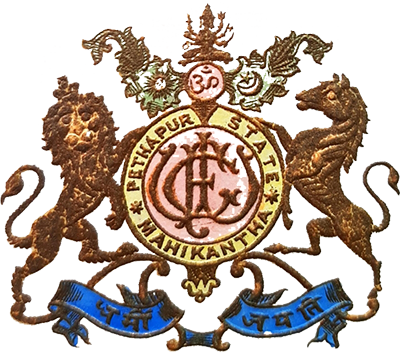
History
The Origin and Foundation of Pethapur
Pethapur, located on the banks of the Sabarmati River in modern-day Gujarat, was founded in the late 13th century. The state's origin is tied closely to the decline of the Vaghela (Solanki) dynasty of Anhilwad Patan. Following the chaotic transition of power and subsequent military campaigns by the Delhi Sultanate under Alauddin Khalji against King Karan Dev II (popularly known as Karan Ghelo), branches of the Vaghela clan sought refuge in the rugged terrain along the Sabarmati River.
According to historical records, the principality was founded in 1293 AD by Pethasinh Vaghela (also referred to as Petha Patel in some local legends). Pethasinh, a noble descendant of the Vaghela royal line, established his stronghold here, subduing local tribes and clearing the dense forests to found a secure settlement, which was named "Pethapur" after him. The rulers of Pethapur belonged to the Vaghela clan of Rajputs, who traced their ancestry back to the imperial Solanki dynasty of Gujarat.
Mughal and Maratha Periods
During the medieval era, Pethapur maintained a semi-independent status by paying tribute to successive regional powers. During the reign of the Gujarat Sultanate and later the Mughal Empire, the Thakors of Pethapur preserved their internal autonomy. They paid a fixed tribute (known as peshkash) to the imperial governors stationed at Ahmedabad.
With the decline of the Mughal Empire in the early 18th century, the Maratha Empire, led by the Peshwas and later the Gaekwads of Baroda, asserted hegemony over the Gujarat region. Pethapur, like many other small principalities in the Mahi Kantha region, fell under the sphere of influence of the Gaekwad state. The rulers were forced to pay Ghasdana (tribute) to the Gaekwads, a system that was often accompanied by military expeditions to collect outstanding dues.
British Rule and the Mahi Kantha Agency
The chaotic state of affairs in the region ended with the intervention of the British East India Company. In 1812, the British entered into a settlement with the local chiefs of the Mahi Kantha region, including the Thakor of Pethapur. Under this arrangement, the British guaranteed the payment of tribute to the Gaekwad of Baroda, effectively taking over the administration and security of the region.
Pethapur was classified as a state of the Mahi Kantha Agency under the Bombay Presidency. It was designated as a Class IV state with limited civil and criminal jurisdictional powers. The rulers of Pethapur held the hereditary title of Thakor. Despite its small geographic footprint—covering approximately 11 square miles—the state maintained a distinct identity and stable administration under British suzerainty. The state paid a regular tribute to the Gaekwad of Baroda through the British political agent.
The Craft and Cultural Heritage of Pethapur
Beyond its military and political history, Pethapur gained legendary status as a major hub for artisanal excellence. Under the active patronage of its Vaghela rulers, the town became famous for the craft of woodblock carving and textile block-printing. The artisans of Pethapur, known as Gajars (carvers), became renowned throughout India for creating extremely intricate wooden blocks used for printing traditional textiles such as Bandhani, Saudagiri prints, and Ajrakh. This industry flourished immensely during the 19th and early 20th centuries, turning Pethapur into a prominent mercantile center.
The Later Rulers and the Merger
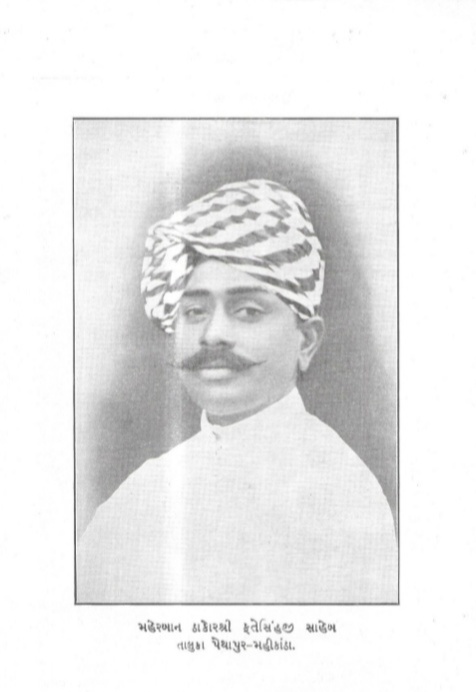
In the late 19th and early 20th centuries, the state was ruled by enlightened chiefs who focused on local infrastructure, basic education, and the preservation of local crafts. Thakor Himatsinhji and later Thakor Fatehsinhji maintained close ties with neighbouring states such as Idar State and Gandhinagar’s local chieftains.
The last ruling chief of Pethapur signed the Instrument of Accession to the Dominion of India on 10th June 1948. The state was formally merged into the Bombay Province, ending centuries of Vaghela dynastic rule.
Post-Independence and Modern Era
Following the linguistic reorganization of states in 1960, Pethapur became a part of the newly formed state of Gujarat. Due to its close proximity to the newly constructed capital city of Gandhinagar in the 1960s, Pethapur was gradually integrated into the Gandhinagar metropolitan area.
Today, Pethapur is widely recognized as the "Craftsman’s Village." While modern textile printing technologies have largely overtaken traditional hand-printing, a small community of master artisans in Pethapur continues to keep the ancient craft of hand-carving wooden blocks alive, attracting historians, textile researchers, and tourists from around the globe.
References and External Links
- Learn more about the history of the region in the Mahi Kantha Agency - Wikipedia.
- For details on the geographical and administrative history, see Pethapur - Wikipedia.
- An overview of regional states can be found in the List of Princely States of British India - Wikipedia.
Genealogy
- Thakore Shri TIRATHSINHJI, 1st Thakore Saheb of Pethapur 1445/-
- ....
- Thakore Shri (name unknown), married and had issue.
- Thakore Shri Punjsinhji (qv)
- Thakore Shri Balbhadra Singh, 1st Taluqdar of Pindarda, which split from Pethapur in 1705 Samvat.
- Thakore Shri PUNJSINHJI, Thakore Saheb of Pethapur, married and had issue.
- Thakore Shri Ranchhodsinhji Punjsinhji (qv)
- Rani Roopkuwar Ji, married Raja Saheb Dolat Singhji of Chadawad, and had issues.
- Thakore Shri RANCHHODSINHJI PUNJSINHJI, Thakore Saheb of Pethapur
- ......
- Thakore Shri ADESINHJI, Thakore Saheb of Pethapur, married and had issue.
- Rani Canduba Sahiba [Ramchandra Kunwarba], married Raj Sahib Jaswantsinhji II Gajsinhji of Dhrangadhra, and had issue.
- ......
- Thakore Shri HIMATSINHJI BHAWANISINHJI Sahib, Thakore Saheb of Pethapur 1861/1879, born , succeeded 28th September 1861, married and had issue. He died .
- Thakore Shri Gambhirsinhji Himatsinhji Sahib (qv)
- Thakore Shri GAMBHIRSINHJI HIMATSINHJI Sahib, Thakore Saheb of Pethapur 1879/1896, born , succeeded 13th January 1879, married and had issue.
- Thakore Shri Fatehsinhji Gambhirsinhji Sahib (qv)
- Thakore Shri FATEHSINHJI GAMBHIRSINHJI Sahib, Thakore Saheb of Pethapur 1896/-, born and succeeded in 1896, educated at Scott College, Sadra; married Ba Shri Manhar Kunverba Saheb, daughter of Rana Shri Harisinhji Sahib of Bhadakva in Kathiawad, and had issue.
- Thakore Shri Bhupendrasinhji Fatehsinhji Sahib (qv)
- Thakore Shri BHUPENDRASINHJI FATEHSINHJI Sahib, Thakore Saheb of Pethapur, born , educated at Daly College, Indore and Christian College, Indore.
- Name unknown
- HH Rani Baiji Kunwarba Sahiba, married (as his third wife), HH Raj Sahib Mansinhji II Ranmalsinhji of Dhrangadhra.
- Rani Sam Kunwarba Sahiba, married (as his fifth wife), Raj Sahib Chandrasinhji Raisinhji of Dhrangadhra, and had issue.
- Rani Chandar Kunwarba Sahiba, married (as his second wife), Raj Sahib Jashwantsinhji Gajsinhji of Dhrangadhra, and had issue.