Present Head
- Yuvraj Sahab Poornavijay Kishore Singh, born .
- Patayet Sahab Harshavardhan Kishore Singh, born .
- Rajkumar Anantvijay Kishore Singh, born .
History
Origin and Foundation
The princely state of Nayagarh, nestled in the hilly tracts of modern-day Odisha, boasts a rich historical legacy dating back to the medieval period. According to local chronicles and historical records, the state was founded in the 13th century (traditionally dated around 1224 AD) by Suryamani Singh, a Rajput prince belonging to the Baghela (Vaghela) clan of Rewah (present-day Madhya Pradesh).
Legend has it that Suryamani Singh, along with his brother Chandrasekhar Singh, came to the sacred town of Puri on a pilgrimage. On their return journey through the dense, forested hinterlands of Odisha, Suryamani Singh established his temporary stronghold at a place called Ralaba. While hunting in the surrounding forests, the prince witnessed a curious sight: a wild hare turned back and fiercely attacked his hunting dogs. Recognizing this as a sign of extraordinary courage inherent in the soil, he decided to construct his permanent fort there. This newly established stronghold came to be known as "Nayagarh" (literally meaning "New Fort"), while his brother Chandrasekhar Singh went on to establish the neighboring princely state of Khandpara.
Medieval Era and Territorial Splitting
In its early centuries, the rulers of Nayagarh steadily expanded their territory by subjugating local tribal chieftains, primarily the Khonds, who inhabited the dense hilly tracts. The ruling dynasty assumed the title of "Mandhata", a prestigious honorific conferred upon them by the contemporary imperial rulers of Odisha.
During the late 16th century, during the reign of Raja Raghunath Singh (1565–1618 AD), Nayagarh underwent a major territorial division. Upon his death, a succession dispute led to the partition of the kingdom. The ruler's younger son, Yadunath Singh Mangaraj, inherited the northern territories and established the independent state of Khandpara in 1599 AD. Despite this partition, the two sister states maintained close dynastic and cultural ties throughout their history, often presenting a united front during external invasions.
The Maratha Influence and British Rule
With the decline of the Gajapati Empire in Odisha, the region fell under the influence of the Mughal Empire and subsequently the Marathas of Nagpur. During the 18th century, Nayagarh was forced to pay annual tribute (peshkash) to the Maratha governors stationed at Cuttack. The Maratha period was marked by frequent administrative instability and economic extortion across the Orissa Tributary States.
Following the defeat of the Marathas in the Second Anglo-Maratha War and the signing of the Treaty of Deogaon in 1803, the British East India Company assumed control over Odisha. Nayagarh was recognized as a tributary state under British suzerainty. In 1804, Raja Mandhata Vinayak Singh signed a treaty of fealty with the British, agreeing to pay a fixed annual tribute (tribute-sanad) in exchange for British protection and recognition of his internal autonomy.
Peasant Uprisings and the Prajamandal Movement
The late 19th and early 20th centuries were periods of significant social unrest and reform in Nayagarh. The high revenue demands imposed by the British-backed state administration led to massive peasant rebellions, locally known as the Melas. Prominent among these was the uprising of 1893–1894 under the leadership of local leaders, which forced the British administration to intervene and temporarily take over the state's management to address agrarian grievances.
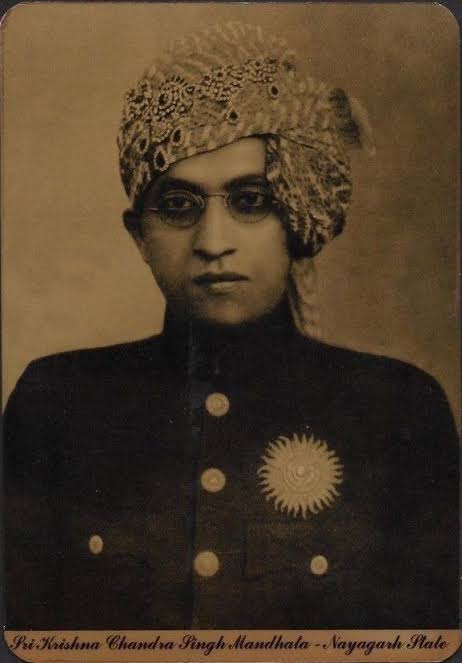
During the reign of Raja Krishnachandra Singh Mandhata, the wind of nationalist consciousness swept through the state. In the late 1930s, the Prajamandal Movement (People's Association Movement) gained immense momentum in Nayagarh. Local freedom fighters and social reformers, inspired by Mahatma Gandhi and led by figures like Sridhar Das and Banamali Maharana, agitated against forced labor (bethi), arbitrary taxes, and feudal oppression. This movement successfully bridged the gap between the princely state's subjects and the wider Indian freedom struggle.
Post-Independence Integration and Modern Era
Following India's independence from British rule in August 1947, the last ruling chief of Nayagarh, Raja Harihar Singh Mardaraj Mandhata, signed the Instrument of Accession to merge his state with the Dominion of India. On January 1, 1948, Nayagarh officially merged with the province of Orissa (now Odisha).
Initially, the territory of the former state was administrative merged into the Puri district. However, recognizing its distinct cultural identity and administrative needs, Nayagarh was carved out as an independent district of Odisha on April 1, 1993. Today, the region is highly regarded for its rich cultural heritage, historical temples like the Ladukeswar Temple, and its contribution to the agricultural and educational landscape of Odisha. More historical details can be explored on the official Nayagarh District Portal.
Genealogy
- Raja SURJYA MANI, Raja of Nayagarh, founder, scion of the Rewah Royal Family.
- 22 intervening generations
- Raja CHANDRASEKHAR SINGH Mandhata, Raja of Nayagarh
- Raja PURUSHOTTAM SINGH Mandhata, Raja of Nayagarh
- Raja MRUTYUNJAY SINGH Mandhata, Raja of Nayagarh -/1784
- Raja BINAYAK SINGH Mandhata, Raja of Nayagarh 1784/1825
- Raja BRAJA BABDHU SINGH Mandhata, Raja of Nayagarh 1825/1851
- Raja LADHU KISHOR SINGH Mandhata, Raja of Nayagarh 1851/1889, born about 1843, succeeded 30th September 1851, married and had issue.
- Rajkumari (name unknown), married 1899, Raja Bahadur Sir Rajendra Narayan Bhanj Deo Bahadur of Kanika.
- Raja BALBHADRA SINGH Mandhata, Raja of Nayagarh 1889/1890
- Raja RAGHUNATH SINGH Mandhata, Raja of Nayagarh 1890/1897, born about 1862, succeeded 2nd March 1890, married Rani Padmamali Devi, only daughter of Raja Dasrathi Birbar Mangraj Mahapatra, Raja of Baramba.
- Raja NARAYAN SINGH Mandhata, Raja of Nayagarh 1897/1918, married and had issue, two sons.
- Raja Krishna Chandra Singh Mandhata (qv)
- Rajkumar (San Deo) (name unknown) Singh, born .
- Raja KRISHNA CHANDRA SINGH Mandhata, Raja of Nayagarh 1918/1983, born and succeeded 7th December 1918, 26th in descent from the founder of the state; instrumental in establishing the Nayagarh Co-operative Bank, a number of Educational Institutions, a Homeopathic Dispensary and the Memorial Club; M.L.A. (Orissa) 1957/1961; author of Footprints of Ramachandra; interests were Football and Writing; married 1stly, Rani Basanta Manjari Devi [n�e Homa Rajya Laxmi], daughter of Supradipta Manyabara Gen. HH Maharajkumar Sir Baber Shumsher Jung Bahadur Rana of Nepal, married 2ndly, Rani Saubhagya Manjari Devi, daughter of Raja Bahadur Nabkishore Singhji Jagdeb Mardraj of Hindol, and had issue, two sons and three daughters. He died .
- Raja Brajendra Kishore Singh Mandhata (Rani Homa Rajya Laxmi) (qv)
- Rajkumar Saheb Amarendra Kishore Singh (by Rani Saubhagya Manjari Devi), married Kumar Rani Saheba Sabita Moyee Devi, daughter of Thakur Rai Bahadur Birendra Nath Singh, Zamindar Saheb of Chandrapur and Padampur Estate, Chhatisgarh, and has issue, two sons and one daughter.
- Kunwar Saheb Rameshwar Prasad Singh, married Kunwarani Suprabha Singh, daughter of Thakur Sourendra Shankar Singh, Zamindar Saheb of Chandrapur and Padampur Estate, Chhatisgarh, and has issue, one daughter and one son.
- Yuvraj Udayaditya Kishore Singh
- Rajkumari Shrutimanjari Singh
- Kunwar Saheb Amareswar Prasad Singh, married Kunwarani Sarita Devi, daughter of Lal Saheb Mitra Ganga Deb of Bamra, and has issue, one son.
- Kumari Rajeshwari Devi, married Kumar Kaustava Chandra Deb, son of Rajkumar Bhupendra Chandra Deo of Talcher, a retired judge.
- Kunwar Saheb Rameshwar Prasad Singh, married Kunwarani Suprabha Singh, daughter of Thakur Sourendra Shankar Singh, Zamindar Saheb of Chandrapur and Padampur Estate, Chhatisgarh, and has issue, one daughter and one son.
- Rajkumari Padmini Raj Lakshmi (twin, by Rani Saubhagya Manjari Devi), married (as his 1st wife), Kunwar Narendra Bux Rai, younger son of Raja Nageshwar Bux Rai of Bishrampur, and his wife, Rani Hari Priya Devi, and had issue, one son.
- Kunwar Sailesh Bux Rai, M.A. (English), B.Ed., presently (2008) working as a teacher in English with Navodaya Vidyalaya Samiti, Patna Region; married Rajkumari Rashmi Devi, daughter of the last Raja Saheb of Baramba, Raja Krishna Chandra Deb, and his wife, Rani Jyotsna Devi, daughter of Raja Anup Singh Deo of Khariar, and has issue, one daughter and one son.
- Kumari Shraddha Buxrai, born .
- Kunwar Shivendra Buxrai, born .
- Kunwar Sailesh Bux Rai, M.A. (English), B.Ed., presently (2008) working as a teacher in English with Navodaya Vidyalaya Samiti, Patna Region; married Rajkumari Rashmi Devi, daughter of the last Raja Saheb of Baramba, Raja Krishna Chandra Deb, and his wife, Rani Jyotsna Devi, daughter of Raja Anup Singh Deo of Khariar, and has issue, one daughter and one son.
- Rajkumari Nalini Raj Lakshmi (twin, by 2nd wife), married Raja Pratap Rai, Zamindar of Andra in Andhra Pradesh, and has issue, one son.
- Yuvaraj Pratish Rai, married Rajkumari Shriti Devi, daughter of Yuvraj Trigunateeta Deb of Chikiti, and his wife Yuvrani Usha Devi, and has issue, one daughter.
- Kumari Sangali Devi
- Yuvaraj Pratish Rai, married Rajkumari Shriti Devi, daughter of Yuvraj Trigunateeta Deb of Chikiti, and his wife Yuvrani Usha Devi, and has issue, one daughter.
- Rajkumari Anusuya Raj Lakshmi Devi (by Rani Saubhagya Manjari Devi), married Rajkumar Bhupendra Chandra Deo of Talcher, a retired Judge, and has issue, one son and one daughter.
- Kumar Kaustava Chandra Deb, married Kumar Rani Rajeshwari Devi, daughter of Kumar Saheb Amarendra Kishore Singh of Nayagarh (see above).
- Kumari Manoswini Sobhalakshmi Devi
- Raja BRAJENDRA KISHORE SINGH Mandhata, Raja Saheb of Nayagarh since 24th June 1983, born at Nayagarh, educated at Rajkumar College, Raipur and at Patna Law College, earning a Bachelor of Arts, Law degree; married at Ranchi, Rani Lok Rajya Laxmi, and has issue.
- Yuvaraj Gajendra Chandra Singh (qv)
- Rajkumar Hemendra Chandra Singh, born , educated at St Xaviers School and then Rajkumar College, Raipur, at present is a broker in the share markets in India, married Kunwarani Pratyusha (Member of Parliament from Kandhmal Lok Sabha Constituency of Odisha) and has issues, one daughter and a son. He died on .
- Kumari Dakshayani Manjari Singh
- Kumar Aranyaraj Kishore Singh
- Raja GAJENDRA CHANDRA SINGH, Raja Saheb of Nayagarh (see above)
- Kumari Jyotiprabha Devi, married Kumar Golak Chandra Debo of Chikiti.
- Rajkumar Sunder Brindavan Chandra Singh, married Rajkumari Krishna Priya Devi, daughter of Raja Dasarathi Dhir Birabar of Balarampur in Orissa.
- Rajkumar B. K. Singh, married Kumari Jaishree Kumari Devi, daughter of Rajkumar Suresh Chandra Deo Jenamoni, Pattayat Sahib in Rairakhol, and his wife, Rajkumar Rani Saroj Manjari Devi, and adopted daughter of Lal Saheb Satya Narayan Chandra Deo Jenamoni of Rairakhol, and his wife, Lal Saheba Kanak Devi, and has issue.
- Kumari Suprabha Devi
- Kumar Dibya Narayan Singh