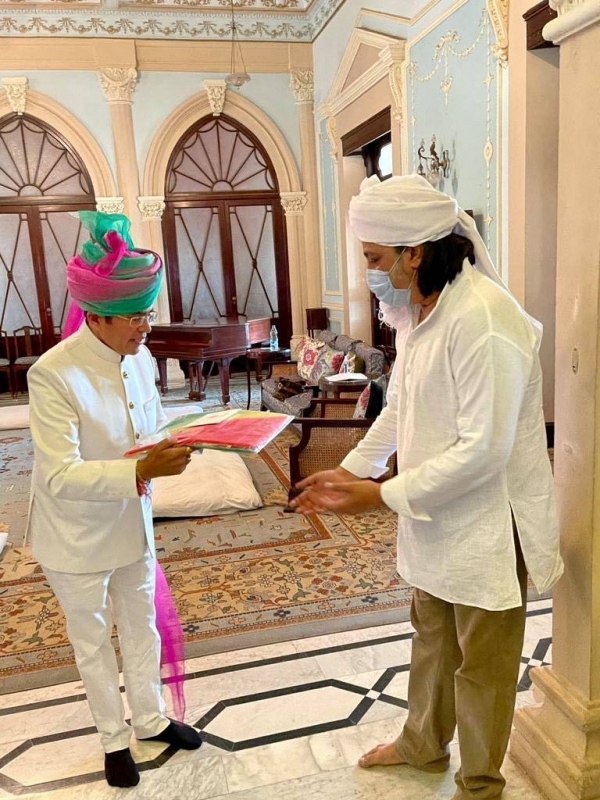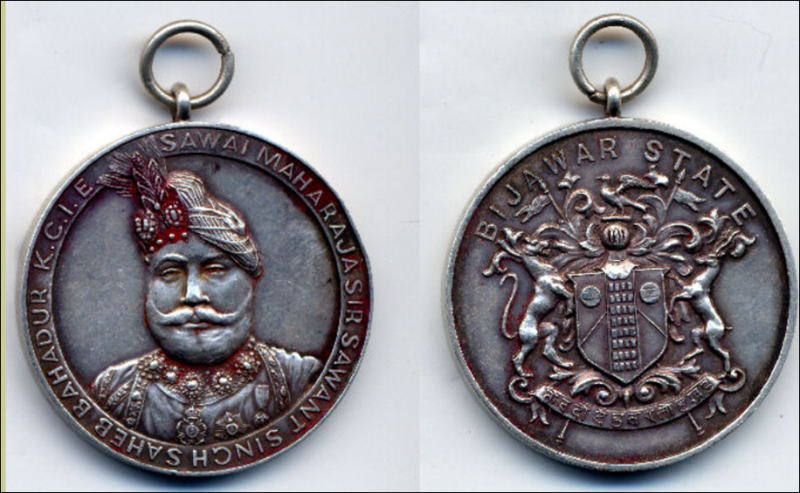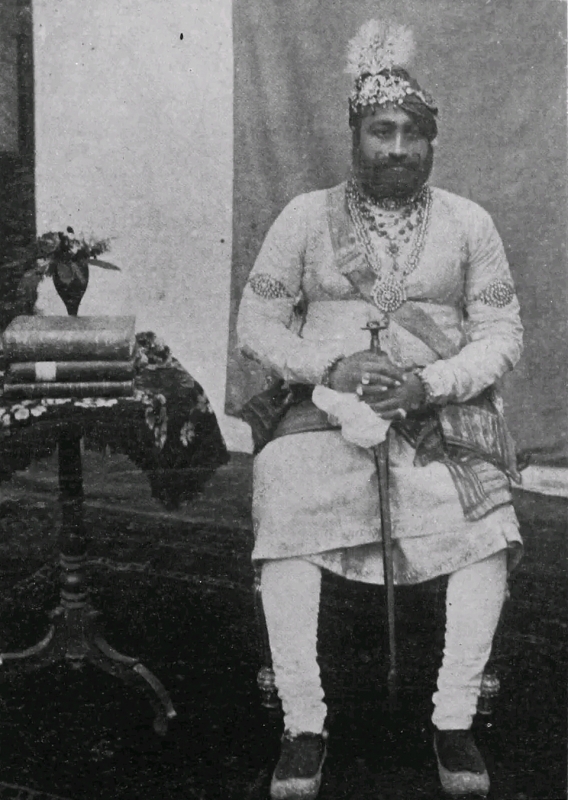
Present Head
History
Originally part of the lands held by the Garha Mandla Gonds, and was taken by Raja Chattar Sal, the founder of Panna. On the partition of territory among his sons, Bijawar fell to Raja Jagat Rai as part of Jaitpur and he later granted it to his son in 1765. In 1893, the Maharaja maintained a military force of 100 cavalry, 1000 infantry and 13 guns. The state motto is Agni pratap Vishwesha (As fire resplendent, the Lord of the World).
Origin and Foundation of Bijawar State
The region of Bijawar, located in the historic Bundelkhand tract of Central India, was originally governed by the Gond chieftains of Garha Mandla. During the late 17th and early 18th centuries, the legendary Bundela warrior Maharaja Chhatrasal, who waged a relentless campaign against Mughal hegemony, annexed these territories and consolidated them under his sprawling Bundela Kingdom. Following the death of Maharaja Chhatrasal in 1731, his vast territories were partitioned among his sons. The tract of Jaitpur, which included the area of Bijawar, was inherited by his second son, Raja Jagat Raj.
In 1765, Raja Jagat Raj granted the territory of Bijawar to his son, Bir Singh Deo. Bir Singh Deo consolidated his hold over the region, establishing Bijawar as an independent princely state. Through strategic alliances and defensive fortifications, Bir Singh Deo secured the borders of his newly formed principality against rival Bundela clans and Maratha incursions.
The British Era and Treaty Alliances
As the Maratha Empire's influence waned in Central India, the British East India Company began expanding its footprint in Bundelkhand. Following the Treaty of Bassein and subsequent military campaigns, the British established hegemony over the region. During the rule of Raja Kesri Singh, the British recognized the sovereign status of the state, formally granting a Sanad (charter of recognition) to his successor, Raja Ratan Singh, in 1811.
In exchange for British protection, the rulers of Bijawar agreed to pay tribute and assist the British Crown in maintaining regional stability. Raja Ratan Singh proved to be an ally of the British during the Bundela Rising of 1842. Upon his death in 1847, he was succeeded by his adopted son, Maharaja Bhan Pratap Singh.
The 1857 Uprising and Administrative Reforms
During the Indian Uprising of 1857 (First War of Independence), Maharaja Bhan Pratap Singh remained steadfastly loyal to the British Crown, assisting in the suppression of local mutineers and maintaining order in his territory. In recognition of his loyalty and services, the British Government rewarded him with the hereditary title of Maharaja in 1866, along with a khillat (robe of honor) and a salute of 11 guns. In 1862, he also received a Sanad of Adoption, securing the dynastic line of succession.
Maharaja Bhan Pratap Singh introduced several modern administrative reforms, including:
- Establishment of formal revenue courts and codification of local laws.
- Introduction of basic health and educational facilities in the capital city of Bijawar.
- Construction of roads connecting Bijawar with neighboring states like Panna, Chhatarpur, and Nowgong.
Since Maharaja Bhan Pratap Singh had no male heir, he adopted Sawant Singh, a younger son of the Maharaja of Orchha. Maharaja Sawant Singh ascended the gaddi (throne) in 1900 and continued the modernization of the state's judicial and revenue structures.
State Heraldry, Flag, and Military Strength
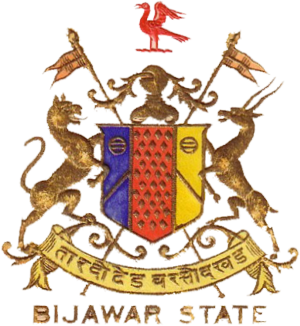
The princely state of Bijawar boasted a distinct identity represented through its heraldry and state flag:
- The State Flag: A triangular banner of saffron (kesariya) color, representing the traditional Rajput honor, valor, and sacrifice.
- The State Emblem: Featured a shield supported by two tigers, symbolizing courage and sovereign power. At the center of the shield was a depiction of holy fire, aligning with the dynastic roots.
- The State Motto: "Agni Pratap Vishwesha" (As fire resplendent, the Lord of the World), reflecting the rulers' claim to Suryavanshi (solar lineage) or Agnivanshi (fire lineage) Rajput heritage.
By the late 19th century, the state maintained a disciplined force of 100 cavalry, 1,000 infantry, and 13 artillery guns to maintain law and order and guard the state treasury.
Post-Independence and the Modern Era
Following India’s independence in 1947, the last ruling chief of the state, Maharaja Govind Singh, signed the Instrument of Accession to the Dominion of India on August 15, 1947. In 1948, the state was formally integrated into the newly formed United State of Vindhya Pradesh, which later became a part of Madhya Pradesh following the States Reorganisation Act of 1956.
Today, the town of Bijawar is a tehsil headquarters within the Chhatarpur district of Madhya Pradesh. It is celebrated for its rich Bundeli heritage, historical temples, and the remnants of its royal palaces which stand as silent witnesses to its glorious past.
References and Historical Sources
- To read more about the administrative division of Bijawar under British rule, visit the Imperial Gazetteer of India on the Digital South Asia Library.
- For detailed genealogical accounts and treaties of the Bundelkhand states, refer to A Collection of Treaties, Engagements and Sanads by C.U. Aitchison on Archive.org.
- Explore historical records of Bundela rulers in The Indian Culture Portal by the Ministry of Culture, Government of India.
Genealogy
- Raja BIR SINGH DEO, 1st Raja of Bijawar 1765/1793, gradually extended his holdings by force of arms, but was killed fighting Ali Bahadur and Himmat Bahadur of Banda, married and had issue. He died .
- Yuvaraj Dhaunkal Singh, died vpsp.
- Raja Keshri Singh (qv)
- Kunwar Khuman Singh, died after 1804.
- Raja KESHRI SINGH, 2nd Raja of Bijawar 1802/1810, the state was restored to Raja Kesri Singh by Himmat Bahadur, by a sanad in 1802, married and had issue, four sons. He died
- Raja Ratan Singh (qv)
- Kunwar Khet Singh, married and had issue.
- Raja Lakshman Singh (qv)
- Kunwar Shatrujit Singh
- Kunwar Maharaj Deo
- Raja RATAN SINGH, 3rd Raja of Bijawar 1810/1833, he was granted a sanad confirming his possession of the state in 1811; he instituted state coinage. He died sp 17th December 1833.
- Raja LAKSHMAN SINGH, 4th Raja of Bijawar 1833/1847, married and had issue.
- HH Maharaja Sawai Bhan Pratap Singh Bahadur (qv)
- HH Maharaja Sawai BHAN PRATAP SINGH Bahadur, 5th Maharaja of Bijawar 1847/1899, born , succeeded 23rd November 1847, granted a valuable khilat and a hereditary salute of eleven guns for his help to the British, during the Indian Mutiny in 1857, he was granted a sanad of adoption in 1862 and the titles of Maharaja [cr.1866] and Maharaja Sawai [cr.1877], but his maladministration placed the state into financial difficulties and an administrator was appointed in 1897, he adopted Kunwar Sawant Singh, second son of the Maharaja Pratap Singh Ju Deo of Orchha in 1898, married and had adoptive issue. He died sp 1899.
- (A) HH Bharat Dharmendra Maharaja Sawai Sir Sawant Singh Bahadur (qv)
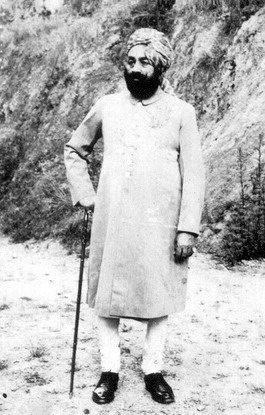
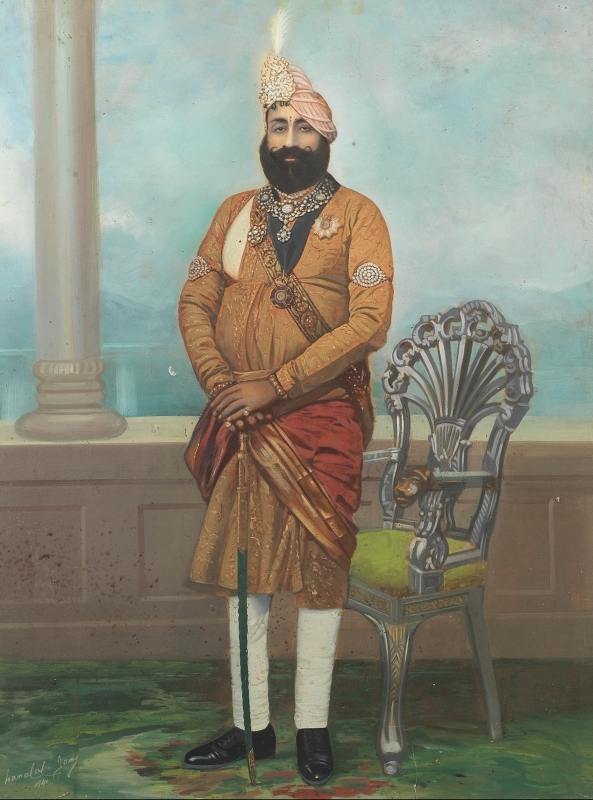
- HH Bharat Dharmendra Maharaja Sawai Sir SAWANT SINGH Bahadur, 6th Maharaja of Bijawar 1899/1940, born , K.C.I.E. [cr.1911], married 1stly, a daughter of Panwar Diwan Raghuraj Singh of Sonrai in Jhansi district, married 2ndly, 1913, a daughter of Dhandera Diwan Gajraj Singh Judeo Parmar, a Jagirdar in Datia State [HH Maharani Kanchan Kunwar, sister of Rao Hira Singh Ju Dev of Karahia (maternal grandfather of Rajkumari Anjana (Bundela) (née Rajniesh Singh) of Ajaigarh)], and had issue, two daughters, an adoptive son, as well as further issue. He died spl 30th October 1940.
- Maharajkumari (name unknown) (by 1st marriage), married 1910, Rao Lokendra Singh of Beri, and had issue.
- Kunwar Aman Singh
- (A) HH Maharaja Sawai Govind Singh Bahadur (qv)
- HH Maharaja Sawai GOVIND SINGH Bahadur, 7th Maharaja of Bijawar 1940/1983, born , son of Kunwar Malkhan Singh of Lakhanguwan and descendant of Raja Bir Singh Deo, 1st Raja of Sarila, married HH Maharani Mohini Kumari, daughter of HH Maharana Raj Saheb Pratapsinhji Amarsinhji of Wankaner, and his wife, HH Maharani Rama Kunverba Sahiba, and had issue. He died in New York.
- HH Maharaja Sawai Jai Singh Bahadur (qv)
- HH Maharaja Sawai JAI SINGH Bahadur, 8th Maharaja of Bijawar (see above)
Notable Figures
Bir Singh Deo (1765 – 1793)
Bir Singh Deo, a Bundela Rajput and a descendant of the legendary Bundela chief Maharaja Chhatrasal of Panna, founded the independent state of Bijawar in 1765. He established his capital at Bijawar, which was named after a Gond chief, Bijai Singh, who had originally founded the local settlement. Bir Singh Deo successfully carved out his territory from the parent state of Jaitpur during a period of political fragmentation in Bundelkhand, securing his authority through military strength and strategic alliances.
For more detailed historical context, see the Wikipedia page on Bijawar State.
Kesri Singh (1793 – 1810)
Succeeding his father, Kesri Singh ruled during a highly turbulent era in Central Indian history, marked by regular Maratha incursions and the rapid expansion of the British East India Company. He defended his borders against rival local chieftains and initiated early diplomatic dialogues with British representatives to secure the long-term survival of his dynasty. Upon his death in 1810, the administration transitioned to his successor under emerging British paramountcy.
Historical records of this transition can be referenced in the Imperial Gazetteer of India.
Maharaja Ratan Singh (1811 – 1853)
Maharaja Ratan Singh officially ascended the gaddi in 1811. In the same year, he received a formal sanad (charter of recognition) from the British East India Company, which guaranteed his possessions and protection in exchange for loyalty and defensive cooperation. Ratan Singh proved to be an able administrator who reorganized the state's land revenue systems, built civic amenities, and maintained a peaceful reign that lasted over four decades.
Further details on his treaty and reign are documented on the Bijawar State Wikipedia article.
Maharaja Bahadur Bhan Pratap Singh (1853 – 1899)
Maharaja Bahadur Bhan Pratap Singh was one of the most prominent and influential rulers of the Bundela dynasty in Bijawar. Ascending the throne in 1853, his leadership was tested during the Indian Rebellion of 1857. By actively assisting the British forces and maintaining order within his territory, he earned the gratitude of the British Crown. In recognition of his loyalty, he was rewarded with the hereditary title of Maharaja Bahadur, an upgrade to an 11-gun salute, and a remission of his annual tribute.
Under his long and progressive rule, Bijawar underwent substantial modernization. He established western-style schools, hospitals, and extensive irrigation works that benefited the agrarian economy of the state. He died without a direct male heir, leading to the adoption of his successor from the ruling family of Orchha.
Read more about his contributions on the Wikipedia page on Bijawar State.
Maharaja Sanwant Singh (1899 – 1940)
Maharaja Sanwant Singh, born as a prince of the nearby state of Orchha, was adopted by Maharaja Bhan Pratap Singh and ascended the throne of Bijawar in 1899. His reign was marked by administrative efficiency and close cooperation with the British Raj. In recognition of his governance and public works, he was appointed a Knight Commander of the Most Exalted Order of the Star of India (KCSI).
Sanwant Singh paid special attention to upgrading the infrastructure of Bijawar, constructing roads to link the state capital with regional trade centers, and promoting forestry and mining resources. He ruled for over forty years, guiding the state through the challenges of the early 20th century and the Great Depression.
Biographical references and state records can be accessed via the Bijawar Wikipedia page.
Maharaja Govind Singh (1940 – 1950)
Maharaja Govind Singh was the last ruling Maharaja of Bijawar. He succeeded to the throne in 1940 during the height of the Second World War. His decade-long reign witnessed the historic transition of India from colonial rule to independence. Following the British withdrawal, Maharaja Govind Singh signed the Instrument of Accession in 1948, merging Bijawar into the newly formed Union of India. The state was subsequently merged into Vindhya Pradesh, which later became a part of Madhya Pradesh in 1956.
Details regarding the accession and integration of the state are available on the Wikipedia page on Bijawar State.