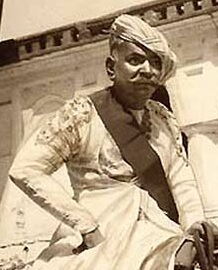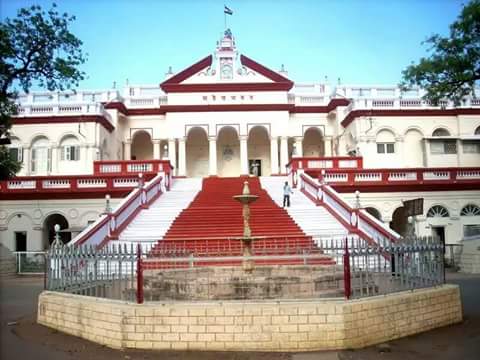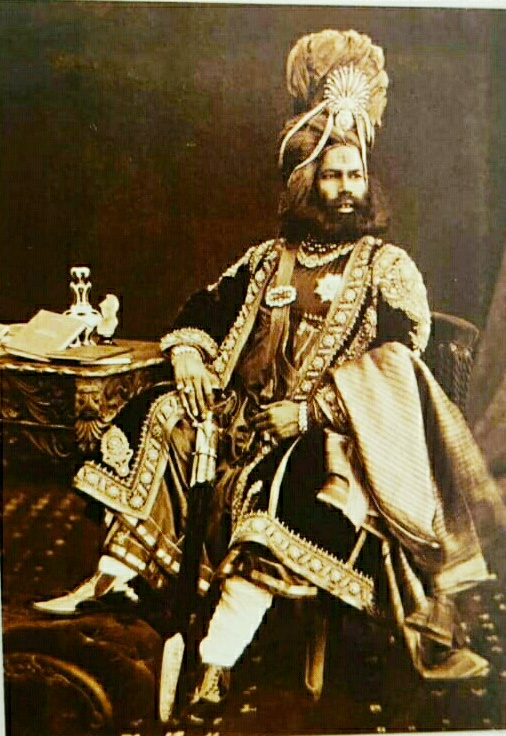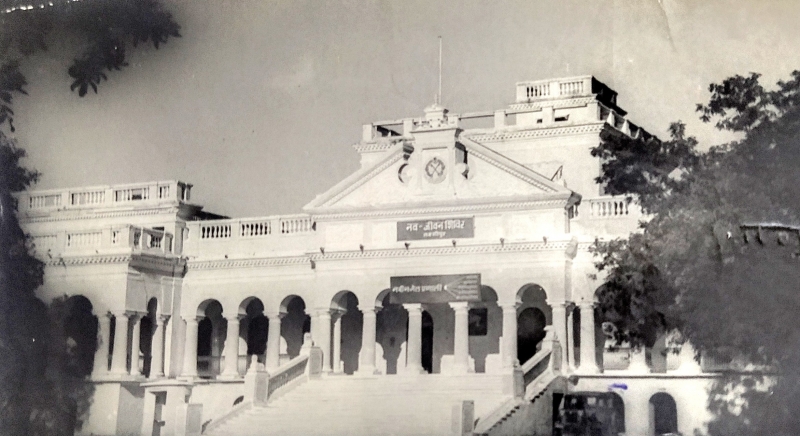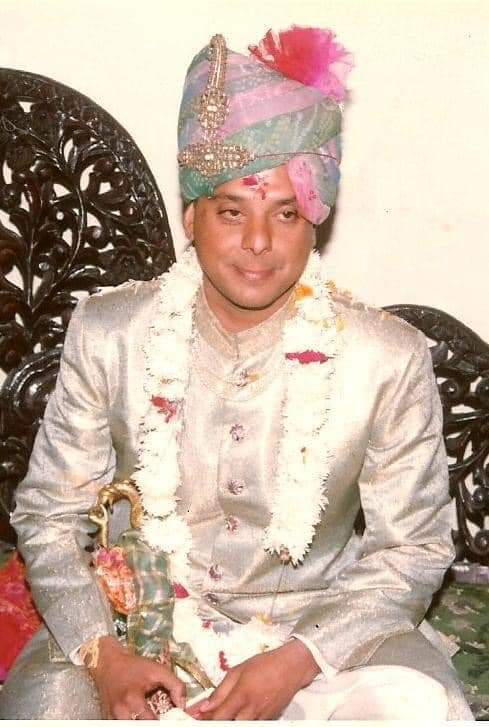
Present Head
History
Origin and Foundation of Panna State
The historical lineage of Panna is deeply intertwined with the martial history of the Bundela Rajputs. The predecessor state of Panna traces its origins back to around 1450 AD. However, the foundation of the modern sovereign state of Panna was established in 1731, emerging as the capital of the legendary Bundela ruler, Maharaja Chhatrasal.
The political resurgence of this region began with Champat Rai, a direct descendant of Raja Rudra Pratap of Orchha State. Champat Rai was a fierce chieftain who raised the banner of rebellion against the Mughal Empire, challenging the authoritative rule of Emperor Shah Jahan and later Aurangzeb. His relentless campaigns laid the groundwork for a sovereign Bundela kingdom, a mission that would be fully realized by his illustrious fourth son, Chhatrasal.
The Golden Era of Maharaja Chhatrasal
Maharaja Chhatrasal (1649–1731) remains the most celebrated figure in the history of Bundelkhand. Inspired by the Maratha warrior king Chhatrapati Shivaji Maharaj, Chhatrasal launched a formidable rebellion against the Mughal Empire in 1671. Known for his exceptional military tactics, administrative brilliance, and courage, Chhatrasal captured Naugaon in present-day Chhatarpur district and seized the strategic fort of Mahoba in 1680. He subsequently established his capital at Panna, transforming it into a flourishing political and cultural hub.
Facing persistent campaigns from the Mughal forces under the command of Muhammad Khan Bangash, Chhatrasal forged a historic military alliance with the Maratha Peshwa Baji Rao I. In 1729, the Peshwa led a massive Maratha army into Bundelkhand to rescue the aging Bundela king from a siege at Jaitpur. In gratitude, Chhatrasal adopted Peshwa Baji Rao I as his third son, bequeathing him one-third of his vast kingdom upon his death in 1731. This portion included Mahoba, Banda, and Jhansi.
Partition of Bundelkhand and the Panna Dynasty
Following the demise of Maharaja Chhatrasal in 1731, his remaining dominions were divided among his biological sons. The eldest son, Harde Sah, inherited the core principality of Panna along with its famous diamond mines. The other sons and descendants went on to rule various offshoot principalities, including Ajaigarh (founded in 1765), Charkhari (founded in 1765), Jaso State, and Chhatarpur (which eventually passed to the Ponwar Rajputs in 1785).
Under Harde Sah and his successors, Panna maintained its preeminence in Bundelkhand, largely sustained by the rich revenues generated from the state's legendary diamond mines. However, the late 18th century saw internal strife and territorial encroachments by neighboring Maratha chieftains and Gosain warriors, which weakened the administrative grip of the Panna rulers.
The British Period and the 1857 Uprising
With the decline of the Maratha Empire and the rise of the British East India Company, Panna entered into treaty relations with the British. In 1807, during the reign of Raja Kishor Singh, Panna was formally recognized as a princely state under British protection through a Sanad. During the early 19th century, the British administration consolidated Panna's regional authority, granting it supervisory control over the smaller states of Sohawal and Nagod.
During the pivotal Indian Rebellion of 1857, Raja Nirpat Singh of Panna chose to align with the British East India Company. He provided crucial military assistance, guarded key transit routes, and aided in suppressing local rebel factions in the Bundelkhand region. In recognition of his loyalty, the British government rewarded Nirpat Singh with the hereditary title of Maharaja Mahendra, along with a khillat (robe of honor) and an increased gun salute.
Historically, the military capability of the state was well-maintained; the HH Maharaja of Panna maintained a state force consisting of 30 cavalry, 150 infantry, and 20 ceremonial artillery guns.
Post-Independence and Modern Era
Following India's independence in 1947, Maharaja Mahendra Yadvendra Singh signed the Instrument of Accession, formally merging Panna into the Dominion of India on 1st January 1950. The former princely state was initially integrated into the newly formed state of Vindhya Pradesh, where Maharaja Yadvendra Singh served as the Up-Rajpramukh (Deputy Governor).
On 1st November 1956, following the States Reorganisation Act, Vindhya Pradesh was merged into the state of Madhya Pradesh, and Panna was designated as a separate administrative district. Today, the modern Panna District is globally renowned for the Panna National Park, a vital tiger reserve, and continues to be India's primary source of actively mined diamonds.
References and Citations
- To learn more about the reign of Maharaja Chhatrasal, visit his biographical profile on Wikipedia.
- For an overview of the princely state's geography and history, refer to the Panna State Wikipedia Page.
- For official administrative history and tourism information, visit the official website of Panna District, Government of Madhya Pradesh.
- Read more about the geographical significance of the region on Encyclopedia Britannica.
Genealogy
- Raja HARDE SAH, 1st Raja of Panna 1731/1739, eldest son of Raja Chhatarsal, received Panna from his father, valued at 39 lakhs annually in 1731, sacked the Rewah State in about 1731, causing Raja Avadhoot Singh to flee to Pratapgarh in Oudh, married and had issue. He died .
- Raja Sabha Singh (qv)
- Rajkumar Prithvi Singh, claimed the succession after his father's death, and with the help of the Marathas managed to take control of the Shahgarh area of Panna state, becoming its first Raja around 1744, married and had issue.
- Several generations
- Raja Mardan Singh, Raja of Garhakotah fl.1810, married and had issue. He died about 1810.
- Raja Arjun Singh of Shahgarh, died .
- Kumar (name unknown), married and had issue.
- Raja Bakht Bali Singh, Raja of Shahgarh, he joined the Mutiny in 1857, but later gave himself up and was imprisoned. He died after 1869.
- Raja Mardan Singh, Raja of Garhakotah fl.1810, married and had issue. He died about 1810.
- Several generations
- Raja SABHA SINGH, 2nd Raja of Panna 1739/1752, married and had issue. He died .
- Raja Aman Singh (qv)
- Raja Hindupat Singh (qv)
- Raja AMAN SINGH, 3rd Raja of Panna 1752/1758, constructed a palace at Fort Kalinjer, donated Alipura pargana to Rao Mukund Singh, a sardar of Panna, died , murdered by his brother.
- Raja HINDUPAT SINGH, 4th Raja of Panna 1758/1778, constructed Jugal Kishore Temple at Panna, he granted territory of Maihar to his Minister Beni Hujoori [Hazuri] in 1778, married and had issue. He died .
- Raja Anirudh Singh (qv)
- Raja Dhokal Singh (qv)
- Raja ANIRUDH SINGH, 5th Raja of Panna 1778/1779, succeeded his father after an older brother was overlooked in the succession, being a minor, the state was managed by Beni Hazuri and Khemraj Chaube, a Brahmin, and Sonesah Ponwar, who as a result of their jealousy and suspicions of each other, caused the state to fall into civil war which was intensified by the death of the Raja, and the rivalry of numerous claimants. During this period the area of Panna State was much reduced as these three carved out for themselves Maihar, Paldeo and Chhatarpur respectively, as free states. Ultimately Dhokal Singh, brother of Raja Anirudh Singh was able to establish himself on the gaddi. He died . INTERREGNUM 1779/1785
- Raja DHOKAL SINGH, 6th Raja of Panna 1785/1798, married and had issue.
- Raja Kishor Singh (qv)
- Raja KISHOR SINGH, 7th Raja of Panna 1798/1834 (1840), confirmed in his possessions by sanads granted in 1807 and 1811, constructed Jaggananth ji temple at Panna, was awarded control of Sohawal state and Nagod state by the British authorities, married and had issue.
- Raja Harbans Singh Ju Deo Bahadur [Harbans Rai] (qv)
- Maharaja Mahendra Nirpat Singh Ju Deo Bahadur (qv)
- Raja HARBANS SINGH Ju Deo Bahadur, 8th Raja of Panna 1834/1849.
- Maharaja Mahendra NIRPAT SINGH Ju Deo Bahadur, 9th Maharaja of Panna 1849/1870, assisted the British during the mutiny, by holding the forst of Kalinjar and clearing Damoh District of rebels, for which he was rewarded with a khilat worth 20,000Rs, and the Samaria pargana, and in 1869 was granted the title of Maharaja as a personal distinction. In 1862 a sanad of adoption was granted him, and in 1863 he ceded the land required for the East Indian Railway, constructed Lokpal Sagar (Tank) near Panna, developed the commercial area in Panna known as Bada Bajar, constructed the Ram Janki temple at Panna, married and had issue.
- HH Maharaja Mahendra Sir Rudra Pratap Singh Ju Deo Bahadur (qv)
- HH Maharaja Mahendra Lokpal Singh Ju Deo Bahadur (qv)
- Kunwar Lakshman Singh Ju Deo, adopted by Rao Bhopal Singh of Jigni and succeeded there as Rao Lakshman Singh II Bahadur of Jigni.
- Rao Raja Khuman Singh Ju Deo, married and had issue. He was murdered in June 1901.
- Capt. HH Maharaja Mahendra Sir Yadvendra Singh Ju Deo Bahadur (qv)
- HH Maharani Padmini Kunverba Sahiba, married 18th June 1917, Lt.-Col. HH Maharana Shri Sir Vijaysinhji Chhatrasinhji Sahib, Maharaja of Rajpipla, and had issue.
- HH Maharaja Mahendra Sir RUDRA PRATAP SINGH Ju Deo Bahadur, 10th Maharaja of Panna 1870/1893, born , succeeded 9th June 1870, K.C.S.I. [cr.1876], granted the title of Maharaja, which was made hereditary, and received an addition of 2 guns to his salute as a personal honour in 1877, one of the best rulers of Panna, he constructed Baldeoji Temple and Govindji Temple, constructed many roads and cavelets and a bridge over the river in Panna, also constructed the Ajaigarh ghat. He died sp.
- HH Maharaja Mahendra LOKPAL SINGH Ju Deo Bahadur, 11th Maharaja of Panna 1893/1898, married (amongst others), HH Maharani Sujan Kanwar, and had issue. He died .
- HH Maharaja Mahendra Madho Singh Ju Deo Bahadur (qv)
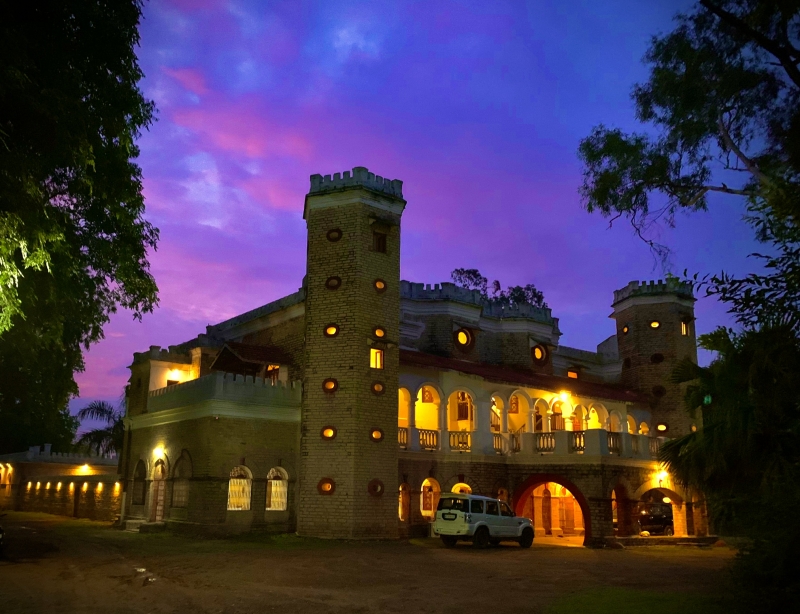
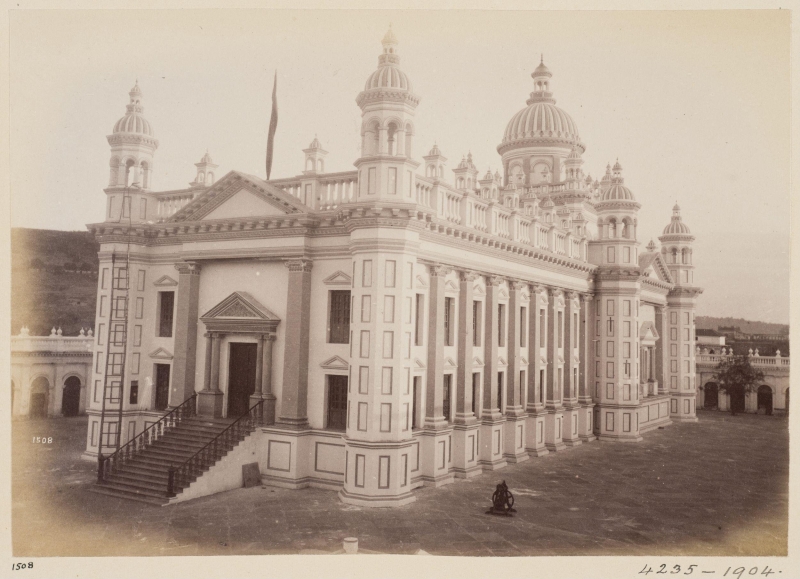
- HH Maharaja Mahendra MADHO SINGH Ju Deo Bahadur, 12th Maharaja of Panna 1898/1902, constructed the Mahendra Bhavan Palace in Panna, deposed for complicity in the murder of his uncle, Rao Raja Khuman Singh. He died after 1925.
- Col. HH Maharaja Mahendra Sir YADVENDRA SINGH Ju Deo Bahadur, 13th Maharaja of Panna 1902/1963, born , K.C.I.E. [cr.1.1.1922], K.C.S.I. [cr.1.1.1932], son of Rao Raja Khuman Singh, educated at Mayo College, Ajmer; invested with full ruling powers on 4th February 1915, appointed UpRaj Pramukh of Vindhya Pradesh after the merger of his state into the Indian Republic; married 1stly, 1912, HH Maharani Shri Manhar Kunverba, died , daughter of HH Maharaja Raol Shri Bhavsinhji II Takhatsinhji of Bhavnagar, and his first wife, HH Maharani Dev Kunverba Sahiba, married 2ndly, 1928, HH Maharani Shri Gopal Kumari, daughter of Thakur Saheb Sawai Singhji, Raja Saheb of Isarda, and his wife, Thakurani Sugan Kunwar, and had issue. He died .
- HH Maharaja Mahendra Narendra Singh Ju Deo Bahadur (qv)
- HH Maharani Kanchan Prabha Devi (eldest daughter), married 28th May 1931, Capt. HH Bisam-Samar-Bijayi Mahamahodya Pancha-Srijukta Maharaja Manikya Sir Bir Bikram Kishore Dev Varman Bahadur of Tripura.
- Maharaj Pushpendra Singh, born , educated at Mayo College, Ajmer (Class-Captain 1935/36).
- Maharajkumari Indira Kumari, born , died unmarried 16th June 2006 at Rajmandir Palace, Panna.
- Maharajkumari Pushpa Kumari Devi, born , married 11th February 1940, Maharaj Kumar Nagendra Singh of Dungarpur. She died .
- Maharajkumari Sarla Kumari
- Maharajkumari Nirmala Devi, born , married 30th November 1951, Rana Ramchandra Pal Singh of Bhajji, and had issue. She died .
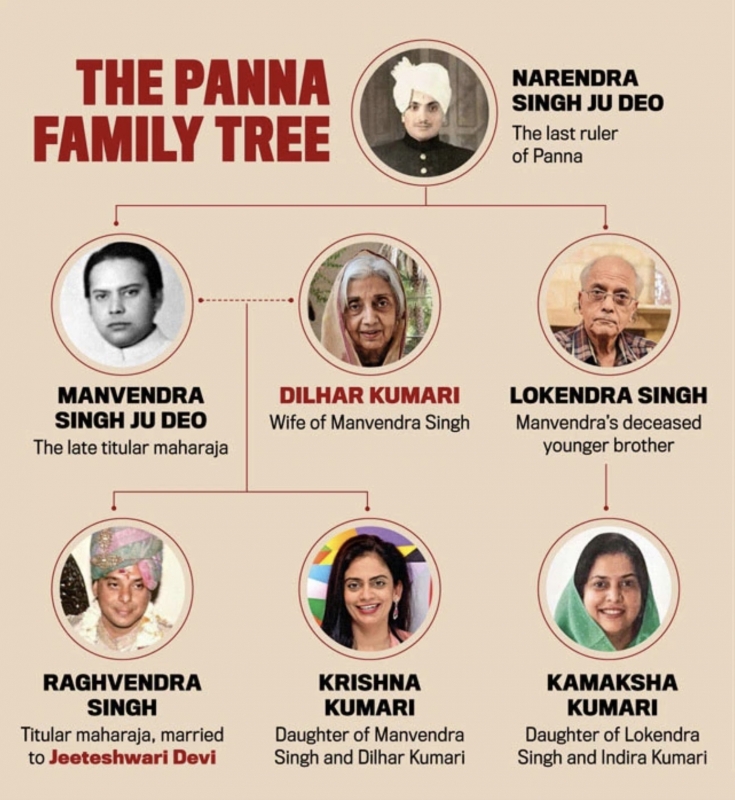
- HH Maharaja Mahendra NARENDRA SINGH Ju Deo Bahadur, 14th Maharaja of Panna 1963/-, born , educated at Mayo College, Ajmer; Member of the Legislative Assembly of Madhya Pradesh in 1957, 1962 and 1967; Member of Parliament (Lok Sabha) in 1971 from Satna; Member of Parliament (Lok Sabha) in 1977, from Damoh; Social worker and founder of many educational institutions in Panna; married 24th February 1937 at Kathmandu in Nepal, HH Maharani Durga Rajya Laxmi Devi, daughter of Lt.-Gen. Maharajkumar Shingha Shumsher Jung Bahadur Rana of Lambjang and Kaski in Nepal, and had issue.
- HH Maharaja Mahendra Manvendra Singh Ju Deo Bahadur (qv)
- Maharaj Lokendra Singh, born on , Member of the Legislative Assembly (Madhya Pradesh) in 1977 and 1993, Member of Parliament (Lok Sabha) in 1989, married Rani Nishi Kumari [née Baisa Indira Kumari], daughter of Major Apji Abhay Singh of Palaitha, and his wife, Rani Chand Kumari, and has issue. He died on .
- Maharajkumari Kumkum Kumari, married Yuvaraj Balwant Singh of Chhatarpur, died , and has issue, one son.
- HH Maharaja Mahendra MANVENDRA SINGH Ju Deo Bahadur, 15th Maharaja of Panna -/2009, born in Mussoorie, educated at Mayo College, Ajmer; married 1stly to HH Maharani Dilhar Kumari, fourth daughter of HH Maharaja Krishnakumarsinhji Bhavsinhji of Bhavnagar, and his wife, HH Maharani Vijayba Sahiba, and had issue; married 2ndly to Maharani Krishna Kumari, daughter of Maharja Gurbaksh Singh Ji of Nabha (Punjab). He died .
- Yuvaraj Ragvendra Singh (succeeded as HH Mahendra Maharaja Ragvendra Singh Ju Deo Bahadur) (qv)
- HH Mahendra Maharaja RAGVENDRA SINGH Ju Deo Bahadur, 16th and present Maharaja of Panna since 8th October 2009 (Raj Mandir Palace, Panna, Madhya Pradesh, India) born in Bombay, married in 1998 to Mahindree Maharani Jeeteshwari Judevi, born , daughter of Rajawat Thakur Darbar Shivprakash Singh of Thikana Shiwad in Jaipur State by his wife Thakurani Narendra Kanwar, daughter of Kumpawat Thakur Jaswant Singh of Dhanla in Jodhpur State. He died in .
- Mahindra Maharajkumari Bari Raja Medhhavi Ju Devi
- Mahindra Maharajkumari Choti Raja Ayuchita Ju Devi
- Mahindra Raja Bahadur Yuvraj Chatrasaal Ju Deo (qv)
- HH Mahendra Maharaja CHATRASAAL SINGH Ju Deo Bahadur (see above)
- Rajkumar Hira Singh, Honourary Lieutenant 1914/-
Notable Figures
Mahamati Prannath (1618–1694)
Mahamati Prannath was a revolutionary saint and the spiritual guide of Maharaja Chhatrasal, playing an instrumental role in the foundation and spiritual identity of Panna State. Born in Kathiawar, Gujarat, he traveled extensively across India and the Middle East before settling in Panna under the patronage of Chhatrasal. He founded the Pranami Sampradaya, a socio-religious movement that synthesized teachings from Hindu and Islamic scriptures to promote universal brotherhood and religious harmony.
Prannath was a central figure in the political and economic destiny of Panna. He blessed Chhatrasal in his struggle against Mughal hegemony and, according to local tradition, guided the Bundela chief to the location of the rich diamond mines of Panna. This discovery provided the critical economic resources required to build and sustain the independent state of Panna. His legacy is preserved at the Shri Gumandji Temple and the Padmavati Puri Dham in Panna, which remain major pilgrimage sites today.
For more detailed information, see the Mahamati Prannath Wikipedia Page.
Maharaja Chhatrasal (reigned 1731 and earlier, founder)
Maharaja Chhatrasal was a legendary warrior of the Bundela Rajput clan who successfully spearheaded the struggle for independence against the Mughal Empire in the Bundelkhand region. Born to Champat Rai, Chhatrasal spent his early years fighting in the Mughal armies under Raja Jai Singh before being inspired by Shivaji Maharaj to raise the banner of rebellion in his homeland. He founded Panna State in 1731, making it his capital and consolidating his authority over a vast territory.
In his twilight years, when faced with an overwhelming invasion by the Mughal governor Muhammad Khan Bangash, Chhatrasal sought the assistance of the Maratha Peshwa Baji Rao I. The joint Bundela-Maratha forces successfully repelled the invaders, cementing a deep political alliance. In gratitude, Chhatrasal adopted the Peshwa as his third son, bequeathed one-third of his kingdom (including Jhansi and Sagar) to the Marathas, and gave his daughter, Mastani, in marriage to Baji Rao I. His reign established Panna as a premier power in Central India.
For more detailed information, see the Maharaja Chhatrasal Wikipedia Page.
Maharaja Harde Sah (reigned 1731–1739)
Maharaja Harde Sah (also known as Hirde Sah) succeeded his father, Maharaja Chhatrasal, in 1731 as the ruler of the core Panna State. As the eldest son, he inherited the prestigious capital of Panna, along with its highly lucrative diamond mines. His primary challenge was to stabilize the newly defined boundaries of the kingdom after the division of Chhatrasal's territories among his sons and the Maratha Peshwa.
Harde Sah maintained cordial relations with his Maratha neighbors and focused on developing his capital. Like his father, he was a patron of the Pranami sect, supporting the construction of various temples and structures that consolidated Panna's status as a socio-religious hub. His reign, though relatively brief, laid the administrative groundwork for the state's survival during the turbulent political climate of 18th-century Central India.
For more detailed information, see the Panna State Wikipedia Page.
Maharaja Hindupat Singh (reigned 1758–1778)
Maharaja Hindupat Singh was one of the most prominent mid-18th-century rulers of Panna. He ascended the throne in 1758 after a period of succession disputes among the descendants of Harde Sah. Hindupat was a highly capable ruler who restored internal stability, consolidated his administrative grip, and expanded the state's military capabilities during a period of widespread Maratha expansionism.
His reign is particularly noted for the economic prosperity of Panna, driven by the systematic exploitation and trade of the Panna diamond mines, which attracted merchants from far and wide. He was also a prolific builder and a devout ruler who patronized several regional temples. However, his decision to bypass his elder sons in favor of his younger son, Anirudh Singh, for succession sparked intense court intrigue and power struggles that weakened the state in the years following his death in 1778.
For more detailed information, see the Panna State Wikipedia Page.
Maharaja Mahendra Nirpat Singh (reigned 1849–1870)
Maharaja Mahendra Nirpat Singh ascended the throne of Panna in 1849. His reign was a turning point in the history of the state, coinciding with the Indian Rebellion of 1857. Facing a critical political choice, Nirpat Singh decided to support the British East India Company during the uprising, providing essential military assistance and securing British communications and garrisons in the Bundelkhand region.
In recognition of his crucial assistance during the rebellion, the British colonial administration rewarded him with the hereditary title of "Mahendra Maharaja" and a permanent gun salute of 11 guns. He was also granted a sanad (charter) of adoption, protecting Panna from annexation under the Doctrine of Lapse. He was an active reformer who initiated several public works, built grand temples, and fostered a period of peace and infrastructure development in the capital.
For more detailed information, see the Panna State Wikipedia Page.
Maharaja Rudra Pratap Singh (reigned 1870–1893)
Maharaja Rudra Pratap Singh succeeded his father, Nirpat Singh, in 1870. He is widely remembered as a highly progressive and enlightened ruler who introduced modern administrative and social reforms to Panna. Under his administration, Panna witnessed significant advancements in public education, healthcare, and the judiciary, with several schools and modern hospitals being established in the state.
His administrative efficiency and development projects earned him high praise from the British Crown. During the Delhi Durbar of 1876, he was created a Knight Commander of the Most Exalted Order of the Star of India (KCSI) by Queen Victoria. His reign is regarded as a golden era of modernization, during which Panna successfully transitioned from a medieval feudal state to a well-governed, progressive princely state.
For more detailed information, see the Panna State Wikipedia Page.
Maharaja Mahendra Yadvendra Singh (reigned 1902–1950)
Maharaja Mahendra Yadvendra Singh was the last ruling prince of Panna State. Ascending the throne in 1902 as a minor, he was formally invested with full ruling powers in 1916. His long reign was marked by extensive administrative reforms, agricultural modernization, and the introduction of electricity and clean drinking water systems to Panna. He was a highly respected figure among the Indian royalty and served as a member of the Chamber of Princes, advocating for the interests of Central Indian states.
Following India's independence in 1947, Maharaja Yadvendra Singh played a constructive role in the integration of the princely states. He signed the Instrument of Accession, merging Panna State into the Dominion of India on 1 January 1950. The state was initially integrated into the newly formed state of Vindhya Pradesh, and Yadvendra Singh was appointed as its Up-Rajpramukh. He remained a highly respected public figure and community leader in post-independence Central India until his demise in 1963.
For more detailed information, see the Yadvendra Singh Judeo Wikipedia Page.