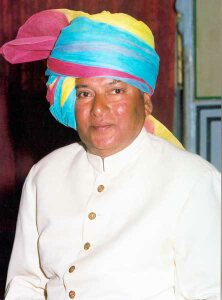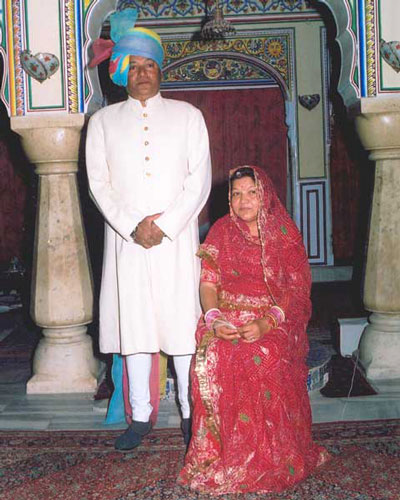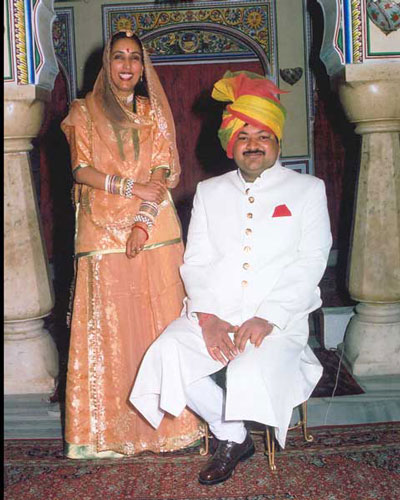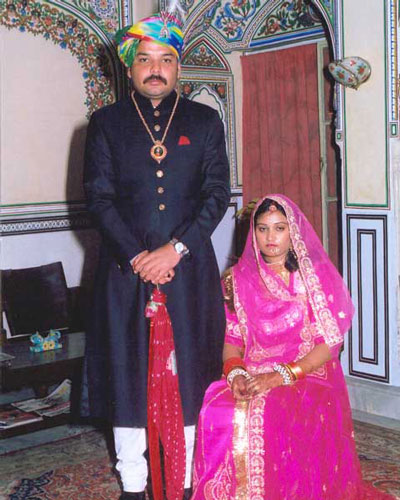
Present Head
- Kunwar Amarveer Singh, married Kunwarani Anita Kumari, daughter of Thakur Raghunandan Singh of Jamli, and his wife, Shrimati Thakurani Kusum Kumari.
- Kunwar Manveer Singh, married Kunwarani Harshita Kumari.
- Thakurani Jyoti Kanwar, born , educated at Maharani Gayatri Devi Girl's School, Jaipur; married 2nd February 1995 in Jaipur, Rawat Thakur Raj Deo Singh, Rawat of Ajabpur, and has issue, one son.
History
Origin and Foundation
The historical Thikana of Banskhoh holds a prestigious position in the feudal hierarchy of the erstwhile Jaipur State. It serves as the premier seat of the Kumbhani branch of the Kachwaha Rajput dynasty. The lineage of this estate traces back to Raja Jashi (also known as Raja Junasi or Jaichand) of Amber, who ruled the region during the 14th century (circa 1318–1367 AD).
Raja Jashi’s son, Kumar Kumbha, was granted the estate of Banskhoh. His descendants came to be known as the Kumbhani Kachwahas, establishing Banskhoh as their principal seat of power and representing one of the oldest surviving sub-clans within the Amber kingdom.
The Bara Kotri of Amber
The Kumbhanis of Banskhoh are traditionally recognized as one of the houses of the famous Bara Kotri (Twelve Chambers) of Jaipur. This system of nobility was structured to organize the closest kinsmen and descendants of the ruling Amber house into twelve premier noble estates. Due to their direct descent from the early rulers of Amber, the lords of Banskhoh held a highly respected, high-ranking status (Tazimi Sirdars) at the royal court of Jaipur, enjoying special privileges and seats of honor during royal durbars.
Mughal and Maratha Periods
Throughout the medieval period, the nobles of Banskhoh served the Amber and Jaipur rulers with distinction in various military campaigns. During the expansion of the Amber State's influence under Raja Man Singh I and Mirza Raja Jai Singh, the warriors of the Kumbhani clan participated in imperial campaigns across the Deccan, Afghanistan, and eastern India.
During the turbulent 18th century, as the Maratha Empire extended its influence into Rajputana, Banskhoh faced the challenges of defending its territories and contributing to the collective defense of the Jaipur state under Maharaja Sawai Jai Singh II and his successors. The strategic location of Banskhoh, situated near the historic route connecting Agra and Jaipur, made it a vital outpost during these conflicts.
British Raj and Modern Era
Following the treaty of alliance between Jaipur State and the British East India Company in 1818, the region transitioned into a period of relative peace. The rulers of Banskhoh focused on local administration, agricultural development, and maintaining law and order within their estate. The thikana was known for its fort (Banskhoh Garhi), which stood as a symbol of Kumbhani heritage and authority.
Following India's independence in 1947 and the subsequent integration of princely states, the Thikana of Banskhoh was merged into the state of Rajasthan. Today, Banskhoh remains an important historical locality in the Jaipur district, with its heritage preserved by the descendants of the Kumbhani clan. For more academic detail on the noble estates of Jaipur, historians often refer to works like Sir Jadunath Sarkar's A History of Jaipur as well as James Tod's classic Annals and Antiquities of Rajasthan.
Genealogy
- Thakur DIP SINGH, Thakur of Banskhoh fl.1739
- Thakur CHUR SINGH, Thakur of Banskhoh; Diwan.
- .....
- Thakur AMAR SINGH, Thakur of Banskhoh -/1877, married and had adoptive issue. He died spm 1877.
- Baisa (name unknown), married (as his first wife), Thakur Kanh Singh of Geejgarh, and had issue, two daughters.
- (A) Thakur Bairi Sal (qv)
- Thakur BAIRI SAL, Thakur of Banskhoh 1877/- , born about 1857, son of Thakur Gulab Singh, adopted by his uncle, Thakur Amar Singh; married and had issue.
- Kunwar Shiv Singh, born .
- .....
- Thakur RAGHUBIR SINGH, Thakur of Banskhoh (see above)
- Thakur Mangal Singh of Banskhoh, married Baisa Teej Kanwar, daughter of Kanwar Hari Das of Rohet, and his wife, Kanwarani Sireh Kanwar.
- Thakur Devi Singh of Banskhoh, married Thakurani Daulat Kanwar, daughter of Thakur Indra Singh of Rohet, and his first wife, Thakurani Samdar Kanwar.