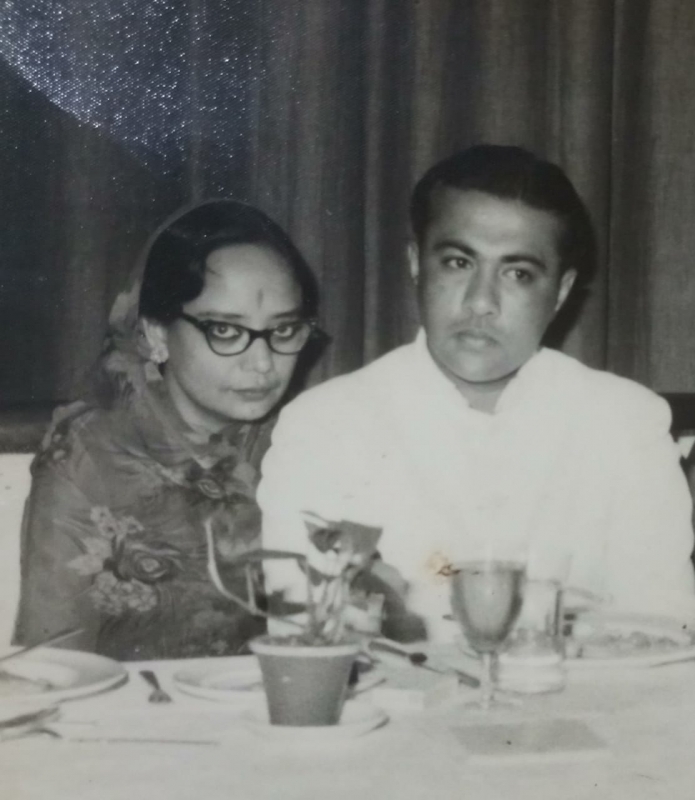
Present Head
History
Origin and Ancient Foundation
The history of the Vala province, historically centered around Vallabhipur (modern-day Vallabhipur in the Bhavnagar district of Gujarat), is deeply rooted in antiquity. In the ancient period, Vallabhi was the capital of the illustrious Maitraka Dynasty, which ruled over Saurashtra and surrounding regions from circa 475 to 775 CE. Founded by Senapati Bhatarka, a military commander of the Gupta Empire, the Maitrakas established Vallabhi as a glorious center of political power, international trade, and Buddhist learning, frequented by famous Chinese travelers such as Xuanzang and Yijing. For more information on this ancient period, you can read the detailed account of the Maitraka Dynasty on Wikipedia.
Following the decline and eventual destruction of the ancient city of Vallabhi by Arab invasions in the late 8th century, the region fell into relative obscurity, governed by various local chieftains. It was not until the 18th century that Vala re-emerged as a prominent princely state under the rule of the Suryavanshi Gohil Rajputs.
Establishment of the Princely State of Vala
The modern Princely State of Vala was founded in 1740 by Thakore Saheb Visoji. Visoji was a prominent Gohil Rajput and the brother of Thakore Saheb Akherajji III of Bhavnagar. Visoji established his control over the ancient site of Vallabhi, which had dwindled to a small village known as Vala, and initiated its reconstruction. By reviving the settlement and fortifying it, he laid the foundations of the Vala State as an independent branch of the Gohil Rajput clan. Detailed administrative records of this era can be cross-referenced via the historical compilations in the Imperial Gazetteer of India.
The Mughal, Maratha, and British Periods
During the mid-18th century, the fading authority of the Mughal Empire in Gujarat created a political vacuum. Vala, like many other states in the Kathiawar peninsula, had to navigate the turbulent waters of Maratha expansion. The Gaekwads of Baroda and the Peshwa's commanders frequently raided the region to collect tribute (Chauth). To secure his territories, Visoji and his successors maintained a delicate diplomatic balance, paying tribute when necessary while consolidating local administrative structures.
In the early 19th century, the British East India Company intervened in Kathiawar to stabilize the region and streamline tribute collection. In 1807–1808, under the guidance of Colonel Alexander Walker, the British executed the Walker Settlement. Through this settlement, Vala entered into a treaty arrangement with the British. The state became a British protectorate, classified as a Third-Class State within the Kathiawar Political Agency of the Bombay Presidency. The British guaranteed protection from external aggression, while the Thakore Sahebs of Vala agreed to pay a fixed tribute (jama) to the Gaekwad of Baroda, channeled through British authorities.
Key Rulers and Reforms
The rulers of Vala, styled as Thakore Saheb, were known for their progressive administration and public welfare initiatives, particularly during the late 19th and early 20th centuries. Some of the notable rulers included:
- Thakore Saheb Visoji (1740–1774): The visionary founder who resurrected Vala from an ancient ruin into a stable and prosperous principality.
- Thakore Saheb Meghrajji (1840–1853): Focused on agrarian reforms and settled local border disputes, ensuring internal peace.
- Thakore Saheb Vakhatsinghji Meghrajji (1875–1943): One of the longest-reigning and most progressive rulers of Vala. Under his administration, the state underwent significant modernization. He introduced modern primary education, established healthcare dispensaries, improved agricultural irrigation systems, and constructed roads connecting Vala to neighboring commercial centers.
- Thakore Saheb Gambhirsinhji Vakhatsinhji (1943–1948): The last ruling chief of Vala, who guided the state through the crucial transition period of India's independence.
Post-Independence and the Modern Era
Following India's independence from British rule in August 1947, the last ruler, Thakore Saheb Gambhirsinhji, signed the Instrument of Accession to the Dominion of India. On 15 February 1948, Vala State officially merged into the United State of Kathiawar, which was later renamed the Saurashtra State. To read more about this political integration, refer to the historical overview of Vala State on Wikipedia.
In 1956, as part of the States Reorganisation Act, Saurashtra was merged into the Bombay State. Following the bilingual state's bifurcation on 1 May 1960, the region became an integral part of the newly formed state of Gujarat. Today, Vallabhipur functions as a vibrant taluka town in the Bhavnagar district. It is highly regarded by historians and tourists alike for its rich archaeological sites, which continue to yield artifacts from its ancient Maitraka-era glory.
Genealogy
- Thakore Sahib VISAJI, 1st Thakore Shri of Vala 1740/1774, twin brother of Thakore Sahib Akherajji of Bhavnagar, married and had issue. He died .
- Thakore Sahib Nathubhai Visaji (qv)
- Kumar Shri Kayabhai Visaji, granted Pati, Pipli.
- Kumar Shri Jethibhai Visaji, granted Ratanpar.
- Thakore Sahib NATHUBHAI VISAJI, 2nd Thakore Shri of Vala 1774/1798
- Thakore Sahib MEGHABHAI NATHUBHAI, 3rd Thakore Shri of Vala 1798/1814, married and had issue. He died .
- Thakore Sahib Harbhamji Meghabhai (qv)
- Thakore Sahib Patabhai Meghabhai (qv)
- Kumar Shri Adabhai Meghabhai, was granted Kanpar.
- Thakore Sahib HARBHAMJI MEGABHAI, 4th Thakore Shri of Vala 1814/1838, married and had issue. He died .
- Kumar Shri Kalyansinhji Harbhamji, died young before 1838.
- Thakore Sahib Daulatsinhji Harbhamji (qv)
- Thakore Sahib Hameersinhji Harbhamji, of Rajpara (Bhayati).
- Mansinhji Hameersinhji
- Narayansinhji Hameersinhji
- Amarsinhji Hameersinhji
- Ranmalsinhji Hameersinhji
- Thakore Sahib DAULATSINHJI HARBHAMJI, 5th Thakore Shri of Vala 1838/1840, died spm in 1840.
- Thakore Sahib PATABHAI MEGABHAI, 6th Thakore Shri of Vala 1840/1853, died .
- Thakore Sahib PRITHIRAJJI PATABHAI, 7th Thakore Shri of Vala 1853/1860, died .
- Thakore Sahib MEGHRAJJI PRITHIRAJJI, 8th Thakore Shri of Vala 1860/1875, married and had issue. He died .
- Thakore Sahib Vakhatsinhji Meghrajji (qv)
- Kumar Shri Akherajji Meghrajji
- Kuamr Shri Pratapsinhji, of Dared.
- Kumar Shri Ranjeetsinhji, granted Melana.
- Thakore Sahib VAKHATSINHJI MEGHRAJJI, 9th Thakore Shri of Vala 1875/1943, born , succeeded 20th August 1875, educated at Rajkumar College, Rajkot; married and had issue. He died .
- Thakore Sahib Gambhirsinhji Vakhatsinhji (qv)
- Kumar Shri Mangalsinhji Vakhatsinhji, married and had issue.
- Kumar Shri Kanaksinhji Mangalsinhji, married and had issue.
- Kumar Shri Krishnachandrasinhji Kanaksinhji, educated at Rajkumar College, Rajkot (1972).
- Kumar Shri Jaswantsinhji Mangalsinhji
- Kumar Shri Kanaksinhji Mangalsinhji, married and had issue.
- Thakore Sahib GAMBHIRSINHJI VAKHATSINHJI, 10th Thakore Shri of Vala 1943/- , educated at Harrow 1904/1907, married and had issue.
- Thakore Sahib Pravinsinhji Gambhirsinhji (qv)
- Kumar Shri Vikramsinhji Gambhirsinhji Gohil, educated at Rajkumar College, Rajkot; died .
- Rani Bhupendra Kumari, married Maharaj Narpat Singh of Jodhpur, and had issue.
- Thakore Sahib PRAVINSINHJI GAMBHIRSINHJI, 11th Thakore Shri of Vala. M.L.A. for two terms from Botad constituency, married Rajkumari Premlata Devi of Surguja [Thakorani Shri Premlata Devi of Vala], daughter of Maharaja Ramanuj Saran Singh Deo of Surguja, and his second wife, and has issue. He died on .
- Raj Kumari Janhavi Devi [Rani Janhavi Devi of Kunda], born in Bombay, married 28th November 1985 in Allahabad, Raja Ravindra Nath Singh, born in Patna, son of Raja Birendra Nath Singh of Kunda, and his wife, Rani Raj Rajeshwari Devi, and has issue.
- Yuvaraj Shri Raghavendra Nath Singh (qv)
- Rajkumari Rituraj Manjari
- Raj Kumari Janhavi Devi [Rani Janhavi Devi of Kunda], born in Bombay, married 28th November 1985 in Allahabad, Raja Ravindra Nath Singh, born in Patna, son of Raja Birendra Nath Singh of Kunda, and his wife, Rani Raj Rajeshwari Devi, and has issue.
- Thakore Sahib Raghavendra Nath Singh, 12th Thakore Shri of Vala (see above)