History
Origin and Foundation
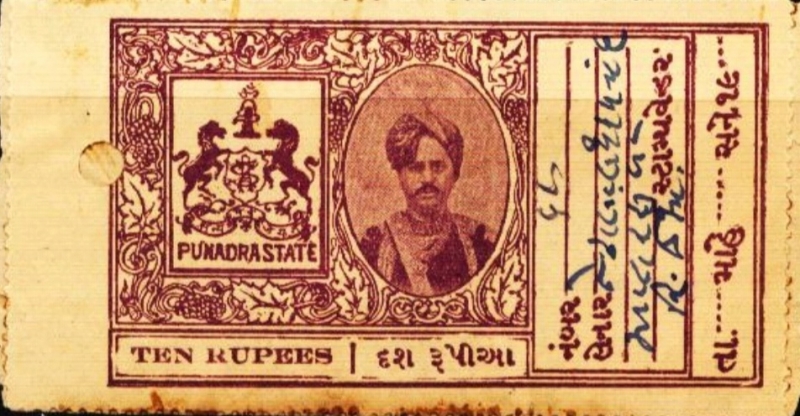
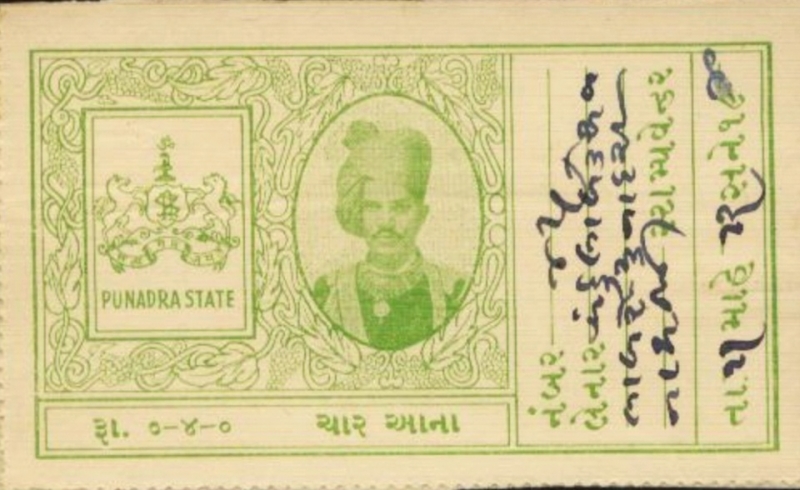
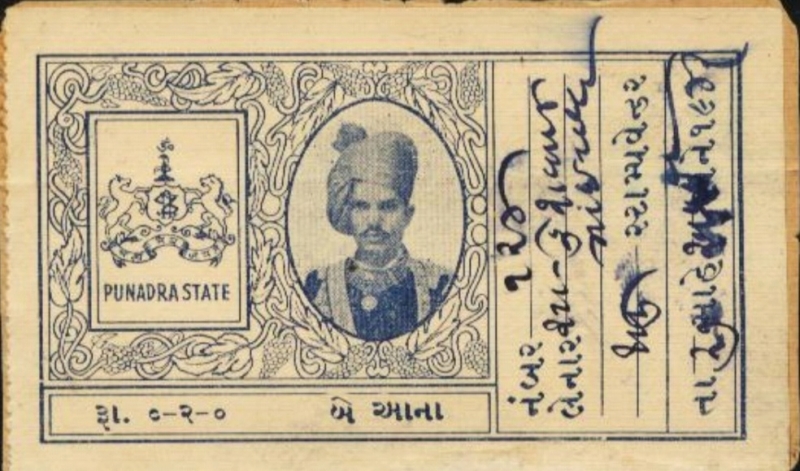
The state of Punadra (sometimes spelled as Punadra or Punadra Taluka) was a princely state of historical significance situated in the Mahi Kantha region of Gujarat, India. The ruling dynasty of Punadra belonged to the Jhala clan of Rajputs. The state's origin is deeply connected with the expansion of the Jhala clan from Halvad.
According to historical records, including the Gazetteer of the Bombay Presidency, the ruling family traces its lineage back to Harisinhji, a brother of the ruler of Halvad. Harisinhji received the estate of Punadra as his patrimony. During the 15th century, during the reign of Sultan Mahmud Begada of Gujarat, Harisinhji embraced Islam. This conversion gave rise to the Molesalam Rajput community in the region. Despite their conversion to Islam, the rulers of Punadra retained several Hindu customs, Rajput traditions, marriage rituals, and names, proudly carrying their Jhala lineage alongside their Islamic identity. The rulers of the state held the hereditary title of Miya.
Mughal and Maratha Periods
During the Mughal era, Punadra maintained its semi-independent status as a local tributary state, paying taxes to the subahdars of Gujarat. As the Mughal Empire declined in the early 18th century, the Maratha Empire, particularly the Peshwas and the Gaekwads of Baroda, asserted their dominance over the region of Gujarat. Punadra, like many neighboring petty states in the Mahi Kantha Agency, was subjected to the collection of ghasdana (tribute) by the Gaekwad's military expeditions.
British Rule and Administration
With the rise of the British East India Company in Western India, a settlement was brokered by Major Ballantyne in 1821 between the Gaekwad of Baroda and the local chiefs of Mahi Kantha. This settlement brought stability to the region, and Punadra became a British protectorate under the political supervision of the Mahi Kantha Agency.
Punadra was classified as a Class IV (or in some periods, Class V) state within the agency. The state possessed limited civil and criminal jurisdictions, with the British political agent exercising oversight over major judicial matters. The state spanned an area of approximately 11 to 12 square miles and comprised several revenue-yielding villages. The rulers were recognized for their administrative prudence, ensuring peaceful coexistence between the diverse Hindu and Muslim populations within their borders.
The Molesalam Rajput Heritage
The social structure of Punadra was characterized by the unique cultural synthesis of the Molesalam Rajputs. Even after centuries of adopting Islam, the ruling Miyas of Punadra continued to patronize traditional Rajput bards (Charans and Bhats) who kept the genealogies of the Jhala clan. They observed dual socio-religious practices, combining Islamic faith with Rajput code of chivalry (Sanskar), which made the province a remarkable model of syncretic cultural heritage in Gujarat.
Post-Independence and Modern Era
Following India's independence from British rule in August 1947, the last ruling Miya of Punadra signed the Instrument of Accession, merging the state into the Dominion of India. In 1948, Punadra was formally integrated into the Bombay Province.
Following the linguistic reorganization of Indian states in 1960, the territory of Punadra became a part of the newly formed state of Gujarat. Today, Punadra is situated as a prominent historical village and locality within the Dehgam Taluka of the Gandhinagar district, preserving the architectural ruins of its fort, stepwells, and ancestral monuments that testify to its royal past.
Genealogy
- Mian ABHAISINHJI AMARSINHJI, Thakore of Punadra 1865/1907, born , succeeded 12th March 1865, married and had issue.
- Thakore Shri Shivsinghji Abhaisinghji (qv)
- Thakore Shri SHIVSINGHJI ABHAISINGHJI, Thakore of Punadra 1907/1939, born , married and had issue. He died .
- Thakore Shri Ajitsinghji Shivsinghji (qv)
- Thakore Shri Laxmansinghji Shivsinghji
- Thakore Shri AJITSINGHJI SHIVSINGHJI, Thakore of Punadra 1939/1954, born , educated at Scott College, Sadra; married and had issue. He died .
- Thakore Shri Dilipsinghji Ajitsinghji (qv)
- Thakore Shri DILIPSINGHJI AJITSINGHJI, Thakore of Punadra 1954/-, born .