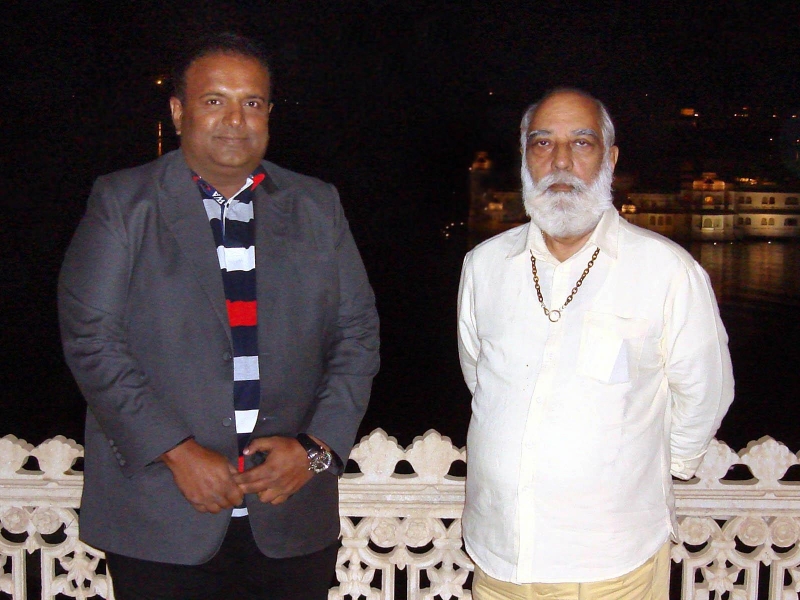
Present Head
History
Origin and Foundation of Nadar
The history of the Nadar Jagir is deeply intertwined with the migration patterns of the illustrious Sisodia Dynasty of Mewar. Around 720 years ago, during the turbulent early 14th century—a period marked by the expansion of the Delhi Sultanate and the legendary siege of Chittorgarh—Raja Khancherai, accompanied by his mother, migrated from Udaipur to establish a new secure haven. Seeking to preserve their sovereign Rajput identity, they traveled eastward and settled in the region that would become known as Nadar.
Upon his arrival, Raja Khancherai consolidated his authority over the surrounding territories, laid the foundations of his state, and constructed a formidable fortress. This stronghold, famously known as Narar Kot, was built across a sprawling 52-acre estate and became the focal point of Sisodia power in the region.
Conflict with Regional Sultanates and Nawabs
Throughout the medieval and early modern periods, the strategic position of the Nadar state attracted the attention of neighboring Islamic rulers and Nawabs. The principality faced repeated military incursions aimed at subjugating this independent Rajput pocket. Despite being heavily outnumbered, the rulers of Nadar mounted resilient defenses over several generations, drawing inspiration from their ancestral heritage in the Mewar Kingdom.
The decline of the fort came during a final, massive invasion launched by regional Nawabs. The attacking forces deployed a formidable army that included 100 war elephants. The sheer scale of this elephant-led assault succeeded in breaching the defenses and destroying the grand castle of Narar Kot. Today, the extensive 52-acre ruins of the fort stand as silent witnesses to this historic confrontation, preserving the memory of the clan's last stand.
Prominent Rulers and Clan Legacy
Despite the destruction of their primary seat of power, the Sisodia Rajputs of Nadar maintained their local influence and produced several prominent leaders renowned for their valor and administration. Among the most celebrated figures born in to this lineage are:
- Jorawar Pratap Singh: A legendary warrior who played a key role in defending the clan's territories during times of political instability.
- Lakshan Pratap Singh: Known for his diplomatic acumen and efforts to rebuild the community in the aftermath of external invasions.
- Raja Udaypratap Singh: A visionary leader who navigated the complex socio-political transitions of the late pre-modern era, ensuring the survival of the family's legacy.
The British Raj and Post-Independence Era
During the British colonial administration, the descendants of the Nadar rulers were recognized as influential local chieftains and landlords (Jagirdars). They adapted to the changing agrarian landscape while maintaining their traditional cultural roles within the community. Following India's independence in 1947 and the subsequent implementation of the Zamindari Abolition acts, the estate transitioned into the modern era. Today, the descendants of this ancient branch of the Sisodia Dynasty continue to be respected for their historical lineage, while the 52-acre ruins of Narar Kot remain an important archaeological and historical landmark of Rajput heritage in northern India.
Genealogy
- Raja Khancherai
- Raja Jorawar Pratap Singh
- Raja Lakshan Pratap Singh
- Raja Moti Pratap Singh
- Raja Baban Narayan Singh
- Raja Heera Narayan Singh
- Raja Bali Singh
- Raja Rajendra Pratap Singh