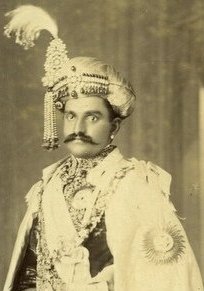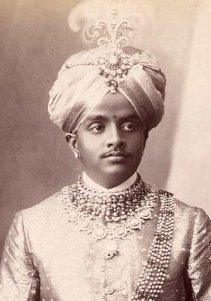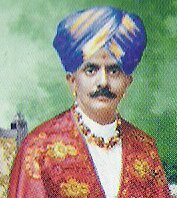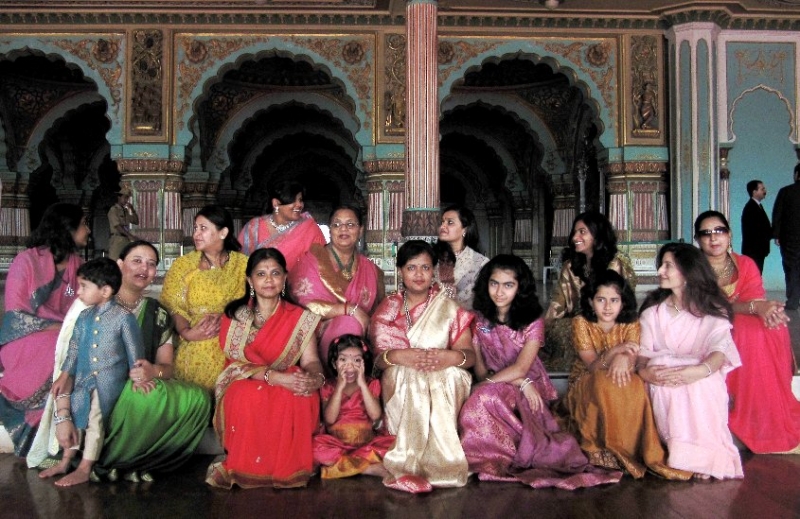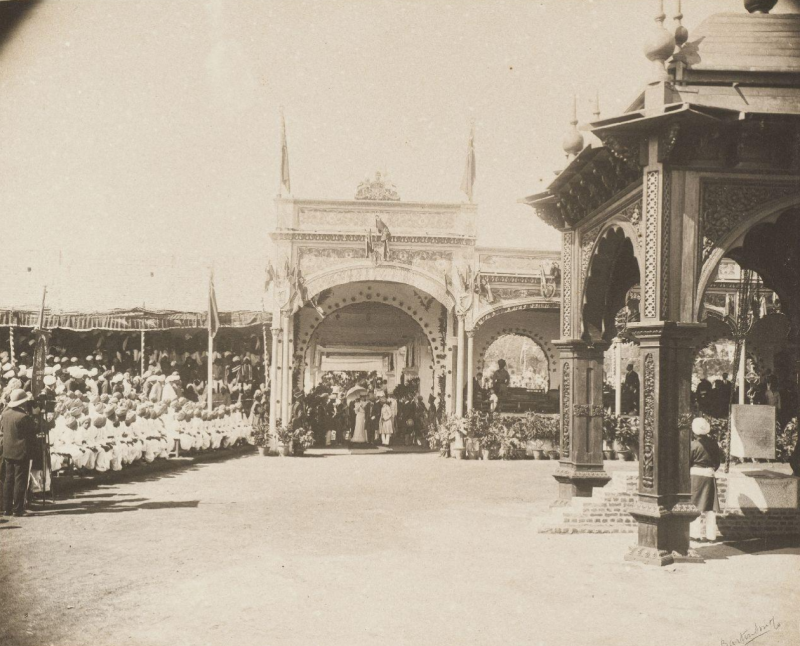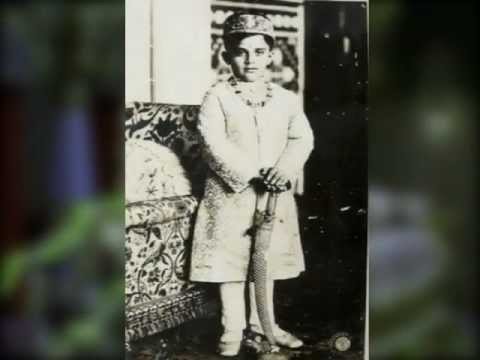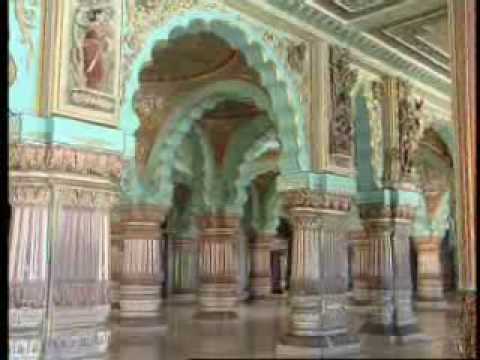
Present Head

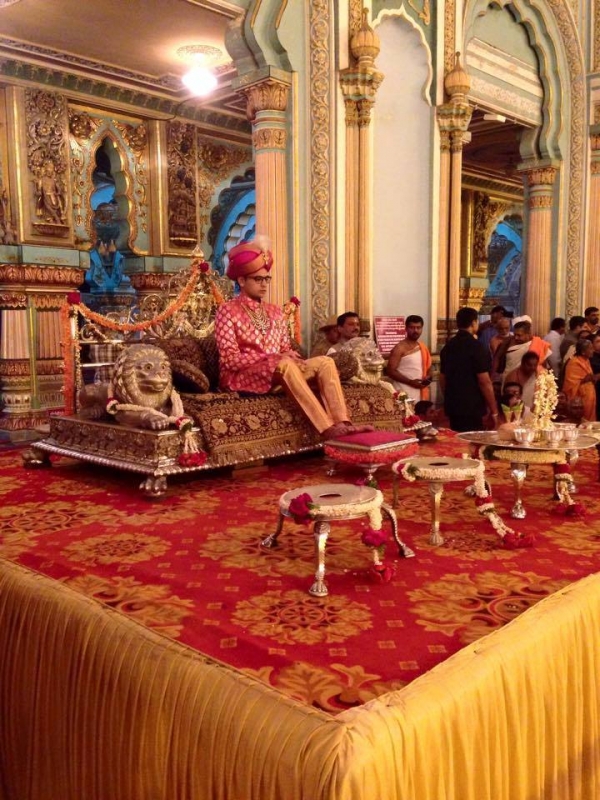
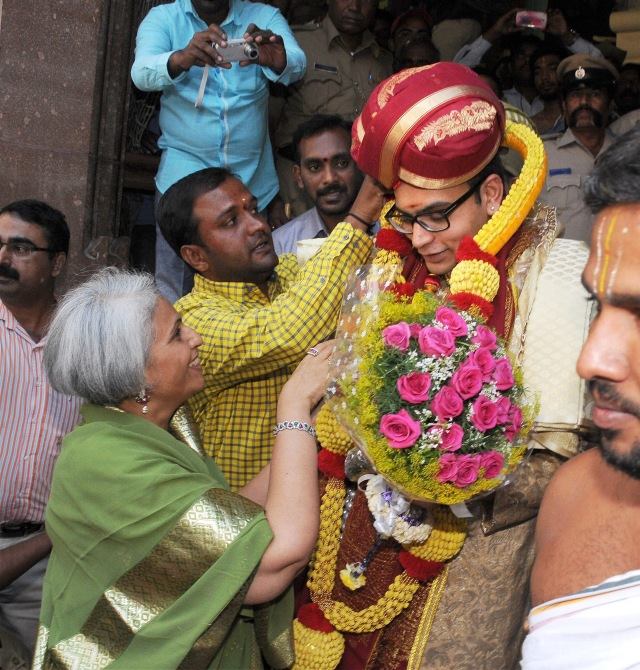
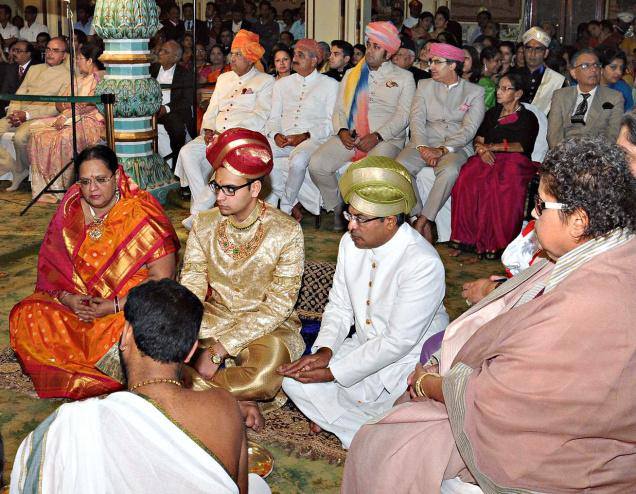
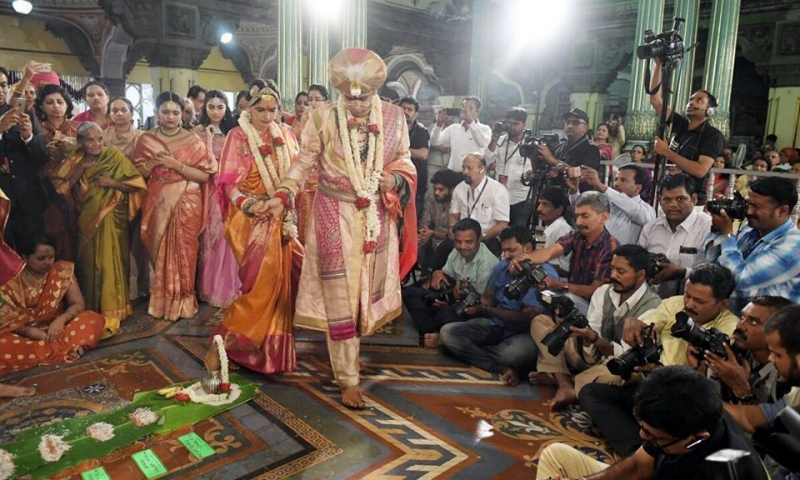
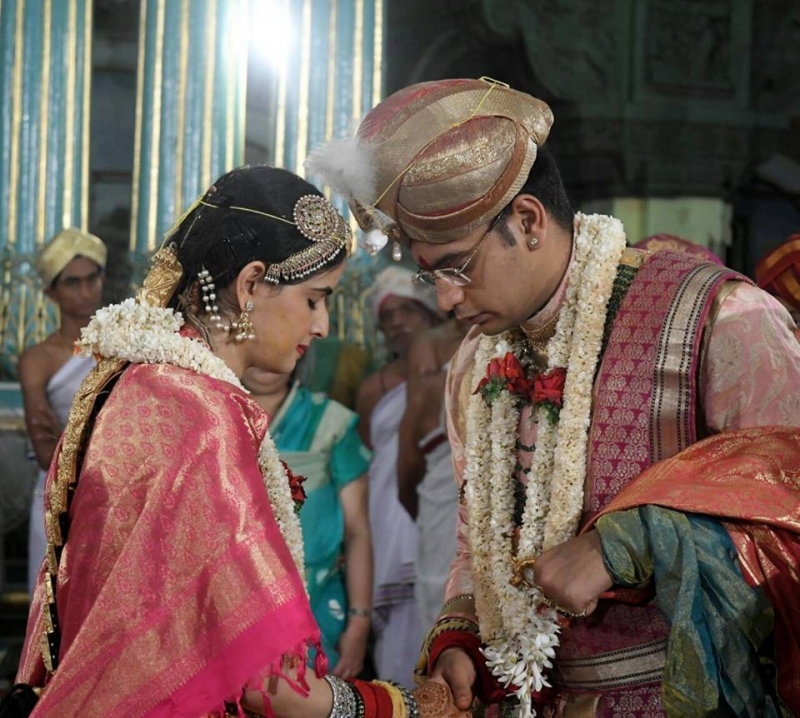
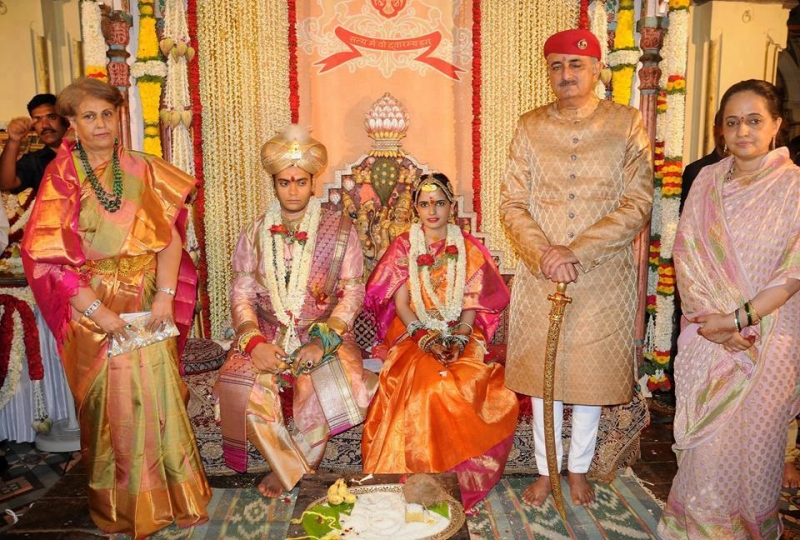
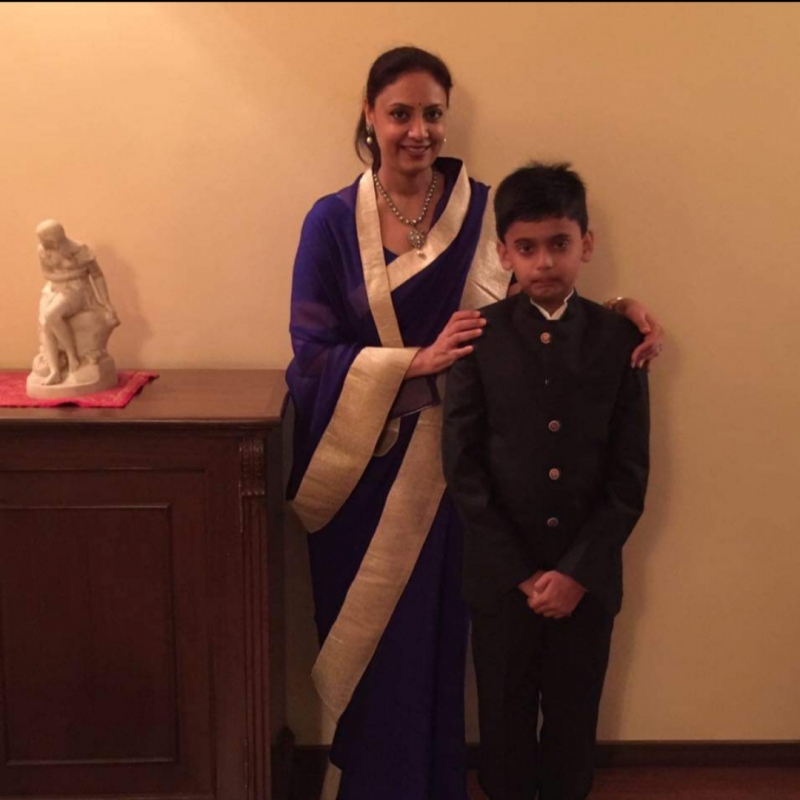
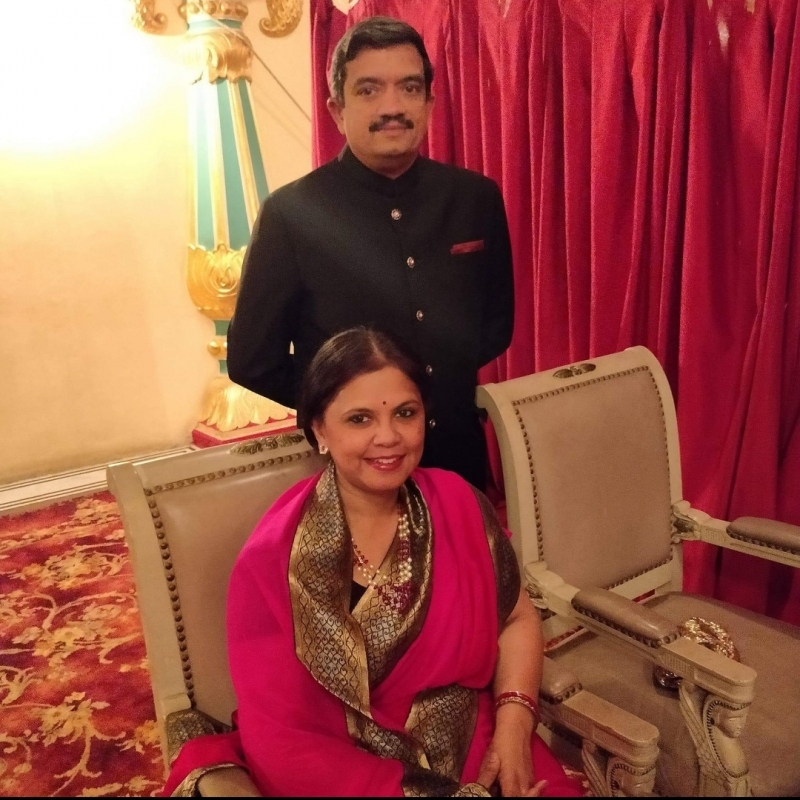
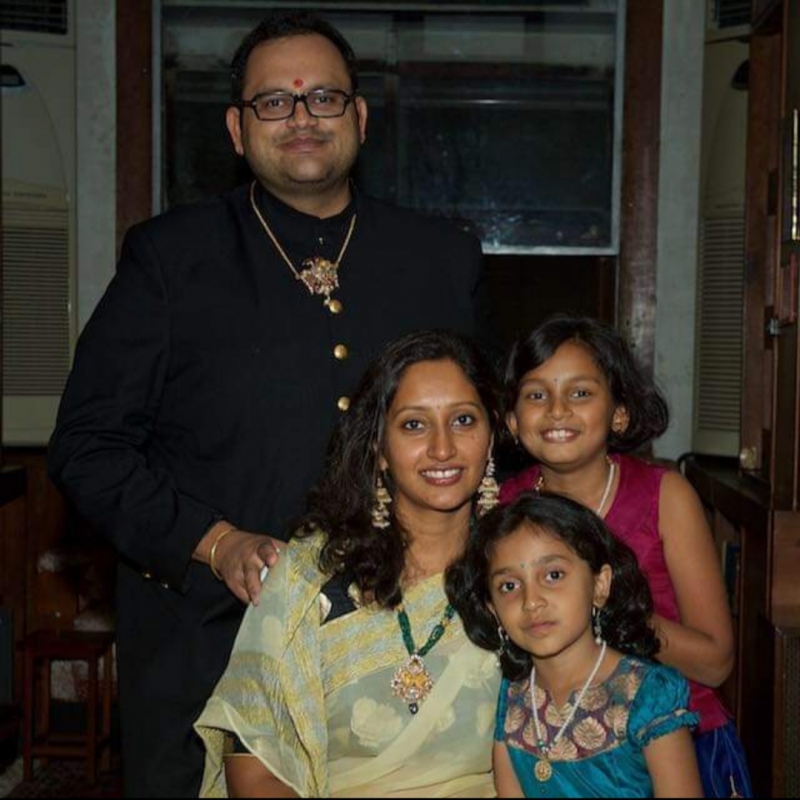
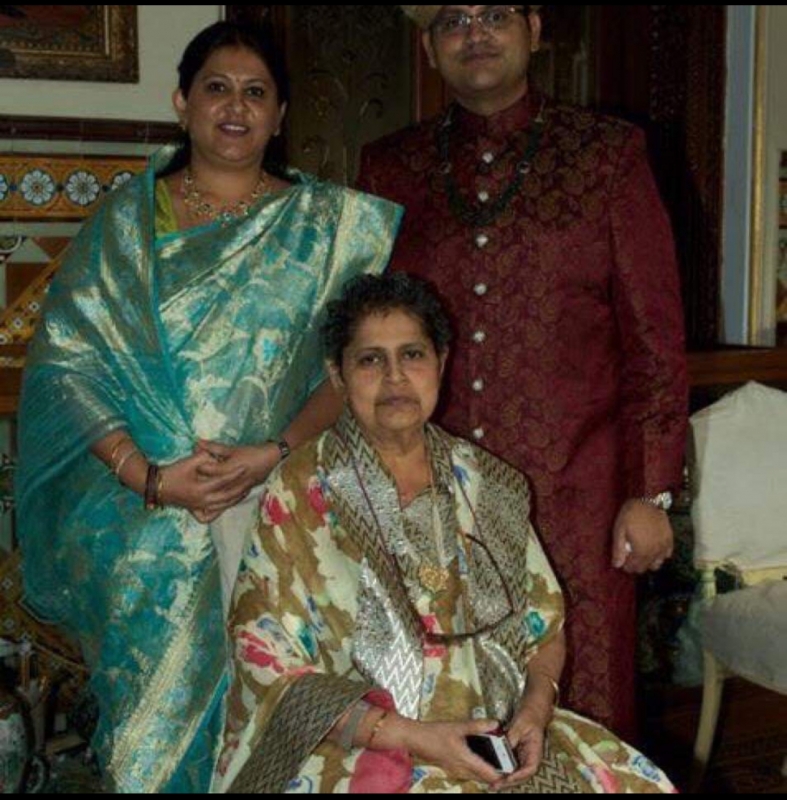
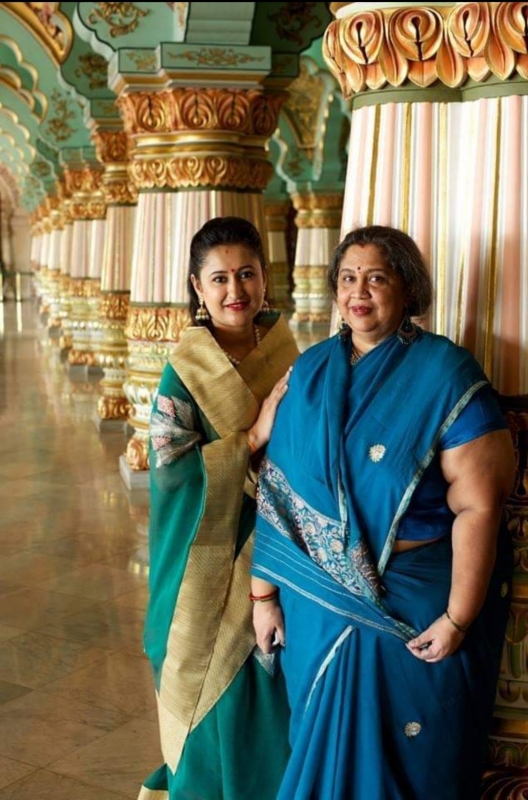
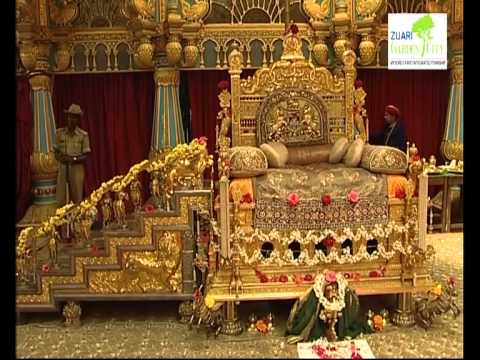
HH Maharaja Yaduveer Krishnadatta Chamaraja Wodeyar (prev. Yaduveer Gopal Raj Urs), born , coronated on 28th May 2015 after the death of Srikantadatta Narisimharaja Wodeyar in 2013. He is the grandnephew of Srikantadatta Wodeyar and Pramodadevi, grandson of the Srikantadatta Wodeyar's eldest sister Gayathri Devi and son of Swarup Anand Gopal Raj Urs and his wife Tripura Sundari Devi. [Facebook] [Wikipedia] [NDTV] [The Hindu]
Born as Yaduveer Gopalraj Urs, he is the only son of Swarup Anand Gopalaraj Urs (1 January 1960) of the Bettadakote clan of the Urs family, and his wife, Rajakumari Tripurasundari Devi (born ) (nick name, Leela), the niece of the late Maharaja and the eldest daughter of Maharajakumari Gayatri Devi (10 October 1946-July 1974) and her husband Sardar K.B.Ramachandraraj Urs (10 May 1936 - 29 June 2011). He has a younger sister Jayathmika Lakshmi, currently studying in England.
He studied in Vidya Niketan School in Bangalore up to class 10, and completed his education through class 12 at the Canadian International School, Bangalore, after which he left for the United States. He is currently an undergraduate at University of Massachusetts Boston, majoring in economics and English.
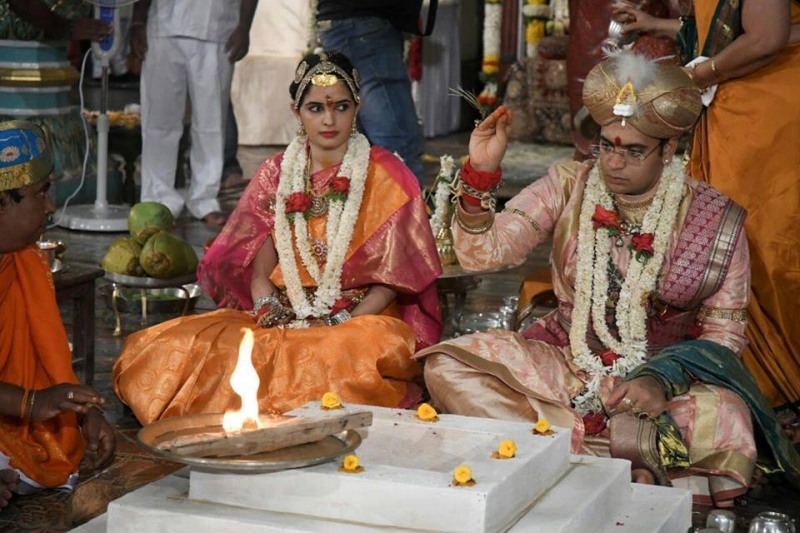
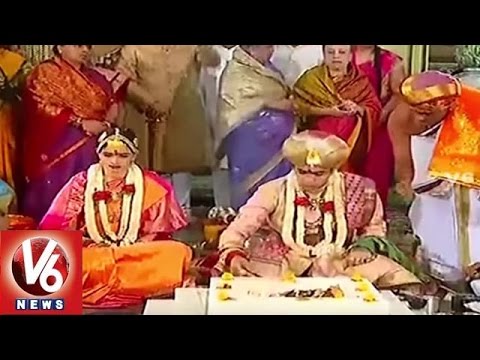
Maharaja Yaduveer Krishnadatta Chamaraja got married at Mysuru Palace on 26th July 2016 to H.H. Maharani Trishika Kumari Ju Devi Ammanni Avaru, daughter of H.H. Rai-i-Rayan Mahi-Mahendra Maharajadhiraj Ravi Kula Bhushan Sri 108 Sri Maharawal Shri Harshvardhan Singhji Bahadur of Dungarpur and has issue, one son. [IndiaToday] [News18].
- Yuvaraja Sri Aadyaveer Narasimharaja Wodeyar, born .
History
Origins and Ancient Period (350 AD – 1399 AD)
The region of Mysore, located in the southern part of the Deccan plateau, has a rich historical lineage dating back to antiquity. The earliest recorded political entity to govern the region was the Western Ganga Dynasty, which established its rule around 350 AD. Ruling from their capital in Talakadu, the Gangas fostered a culturally vibrant society, marked by significant achievements in Jain architecture and literature, most notably the construction of the monolithic Gommateshwara statue at Shravanabelagola. Their long-standing hegemony lasted for nearly seven centuries until they were displaced by the expanding Chola Empire, which was subsequently ousted by the Hoysala Dynasty in 1024 AD.
The Hoysalas integrated the territory into their prosperous empire, introducing unparalleled temple architecture, exemplified by the intricate soapstone carvings at Belur and Halebidu. Following the decline of the Hoysalas in the mid-14th century, the geopolitical vacuum was filled by the newly emerged Vijayanagara Empire, which asserted suzerainty over the local chieftains of southern India, setting the stage for the rise of a new local ruling house.
Foundation of the Wadiyar Dynasty (1399 AD)
The historical trajectory of Mysore shifted dramatically in 1399 AD with the arrival of two brothers, Yaduraya (also known as Vijaya) and Krishnaraya. Believed to have migrated from Dwarka, the brothers settled in the Hadana region. At the time, the local royal family was in distress; the ruler of Hadana had died , and a tyrannical neighbouring chief, Karugahalli Maranayaka, was attempting to usurp the territory by forcing a marriage with the widowed queen's daughter. Yaduraya and Krishnaraya intervened, defeated and killed Maranayaka, and rescued the family. In gratitude, Yaduraya married the local princess and assumed the chiefdom, establishing the Wadiyar Dynasty (also spelled Oodeyar or Odeyar) as loyal feudatories of the Vijayanagara Empire.
In the early 16th century, during the reign of Hiriya Bettada Chamaraja III, the family's influence grew. He partitioned his territories among his three sons, granting the fortress of Puragarh to his son Appana Timmaraja II. This fortress was renamed Mahishasura, commemorating the mythological victory of the Goddess Chamundeshwari over the demon Mahishasura. Over time, the name evolved through vernacular transitions from Maisur to the anglicized Mysore.
Sovereignty and Territorial Expansion (1565 – 1761 AD)
The cataclysmic defeat of the Vijayanagara Empire at the Battle of Talikota in 1565 AD shattered the central authority in southern India. Seizing the opportunity, Raja Wadiyar I (r. 1578–1617) consolidated local power and declared formal independence. In 1610 AD, he expelled the Vijayanagara governor from the strategic island fortress of Srirangapatna and made it his new capital, which solidified Mysore's transition from a minor fiefdom to a sovereign regional power.
Subsequent rulers expanded the kingdom’s borders through strategic military campaigns and diplomatic maneuvers:
- Ranadhira Kanthirava Narasaraja I (r. 1638–1659): Celebrated for his military prowess, he successfully defended Mysore against invasions by the Adil Shahi Sultanate of Bijapur and minted the first independent Mysorean coinage (Kanthiraya Fanam).
- Chikka Devaraja Wadiyar (r. 1673–1704): A highly astute administrator, he reformed the tax system, acquired the strategic city of Bangalore from the Marathas, and established a specialized administrative hierarchy known as the Athara Kacheri (Eighteen Departments). He maintained diplomatic relations with the Mughal Emperor Aurangzeb, securing recognition for his kingdom.
The Usurpers: Hyder Ali and Tipu Sultan (1761 – 1799 AD)
By the mid-18th century, internal factions and external threats from the Marathas and the Nizam of Hyderabad weakened the administrative control of the Wadiyar kings. This vulnerability allowed Hyder Ali, a charismatic and resourceful military commander, to rise through the ranks. By 1761, Hyder Ali had usurped de facto executive authority, relegating the Wadiyar monarchs to titular figureheads.
Under Hyder Ali and his ambitious son, Tipu Sultan (popularly known as the "Tiger of Mysore"), the state became one of the formidable powers in late-18th-century India. They modernized the military using French advisors, pioneered the use of iron-cased Mysorean military rockets, and established extensive state-run mercantile networks. Their aggressive expansionism led to the four Anglo-Mysore Wars against the British East India Company, who allied variously with the Marathas and the Nizam.
After decades of intense conflict, the fourth Anglo-Mysore War culminated in the historic Siege of Srirangapatna. On May 4, 1799, Tipu Sultan was killed defending his capital, marking the end of the short-lived Muslim usurpation and bringing Mysore under the sphere of British colonial influence.
The British Era and the Subsidiary Alliance (1799 – 1947 AD)
Following the fall of Tipu Sultan, the British East India Company restored the ancient Wadiyar dynasty to the throne. The five-year-old prince, Mummadi Krishnaraja Wadiyar III, was crowned Maharaja, with the brilliant statesman Dewan Purnaiah appointed as regent. The capital was relocated from Srirangapatna back to Mysore city. Under the treaty of Subsidiary Alliance, Mysore surrendered its foreign relations to the British and agreed to pay an annual subsidy in exchange for military protection.
In 1831, citing alleged financial mismanagement and the outbreak of the Nagar rebellion, the British took direct administrative control of the state, appointing British Commissioners (such as Mark Cubbon and Lewin Bentham Bowring) to govern Mysore from Bangalore. This period of direct British rule lasted for fifty years, during which administrative, judicial, and infrastructural foundations were thoroughly modernized.
In 1881, following decades of appeals and demonstrating the maturity of the royal family, the British returned administrative powers to the Wadiyars in an event known as the Rendition of 1881. Chamarajendra Wadiyar X became the ruling Maharaja, marking the start of Mysore's golden age of progressive governance.
The "Model State" and Modern Reformers
Under the visionary leadership of Maharaja Nalvadi Krishnaraja Wadiyar IV (r. 1902–1940), Mysore earned international acclaim as a "Model State" (Rama Rajya), a title bestowed upon it by Mahatma Gandhi. The Maharaja worked alongside legendary prime ministers (Dewans) to implement sweeping socioeconomic and educational reforms:
- Sir M. Visvesvaraya (Dewan from 1912–1918): A pioneering engineer-statesman who conceptualized the Krishna Raja Sagara (KRS) Dam, founded the State Bank of Mysore, and promoted industrialization with the slogan "Industrialize or Perish."
- Sir Mirza Ismail (Dewan from 1926–1941): An aesthetic urban planner who expanded rural electrification, established the Brindavan Gardens, and promoted local cottage industries.
During this era, Mysore became the first Indian princely state to generate hydroelectric power (at Shivanasamudra in 1902), established the prestigious University of Mysore in 1916, and co-founded the Indian Institute of Science (IISc) in Bangalore alongside Jamsetji Tata.
Post-Independence and Modern Era
When India achieved independence from British rule in 1947, the last ruling Maharaja, Jayachamarajendra Wadiyar, signed the Instrument of Accession, integrating the princely state of Mysore into the Dominion of India on August 15, 1947. Recognizing his administrative capability and popularity, the Government of India appointed him as the first Rajpramukh (Governor) of the newly formed Mysore State.
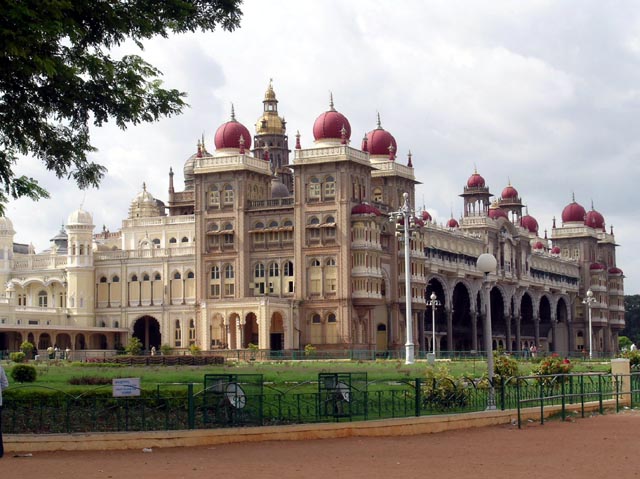
Following the States Reorganisation Act of 1956, Kannada-speaking regions from the neighboring provinces of Bombay, Madras, Coorg, and Hyderabad were integrated with Mysore State. In 1973, under the leadership of Chief Minister D. Devaraj Urs, the state was formally renamed Karnataka. Today, Mysore remains the cultural heart of Karnataka, globally renowned for its magnificent Mysore Palace, its exquisite sandalwood and silk industries, and the grandeur of its annual ten-day Dasara festival.
References and Historical Citations
- For comprehensive political and social histories, consult the Encyclopaedia Britannica's Kingdom of Mysore Section.
- Detailed gazetteer reports are available via the Imperial Gazetteer of India (Digital South Asia Library).
- For the administrative evolution of modern Karnataka, refer to the Official Portal of the Government of Karnataka.
Genealogy
- Maharaja VIJAYARAJA, 1st Maharaja of Mysore 1399/1423
- Maharaja CHAMARAJA II, 2nd Maharaja of Mysore 1423/1459
- Maharaja TIMMARAJA I, 3rd Maharaja of Mysore 1459/1478
- Maharaja CHAMARAJA III, 4th Maharaja of Mysore 1478/1513
- Maharaja CHAMARAJA IV, 5th Maharaja of Mysore 1513/1553
- Maharaja TIMMARAJA II, 6th Maharaja of Mysore 1553/1572
- Maharaja CHAMARAJA V, 7th Maharaja of Mysore 1572/1576
- Maharaja BETTADA DEVARAJA, 8th Maharaja of Mysore 1576/1577
- Maharaja RAJA WADEYAR, 9th Maharaja of Mysore 1577/1617, died .
- Maharaja CHAMARAJA VI, 10th Maharaja of Mysore 1617/1637
- Maharaja IMMADIRAJA, 11th Maharaja of Mysore 1637/1638
- Maharaja NARASSARAJA, 12th Maharaja of Mysore 1638/1659
- Maharaja KEMPADEVARAJA, 13th Maharaja of Mysore 1659/1671
- Maharaja CHIKKA DEVARAJA, 14th Maharaja of Mysore 1671/1705 or 1673/1704, born , died .
- Maharaja MUKARASURAJA, 15th Maharaja of Mysore 1705/1714
- Maharaja KRISHNARAJA I, 16th Maharaja of Mysore 1714/1731
- Maharaja CHAMARAJA VII, 17th Maharaja of Mysore 1731/1734, died .
- Maharaja KRISHNARAJA II, 18th Maharaja of Mysore 1734/1766, born , died .
- Maharaja NANJARAJA, 19th Maharaja of Mysore 1766/1771, born , died .
- Maharaja CHAMARAJA VIII, 20th Maharaja of Mysore 1771/1776, born , died .
- Maharaja CHAMARAJA IX, 21st Maharaja of Mysore 1776/1796, born , married Maharani Lakshmi Ammanni Urs, daughter of Gopal Raj Urs, and had issue. He died . HAIDER ALI KHAN 1762/1782 (Usurper), TIPU SULTAN Shah Bahadur 1782/1799 (Usurper)
- Maharaja KRISHNARAJA III [Mummudi Krishna Raja Wadiyar], 22nd Maharaja of Mysore 1799/1868, born , married 1stly Maharani (name unknown), married 2ndly, Maharani Devajammani Sita Vilasa Anaro, died , and had issue. He died .
- Maharajkumari Devajammanni Wodiyar (by 1st wife), married Chikka Krishna Urs of the Bettadakote branch of the Royal Family, and had issue.
- HH Sir Sri Maharajah Chamarajendra X Wadiyar (qv)
- Natural Son, married and had issue.
- Devaparthivaraj Wadiyar Bahadur, died after 1885.
- Maharajkumari Devajammanni Wodiyar (by 1st wife), married Chikka Krishna Urs of the Bettadakote branch of the Royal Family, and had issue.
- HH Sir Sri Maharajah CHAMARAJENDRA X WADIYAR, 23rd Maharaja of Mysore 1868/1894, born , G.C.S.I., he was granted full ruling powers in 1881, he instituted the Representative Assembly of Mysore state also in 1881, founded the Kannada Bashojjivini School, he encouraged the founding of Agricultural Banks to help finance farmers and initiated Life Insurance for government employees, he was an entusiastic patron of arts and music, as well as a musician himself; married 1878, HH Maharani Kempananjammanni Vani Vilasa Sannidhana, died , daughter of Sirdar Narase Urs of Kalale, and his wife, Kempananjammanni Avaru, and had issue, two sons and three daughters. He died of diphtheria in Calcutta.
- Col. HH Maharajah Sir Shri Krishnaraja IV Wadiyar Bahadur (qv)
- HH Yuvaraja Sir Sri Kantirava Narasinharaja Wadiyar, born , educated at Mayo College, Ajmer; a member of the Council of Ministers, he was granted the style of His Highness in 1917, K.C.I.E. [cr.1911], G.C.I.E. [cr.1915], married 1910, HH Yuvrani Kempu Cheluvammanniyavaru Urs, and had issue, one son and three daughters. He died .
- Yuvarajkumari Jaya Chamunda Ammani Avaru [HH the Maharani of Bharatpur], married HH Shri Maharaja Vrijendra Singh Sahib of Bharatpur, and had issue. She died .
- HH Maharaja Sir Shri Jaya Chamaraja Wadiyar Bahadur (qv)
- Yuvarajkumari Sujaya Kantha Ammani [Thakurani Sujaya Devi of Sanand], married the Thakur Saheb of Sanand.
- Yuvarajkumari Vijaya Lakshmi Ammani [Thakurani Vijaya Devi of Kotda-Sangani], married about 1942, Thakur Saheb Pradyumna Singh of Kotda-Sangani, and had issue.
- Maharajkumari Jayalakshmi Ammani Wadiyar, married 15th February 1897, Sirdar Sir M. Kanth Raj Urs, Dewan of Mysore.
- Maharajkumari Krishnajammani Wadiyar, married 20th April 1896, Col. J. Desaraj Urs, Commander of the Mysore Lancers, and had issue, one son and three daughters. She died o f tuberculosis and the Royal Family established the Princess Krishnajammani TB Sanitorium at Mysore in her memory.
- Rajkumar C. Desaraj Urs, married and had issue, three children.
- Rajkumar Prithviraj Urs, married Shivamala Urs, and had issue, one son and four daughters.
- Yogendra Prithviraj Urs, married to Sreya Urs and has issues, 2 sons.
- Simhendra Yogendra Urs, born O ctober 1999.
- Amartya Desaraj Yogendra Urs, born .
- Mrinalini Devi Urs
- Aarti Devi Urs
- Mayurakshi Devi Urs
- Deepika Devi Urs
- Yogendra Prithviraj Urs, married to Sreya Urs and has issues, 2 sons.
- Major Desaraj Urs
- Geeta Devi Urs
- Rajkumar Prithviraj Urs, married Shivamala Urs, and had issue, one son and four daughters.
- Rajkumar C. Desaraj Urs, married and had issue, three children.
- Maharajkumari Cheluvajammani Wadiyar, married 1900, Sirdar M. Lakshmi Kanth Raj Urs.
HH Maharani Kempananjammanni Vani Vilasa Sannidhana 1894/1902 (Regent)
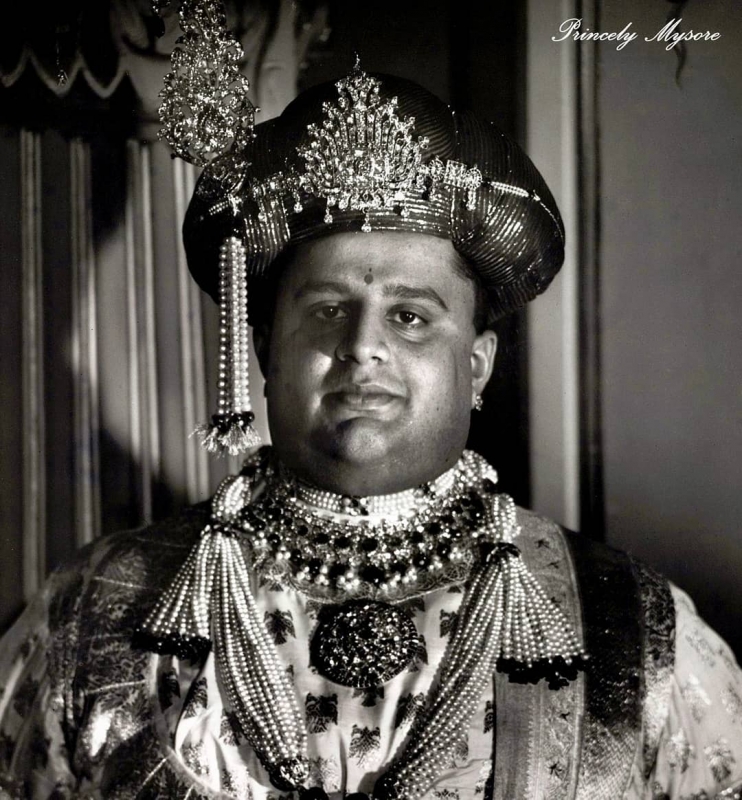
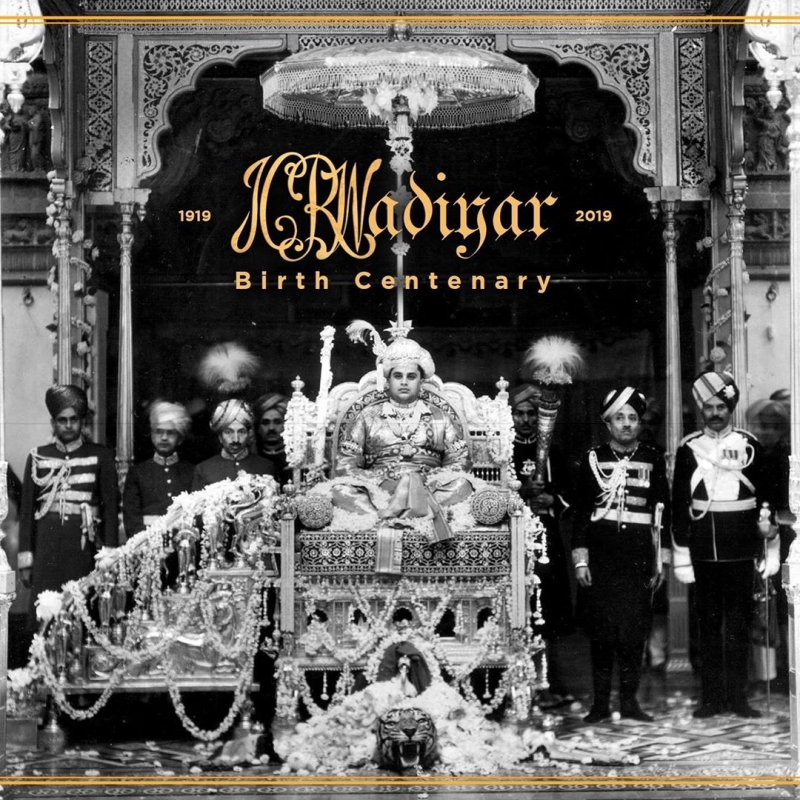
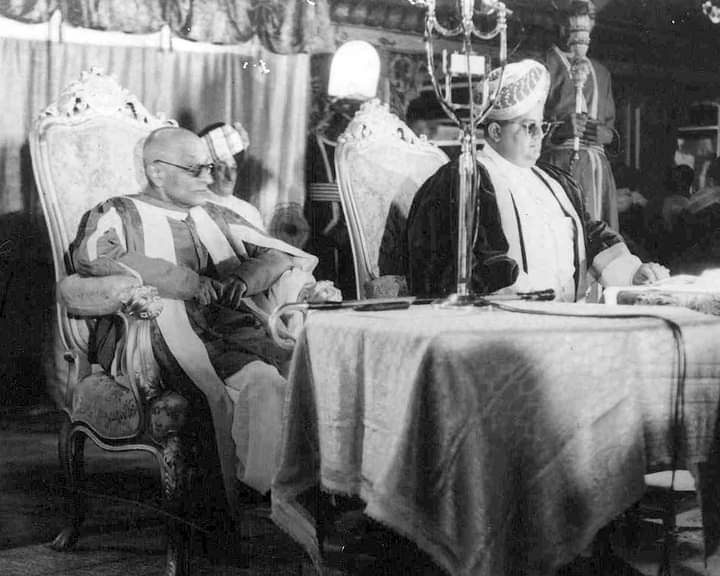
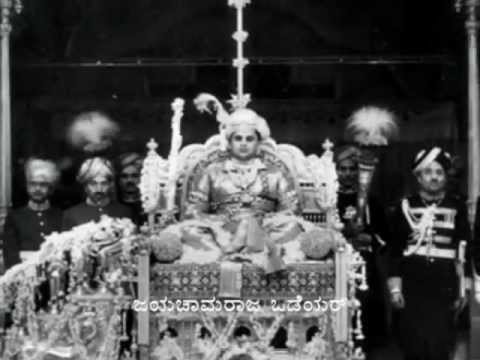
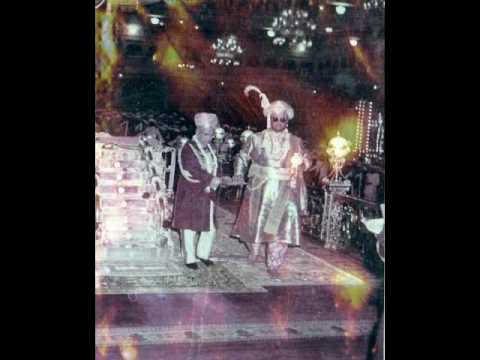
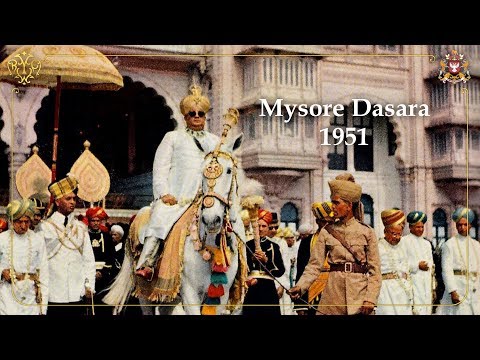
- HH Maharaja Shri Sir JAYA CHAMARAJA WADIYAR Bahadur, 25th Maharaja of Mysore 1940/1974, G.C.S.I. [cr.1945], G.C.B. [cr.1946], born , a philosopher, musicologist, political thinker and philanthropist, educated at the Maharaja's College, Mysore, graduating in 1938, Rajpramukh of Mysore State 1950/1956, first Governor of the unified State of Mysore 1956/1964 and later was transferred as the Governor of the State of Madras (Tamil Nadu) 1964/1967, a Licentiate of the Guild Hall of Music, London and honorary Fellow of Trinity College of Music, London in 1945, he was elected as the first president of the Philharmonia Concert Society, London in 1948, a fellow and president of Sangeet Natak Academy, New Delhi, 1966; author of a number of literary works, including The Quest for Peace: an Indian Approach, 1959; Dattatreya: The Way & The Goal, 1957; The Gita and Indian Culture,1963; Religion And Man, 1965; Avadhuta: Reason & Reverence,1958; An Aspect Of Indian Aesthetics, 1956; Puranas As The Vehicles Of India's Philosophy Of History, 1963; he was awarded a Doctor of Literature from the University of Queensland, Australia and from the Annamalai University, Tamil Nadu, and a Doctor of Law from the Benaras Hindu University, the first Chairman of the Indian Wild Life Board, founder-president of the Vishwa Hindu Parishad, he married 1stly, 15th May 1938 (sep'd.), HH Maharani Sathya Prema Kumari of Charkhari, died , married 2ndly, 30th April 1944, HH Maharani Tripura Sundarammani Yavaru, died , and had issue. He died .
- Maharajkumari Gayatri Devi Yavaru, born , married Sirdar Rama Chandra Raj Urs, died , adopted son of Rajkumari Leelavati and Sirdar Basava Raj Urs, and had issue, one son and three daughters. She died .
- Tripurasundari Devi, born , educated at Mysore University, married Swarup Anand Gopalaraja Urs of the Bettada Kote branch of the Mysore Royal Family, born , and has issue.
- Yaduveer Gopalaraj Urs, born .
- Jayatmika Lakshmi, born .
- Rajkumari Deepa Malini Devi, married to Kumar Raja Shri Jaideep Bhale Rao of Pedapavani in Andhra Pradesh, son of Raja Raghu Bhale Rao and Rani Rajeshwari Devi of Pedapavani and has issues, one son and a daughter.
- Sri Ranajai Dharma Bhupal Bhale Rao, born .
- Bhargavi Devi, born .
- Rajkumarani Keerti Devi, married Rajkumar Shailendra Singh of Ajaigarh, and has issue, one son.
- Sri Varunendra Vikram Singh, born .
- Chaduranga Kanth Raj Urs, married Priyanka from the family of Princess Krishnajammanni.
- Devrat Urs, born .
- Jailakshmi Devi, born .
- Tripurasundari Devi, born , educated at Mysore University, married Swarup Anand Gopalaraja Urs of the Bettada Kote branch of the Mysore Royal Family, born , and has issue.
- Maharajkumari Meenakshi Devi Yavaru, born , former Member of the Social Welfare Board of Karnataka, owner of a riding school in Bangalore Palace grounds called Princess Academy of Equitation, married M. R. Lakshmi Kanth Raje Urs, a Lawyer, and has issue.
- Varchuswee SS Raje Urs, born in Bangalore, B.A. and LL.B. and an Advocate, Manager of Two Horse Safaris and the Princess Academy of Equitation, Matadipathi of Malvali, Honnakayanhalli, Kapadi and BGPura.
- HH Maharaja Shri Kanta Datta Narasinharaja Wadiyar Bahadur (qv)
- Maharajkumari Kamakshi Devi Yavaru, born , married Kunwar Atmanaya Dev Singh [Kumar Shri Atmanayadevsinhji Surendrasinhji] of Wadhwan, born , and has issue, twin daughters.
- Maharajkumari Indirakshi Devi Yavaru, married Raja Chandra Urs, and has issue.
- Ms. Samyukta Lakshmi, graduate in commerce and studying M.B.A.
- Aditya Gurudev Urs, graduate in commerce as well as in Master in Business systems from Monash University, Melbourne, Australia.
- Maharajkumari Vishalakshi Devi Yavaru, born , married Kunwar Gajendra Singh of Auwa, and has issue.
- Maharajkumari Gayatri Devi Yavaru, born , married Sirdar Rama Chandra Raj Urs, died , adopted son of Rajkumari Leelavati and Sirdar Basava Raj Urs, and had issue, one son and three daughters. She died .
- HH Maharaja Shri Kanta Datta NARASINHARAJA WADIYAR Bahadur, 26th Maharaja of Mysore from 24th September 1974 to 10th December 2013. (J1, The Palace, Mysore, Mysore City-570001, Karnataka), born in Mysore, died , M.A. (Pol. Sc.), LL.B., educated at Maharaja College and Sharda Vilas Law College, Mysore; elected to the 8th, 9th, 11th and 13th Lok Sabha. Member of the following committes.. Committee on Private Members' Bills and Resolutions, Consultative Committee, Ministry of Sports and Youth Affairs, Consultative Committee, Ministry of Tourism, Consultative Committee, Ministry of Civil Aviation 1984/1989, Committee on Private Members' Bills and Resolutions 1989/1991, Consultative Committee, Ministries of Commerce and Tourism 1990/1991, Committee on Transport & Tourism 1999/2000. Chairman of the Sri Jayachamarajendra Art Gallery; the HH Mahevani Lakshammamiavam Educational Trust; and the HH Yuvarani Kempuchelo-Vajammaummani Educational Trust; President, Gunamtra Maternity and Child Welfare Centre; Patron, Sri Jayachamarajendra Educational Trust; also worked as Lecturer in Political Science at Post Graduation level in the Department of Political Science, Mysore University. Special Interests are..reading books on philosophy, theology, political science and economics, favourite pastimes include reading, collection of objets d'art and watches. Member of the following clubs: Mysore Sports Club; Bangalore Golf Club; Mysore Race Club; Bangalore Turf Club; Delhi Race Club; Karnataka State Cricket Association and Club House. Chairman and Managing Director Wadiyar Investments (P) Ltd.; Sri Venkateswara Real Estate Enterprises (P) Ltd.; and Mysore International Travel Agency (P) Ltd.; Patron and Managing Partner, Sri Manjunath Packing and Works Wadiyar Regency Rooms Theatre Complex; and Gayatri Enterprises and Saraswati Enterprises, married 2nd February 1976, HH Soubhagyavati Maharani Sri Satya Pramoda Kumari Ju Devija Ammani Avaru of the Urs family. He had no issues. [Wikipedia]
- HH Maharaja Yaduveer Krishnadatta Chamaraja Wodeyar, 27th and present Maharaja of Mysore (see above)
Notable Figures
Yaduraya Wodeyar (1399–1423)
Yaduraya Wodeyar was the historical founder of the Wadiyar dynasty of Mysore. According to traditional accounts, Yaduraya arrived in Mysore from Dwarka with his brother Krishnaraya. He successfully defeated the local usurper, Maranayaka, who had seized control of the region from the local chieftain of Hadinadu. By marrying the local princess, Yaduraya established the foundations of the Wadiyar family's rule under the suzerainty of the Vijayanagara Empire.
His reign marked the transition of Mysore from a small, vulnerable fiefdom into a structured, hereditary principality. He established regional dominance by patronizing local religious institutions, particularly at Melukote and Chamundi Hill, anchoring the dynasty’s legitimacy in divine right. For more details, see the Wikipedia article on Yaduraya Wodeyar.
Raja Wodeyar I (1578–1617)
Raja Wodeyar I was one of the most significant early rulers of the dynasty, transitioning Mysore from a vassal state of the declining Vijayanagara Empire into an independent, powerful kingdom. In 1610, he conquered the strategic fortress of Srirangapatna from Tirumala II, the failing Vijayanagara viceroy, and subsequently shifted his capital there. This conquest marked the formal political independence of Mysore.
He is also credited with initiating the grand celebration of the Mysore Dasara festival in 1610, a tradition that continues to be the cultural cornerstone of Karnataka today. He patronized both Sri Vaishnavism and local temples, consolidating political authority through cultural and religious patronage. More information can be found on the Wikipedia page of Raja Wodeyar I.
Ranadhira Kanthirava Narasaraja Wodeyar I (1638–1659)
Kanthirava Narasaraja I, popularly known as "Ranadhira" (the brave warrior), was a legendary ruler celebrated for his immense physical strength and military genius. He successfully defended his kingdom against the aggressive expansionist campaigns of the Adil Shahi Sultanate of Bijapur, securing the northern borders of Mysore. His martial exploits made him a popular figure in Kannada folklore.
In addition to his military achievements, Kanthirava Narasaraja I was the first ruler of Mysore to establish a sovereign mint, issuing the famous gold coins known as the Kanthirava Phanams. He heavily fortified Srirangapatna and built several temples, showcasing his dual commitment to state defense and religious patronage. Further reading is available on the Wikipedia article on Kanthirava Narasaraja I.
Chikka Devaraja Wodeyar (1673–1704)
Chikka Devaraja Wodeyar was a brilliant strategist and administrator who dramatically expanded the borders of Mysore. He modernized the administrative machinery of the state by dividing the government into eighteen distinct departments, known as the Athara Kacheri. In 1687, he successfully negotiated the purchase of Bangalore from the Maratha ruler Ekoji I for three lakh rupees, cementing Mysore’s economic and political dominance in the region.
He maintained a highly pragmatic foreign policy, securing diplomatic recognition and the title of Raja Jagadeva from the Mughal Emperor Aurangzeb. An accomplished scholar himself, his court was a vibrant center for Kannada and Sanskrit literature, fostering a golden age of regional arts. Learn more from the Wikipedia entry on Chikka Devaraja.
Maharani Lakshmi Ammanni Devi (Regent: 1799–1810)
Maharani Lakshmi Ammanni Devi was one of the most resilient and politically astute figures in the history of Mysore. Following the usurpation of power by the military commanders Hyder Ali and Tipu Sultan, she lived under virtual house arrest but worked tirelessly behind the scenes to restore the Wadiyar dynasty. She initiated secret diplomatic negotiations with the British East India Company, which culminated in the signing of a treaty of alliance.
Following the death of Tipu Sultan in the Fourth Anglo-Mysore War in 1799, her efforts bore fruit. The British restored the Wadiyars to the throne, and she served as the Regent for her young adoptive grandson, Krishnaraja Wodeyar III, guiding the state through a critical transition. For a comprehensive biography, visit the Wikipedia article on Lakshmi Ammanni Devi.
Krishnaraja Wodeyar III (1799–1868)
Krishnaraja Wodeyar III, also known as Mummadi Krishnaraja Wodeyar, was restored to the throne of his ancestors at the age of five following the fall of Srirangapatna. While his early reign was overseen by the Dewan Purnaiya and later marred by internal rebellions that led the British to assume direct administrative control of Mysore in 1831, he spent the latter half of his life patronizing the arts and fighting a legal battle for the restoration of his dynasty's ruling rights.
He was a versatile scholar, musician, and an exceptional patron of the fine arts, Carnatic music, and literature, earning the moniker Abhinava Bhoja. His efforts laid the groundwork for the "Rendition of 1881," whereby the British returned governing power to his successor. His life is detailed on the Wikipedia page of Krishnaraja Wodeyar III.
Chamarajendra Wodeyar X (1868–1894)
Chamarajendra Wodeyar X assumed full ruling powers in 1881 during the historic "Rendition," when the British handed back the direct administration of the Mysore state to the royal family. His reign inaugurated an era of progressive governance and rapid modernization. In 1881, he established the Mysore Representative Assembly, the first democratic legislative body of its kind in princely India, giving citizens a voice in administration.
He was highly instrumental in promoting industrialization, modern education, and infrastructural development, including railway expansions. He is also remembered for his generous sponsorship of Swami Vivekananda’s historic journey to the Parliament of Religions in Chicago in 1893. Read more on the Wikipedia article on Chamarajendra Wodeyar X.
Maharani Kempananjammani Vani Vilasa Sannidhana (Regent: 1894–1902)
Maharani Kempananjammani, popularly known as Vani Vilasa Sannidhana, served as Regent of Mysore following the sudden demise of her husband, Maharaja Chamarajendra Wodeyar X. Her regency is widely hailed as exceptionally progressive and efficient. She championed women's education, opening several schools for girls, and oversaw major public health initiatives to combat plague and cholera epidemics.
Under her administration, major developmental works were initiated, including the construction of the Shivanasamudra Hydroelectric Project—Asia's first major hydroelectric station—and the foundation of the modern Bangalore water supply scheme. She also initiated the construction of the iconic new Amba Vilas Palace (Mysore Palace). For details, see the Wikipedia article on Vani Vilasa Sannidhana.
Krishnaraja Wodeyar IV (1902–1940)
Krishnaraja Wodeyar IV, often called the "Rajarshi" (saintly king) by Mahatma Gandhi, ruled Mysore during what is universally acknowledged as its "Golden Age." Working alongside visionary Dewans like Sir M. Visvesvaraya and Sir Mirza Ismail, he transformed Mysore into one of the most advanced, industrialized, and socially progressive states in British India. Under his reign, Mysore became the first Indian princely state to generate hydroelectric power and to provide universal primary education.
He co-founded the Indian Institute of Science (IISc) in Bangalore, established the University of Mysore, and constructed the monumental Krishnarajasagara Dam. His reign was characterized by communal harmony, rapid industrialization, and a deep commitment to social welfare, making Mysore a model state. His legacy is recorded on the Wikipedia page of Krishnaraja Wodeyar IV.
Jayachamarajendra Wodeyar (1940–1950)
Jayachamarajendra Wodeyar was the 25th and final ruling Maharaja of the Kingdom of Mysore. A highly educated and forward-thinking ruler, he readily signed the Instrument of Accession, integrating his wealthy state into the newly independent Dominion of India in August 1947. He subsequently served as the first Rajpramukh (Governor) of the unified Mysore State and later as the Governor of Madras State.
Beyond his political role, he was a distinguished philosopher, Sanskrit scholar, and an acclaimed composer of Carnatic music, having composed ninety-four kritis under the pen name Sri Vidya. He was also a passionate advocate of wildlife conservation and served as the first president of the Board for Wildlife in India. His life and contributions are detailed on the Wikipedia page of Jayachamarajendra Wodeyar.