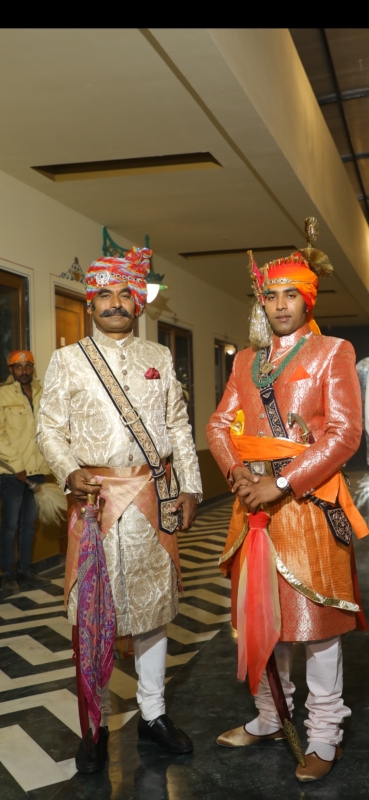
Present Head
- Kunwar Devendra Pratap Singh, married Kuwrani Neeru Nathawat of Doongri in Jaipur, and has issue.
- Bhanwar Kartikay Singh
- Kumari Vijayshree Girnar, married Kunwar Pradeep Singh Jethwa of Gosa in Porbander, Gujarat, and has issue, two sons and one daughter.
- Kumari Nipurna Jethwa
- Kumar Amar Jethwa
- Kumar Ayush Jethwa
- Kumari Rajshree Girnar, married Kunwar Harpal Singh Gohil of Lakhanka in Bhavnagar, Gujarat, and has issue, one son.
- Bhanwar Yashraj Singh Gohil
History
Origin and Ancestry of the Dodia Clan
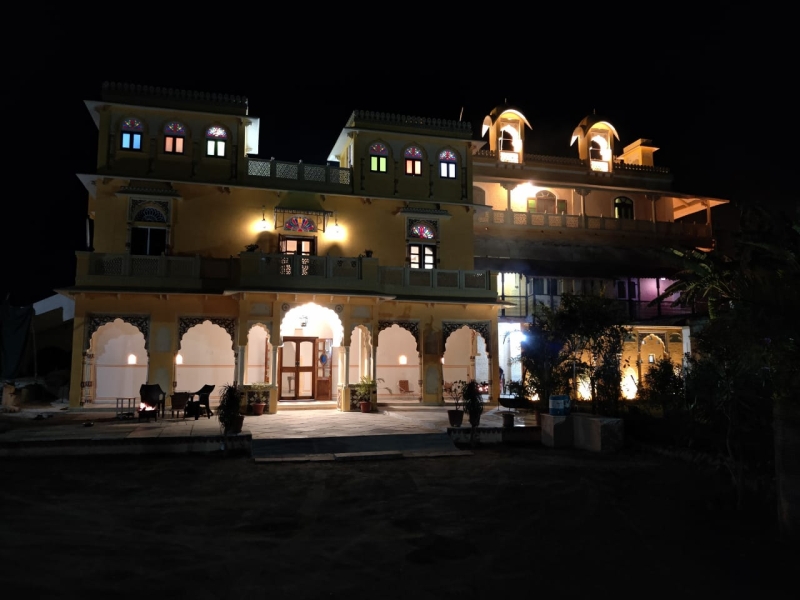
The Mandawal Thikana represents the senior-most lineage (Tikai) of the Chandravanshi Dodia Rajputs, one of the traditional 36 royal clans of Rajputs. The early history of the Dodia clan is rooted in the northwestern frontiers of the Indian subcontinent. Historical records and bardic chronicles state that during the 12th and 13th centuries, the Dodias were settled in and around Multan in Sindh (modern-day Pakistan), where they constructed a formidable stronghold named Rohtashgarh.
Faced with the turbulent geopolitical shifts and foreign invasions in the region during the 14th century, the Dodia Rajputs migrated southward into Gujarat. Under the leadership of Raja Phul Singh Dodia, they established a sovereign principality around the sacred Girnar hills in Junagadh. The Gujarat branch of the clan flourished for generations under successive rulers, including Rawat Soorsinghji, Rawat Chandrabhansinghji, Rawat Krishnaji, Rawat Chalotji, and Rawat Arjundasji.
The Mewar Connection and Migration to Malwa
In the late 15th and early 16th centuries, the Dodia clan diversified into two highly influential branches. One of the brothers of the ruling Rawat in Gujarat migrated to Chittorgarh, accompanying the Rajmata of Mewar as an honorary royal escort. The Dodias quickly distinguished themselves in the service of the Mewar State, proving their exceptional military valor in major conflicts, including the historic Battle of Haldighati. In recognition of their loyalty and bravery, they were granted the prestigious first-class jagir of Lava, which was later renamed Sardargarh.
Simultaneously, another prominent branch of the clan sought fortunes eastward. Rawat Singhraoji migrated from Gujarat into the fertile plains of Malwa, establishing his domain over the Sewana Jagir. This Malwa branch maintained an independent warrior heritage, passing down the leadership through Rawat Kalusinghji, Rawat Dulehsinghji, Rawat Pachoji, Rawat Sawganji, Rawat Ramsinghji, Rawat Akhaybhanji, and Rawat Puraji.
Foundation of Mandawal Thikana
The modern territorial layout of the Dodia clan in Malwa took shape during the reign of Rawat Puraji. The expansion of the family led to the creation of several prominent estates for his sons:
- Rawat Jagatsinghji, the eldest son, established his principal seat at Mandawal, asserting his position as the senior representative (Tikai) of the clan in Malwa.
- Rawat Chatrasalsinghji established the Naveli Jagir.
- Rawat Sawalsinghji founded the Piploda State, which eventually gained recognition as an independent princely state under the Central India Agency of the British Raj.
- Rawat Pharasramji established the Chandrawta Jagir.
Rawat Jagatsinghji was succeeded at Mandawal by his eldest son, Rawat Amarsinghji. His younger son, Pratapsinghji, carved out the Sunkhera Jagir, which later operated as a guaranteed feudal estate under the suzerainty of the Scindia rulers of Gwalior.
Maratha and British Periods
During the 18th and 19th centuries, the Malwa region became a battleground for Maratha dominance, involving the Scindias of Gwalior, the Holkars of Indore, and local Muslim principalities such as Jaora. Due to its strategic location, Mandawal had to navigate complex diplomatic relations. Under British mediation and the subsequent settlement of Central India, Mandawal's territorial rights and local autonomy were recognized, positioning it as a respected Thikana with deep familial and political ties across the region.
Post-Independence and Modern Era
Following India's independence in 1947, the rulers of Mandawal acceded to the Dominion of India. The estate was integrated into the newly formed Union of Madhya Bharat, which was later merged into the state of Madhya Pradesh in 1956. Today, the family of Mandawal maintains its cultural heritage and continues to hold the highly respected status of the Tikai or senior representative of the entire Chandravanshi Dodia Rajput clan.
Genealogy
- Rawat GAJSINGHJI, Rawat of Mandawal
- Rawat AJABSINGHJI, Rawat of Mandawal
- Rawat KIRTISINGHJI, Rawat of Mandawal
- Rawat GUMANSINGHJI, Rawat of Mandawal
- Rawat NATHUSINGHJI, Rawat of Mandawal
- Rawat BHIMSINGHJI, Rawat of Mandawal
- Rawat SHIVSINGHJI, Rawat of Mandawal
- Rawat SHIVSINGHJI, Rawat of Mandawal
- Rawat FATEHSINGHJI, Rawat of Mandawal
- Rawat KESRISINGHJI, Rawat of Mandawal 1861/-, born , married and had issue.
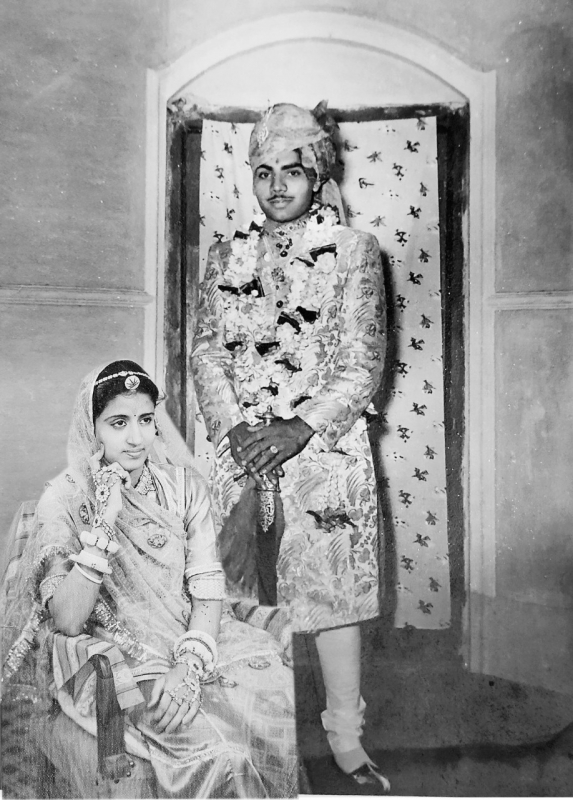
- Rawat RATAN SINGHJI, Rawat of Mandawal 1916/-, born , succeeded 2nd November 1916; married a daughter of the Thakur Saheb of Daulatpur Jagir in Bhopal, and had issue. He died .
- Kunwar Daulat Singh educated at Daly College Indore, adopted to Sunkhera and succeeded there as Rawat Daulat Singhji of Sunkhera, he married 1stly, a Princess of Khijadia, a Thikana in Dhrol, married 2ndly, Rani Pramila Devi of Khijadia in Dhrol, and had issue.
- Kunwar Ghanshyam Singhji of Sunkheda educated at Daly College Indore and Scindia School Gawalior. (by 1st wife)
- Kunwar Ram Pratap Singh of Sunkhera (by Rani Pramila Devi), he was adopted by his grandfather, Rawat Ratan Singhji of Mandawal, and succeded there as Rawat Rampratap Singh Dodia (qv)
- Kunwar Daulat Singh educated at Daly College Indore, adopted to Sunkhera and succeeded there as Rawat Daulat Singhji of Sunkhera, he married 1stly, a Princess of Khijadia, a Thikana in Dhrol, married 2ndly, Rani Pramila Devi of Khijadia in Dhrol, and had issue.
- Rawat RAMPRATAP SINGH DODIA, Rawat of Mandawal (see above)