Present Head
History
Origin and Foundation
The Jagir of Kota Khurd (literally meaning "Lesser" or "Smaller" Kota, to distinguish it from the larger sovereign state of Kota) was established as a feudal fiefdom within the princely state of Bundi. The ruling line of this estate belongs to the Hada (Hara) branch of the Chauhan Rajputs, who established their hegemony over the Hadoti region of Rajasthan in the 14th century. As custom dictated within the Rajput clans, younger sons of the ruling Maharao were granted appanages (locally known as patta or jivika) for their sustenance and to maintain their noble status, which led to the creation of the Kota Khurd estate.
Feudal Relations and the British Era
Throughout the medieval and early modern periods, the Thakurs (lords) of Kota Khurd maintained a close relationship with the Bundi Darbar, actively participating in the state's military campaigns and courtly politics. During the turbulent 18th century, when Rajputana faced frequent Maratha raids, the Hada chieftains of vassal states like Kota Khurd stood in defense of the Bundi borders.
With the signing of the treaty of alliance between the British East India Company and Maharao Raja Bishen Singh of Bundi in 1818, the region entered a period of relative peace. The administrative and revenue rights of the Jagirdars of Kota Khurd were secured under the suzerainty of the Bundi Darbar, subject to the payment of feudal tributes and the performance of military or courtly duties. Detailed historical records of the Hada clan's military exploits and feudal structure can be found in James Tod's classic work, Annals and Antiquities of Rajasthan.
Post-Independence and Modern Era
Following India's independence in 1947, the princely state of Bundi, along with its various tributary thikanas and jagirs, integrated into the Union of India. The United State of Rajasthan was formed in stages, and Bundi formally merged into it in April 1948.
With the passage of the Rajasthan Land Reforms and Resumption of Jagirs Act in 1952, the traditional land-revenue powers and feudal privileges of the Kota Khurd estate were formally abolished. The descendants of the royal kinsmen of Kota Khurd transitioned into modern professions while continuing to preserve their historical lineage, weapons, and ancestral traditions. For further context on the geopolitical history of the region, readers may refer to the Encyclopaedia Britannica entry on Bundi.
Genealogy
- Jagirdar Bhaktavar Singh Hada
- Jagirdar Nand Singh Hada
- Jagirdar Bajrang Singh Hada (qv)
- Jagirdar Kalyan Singh, married to daughter of Jagirdar Madan Singh Jhala of Kanwara Jagir, Jhalawar.
- Jagirdar Bhadur Singh Ji
- Baisa Supriya Kanwar
- Baisa Priya Kanwar
- Kunwar Jai Singh
- Jagirdar Rajendra Singh Ji
- Baisa Priyanka Hada
- Kunwar Vikramaditya Singh
- Baisa Ravina Hada
- Jagirdar Mahendra Singh Ji
- Kunwar Shakti Raj Singh
- Baisa Muskan Hada
- Jagirdar Bhadur Singh Ji
- Jagirdar Soorajbhan Singh Hada
- Kunwar Bhawani Singh
- Kunwar Laxman Singh
- Kunwar Rajendra Singh
- Kunwar Hariraj Singh
- Kunwar Budhraj Singh
- Jagirdar Bajrang Singh Hada
- Jagirdar Bhanwar Singh Ji (qv)
- Jagirdar Arjun Singh Ji
- Jagirdar Govind Singh Ji
- Jagirdar Mahendra Singh Ji
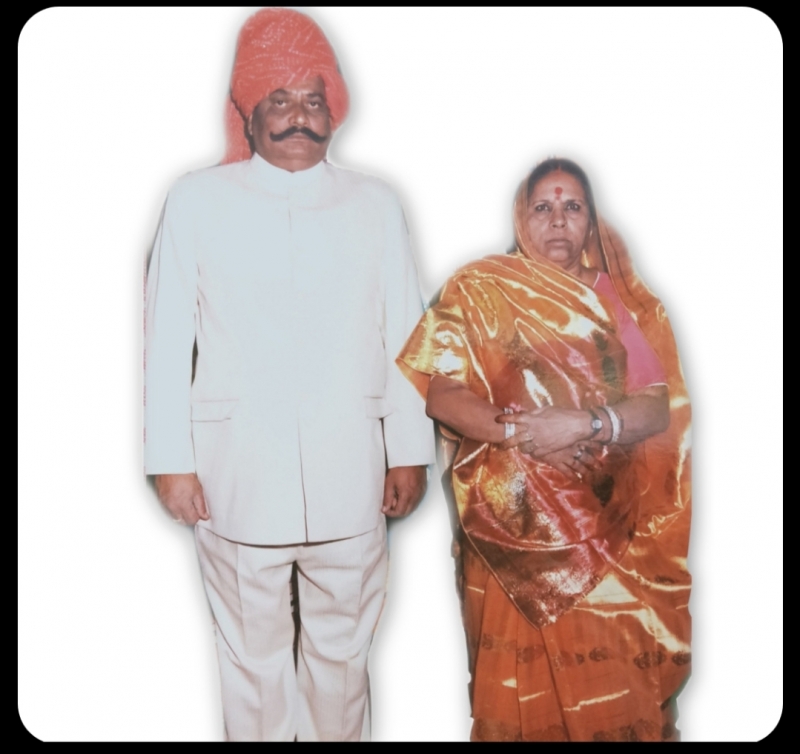
- Jagirdar Bhanwar Singh Ji, present head of Kota Khurd (see above).