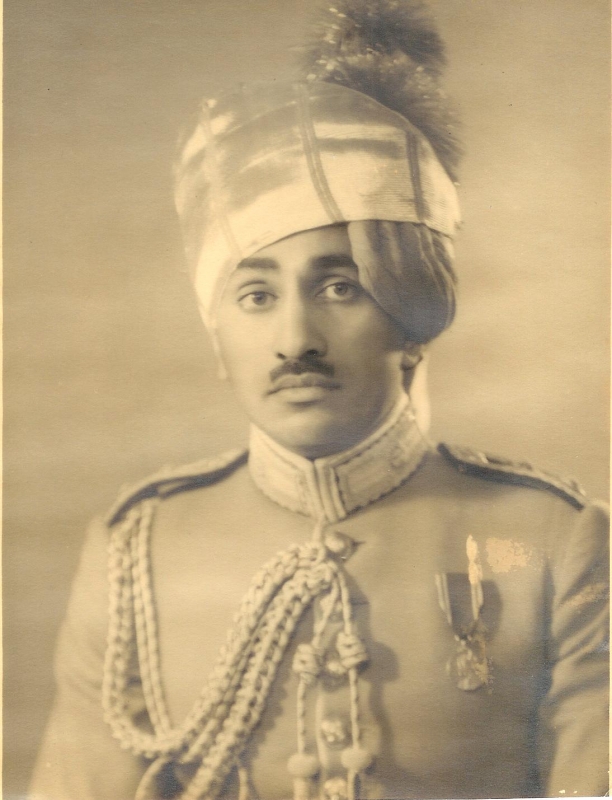
Present Head
- Thakur Laxman Singh, retired as The Municipal Commissioner, married and has issue.
- Kunwar Ajit Singh, ex. Director General Police, Jaipur.
- Kunwar Jagjeet Singh, Proprietor of hotels in Mount Abu.
- Thakur Man Singh, an agriculturalist, married and has issue, four daughters.
- Baiji Lal Kiran Kumari
- Baiji Lal Madhu Kumari
- Baiji Lal Shiv Kumari
- Baiji Lal Kailash Kumari
- Baiji Lal Ummed Kumari, married Thakur Prithvi Singh Kandhal of Thikana Karanpura and has issue.
- Kunwar Ravindra Singh, Software Engineer in the USA.
- Mitra Kumari, Software Engineer in the USA.
- Lt.-Col. Thakur Narpat Singh, retired from the Indian Army, married and has issue, a daughter and a son.
- Kunwar Shantanu Singh, Sr. Director of Systems Engineering at State Compensation Insurance Fund in the USA, married to Kunwrani Mandvi Kumari, daughter of Maharaj Shri Pratap Singh ji of Tejrasar and has issue, one daughter.
- Bhanwar Baisa Baiji Lal Shambhavi Kumari
- Prof. Shalini Shekhawat, (Phd in Sociology), Professor of Sociology.
- Kunwar Shantanu Singh, Sr. Director of Systems Engineering at State Compensation Insurance Fund in the USA, married to Kunwrani Mandvi Kumari, daughter of Maharaj Shri Pratap Singh ji of Tejrasar and has issue, one daughter.
- Thakur Ghanshyam Singh, married and has issue, a daughter and a son.
- Kunwar Dushyant Singh, works in the software industry in the USA.
- Baiji Lal Minal Singh, pursuing her higher education in the USA.
History
Introduction and Origin of Kasli
The historic estate of Kasli, situated in the present-day Sikar district of Rajasthan, holds a highly esteemed position in the historical tapestry of the Shekhawati region. Established as a prominent Thikana (feudal estate), Kasli served as the ancestral seat of the Kasliya Shekhawats, a distinguished branch of the Shekhawat Rajputs. The origin of this estate is deeply rooted in the expansion of the descendants of Rao Shekha, the 15th-century patriarch from whom the Shekhawat clan derives its name.
Following the territorial divisions among the descendants of Rao Shekha, his grandson Rao Suja of Amarsar apportioned his estates among his sons. His second son, Rao Gopalji, was granted the strategic jagir of Kasli along with its surrounding villages. The descendants of Rao Gopalji came to be known as the Gopalji-ka Shekhawats (or Kasliya Shekhawats), with Kasli serving as the primary seat of their power and influence.
The Golden Period and the Birth of Sikar
During the 17th century, Kasli was ruled by Rao Jaswant Singh, a direct descendant of Rao Gopalji. This period marked a monumental phase in regional history. Rao Jaswant Singh’s son, Rao Daulat Singh, sought to expand his ancestral boundaries. In 1687, Daulat Singh took control of a small settlement nearby known as Sikar.
Rao Daulat Singh fortified Sikar and established it as his new administrative headquarters, which eventually grew to become one of the wealthiest and most powerful semi-independent states under the suzerainty of Jaipur. Thus, the royal house of Sikar State directly branched out from the original seat of Kasli, highlighting Kasli's historical significance as the cradle of Sikar's royalty.
Mughal and Maratha Epochs
Throughout the late 17th and 18th centuries, the rulers of Kasli navigated the complex and volatile geopolitical landscape of northern India. Like most chieftains in the Shekhawati region, they maintained a tributary and military alliance with the Kachwaha rulers of Amber (later Jaipur), who held high mansabs under the Mughal Empire. Warriors from Kasli participated in various imperial campaigns led by the Jaipur State.
With the gradual decline of Mughal authority in the 18th century, Rajputana witnessed frequent incursions by the Maratha forces, particularly under the Scindias and Holkars. The rulers of Kasli, in alliance with Sikar and Jaipur, actively fortified their strongholds, defended their territories against Maratha tax collectors, and successfully preserved their internal administrative autonomy through a combination of military resistance and diplomatic treaties.
Administration, Culture, and Social Reforms
Kasli was governed under a traditional Rajput feudal system where the Thakur (lord) managed land revenue, judicial disputes, and local defense. The rulers of Kasli were benevolent patrons of local art, culture, and architecture. They commissioned several grand Havelis, temples, and stepwells (baoris), which were crucial for water conservation in the arid environment of Rajasthan.
In addition to architectural patronage, the Thakurs of Kasli actively supported local trade, making the estate a safe transit point for caravans traveling across the Thar Desert. They also encouraged social welfare programs, including grain distribution during droughts and the preservation of communal harmony among their subjects.
Post-Independence and Modern Era
Following India's independence in 1947, the princely state of Jaipur, along with its subordinate estates like Sikar and Kasli, acceded to the Dominion of India. Under the leadership of Sardar Vallabhbhai Patel, these territories were formally integrated into the United State of Greater Rajasthan in 1949.
With the passage of the Rajasthan Land Reforms and Resumption of Jagirs Act in 1952, the traditional jagirdari and feudal privileges of the Thakurs of Kasli came to an end. Today, Kasli is a historical village within the Sikar district of Rajasthan. The remnants of the historic Kasli Fort, ancestral cenotaphs (chhatris), and beautifully carved stepwells continue to stand as testaments to the enduring legacy of the Shekhawat Rajputs.
References and External Links
- Learn more about the administrative history on the official Sikar District Website.
- Explore the genealogy of the ruling clan on the Wikipedia Shekhawat Page.
- Read about the geographic and cultural history of the region on the Wikipedia Shekhawati Page.
Genealogy
- Rao TIRMAL, Rao of Kasli, granted the title of Rao and the parganas of Nagore and Kasli (84 villages) by Padshah Akbar as he had saved Akbars life in the battles of Sarnal, Khairabad and Pattan, instrumental in the crowning of Shahzada Salim as the next Padshah of Delhi after Akbar, as the whole plot was planned and made operational in his residence at Kasli, married 1stly, Rani Durga Kanwar, daughter of Thakur Veer Bhan Gaur, married 2ndly, Rani Amrit Kanwar, daughter of Thakur Man Singh Rathore, married 3rdly, Rani Som Kanwar, daughter of Thakur Kalyan Das Rathore, married 4thly, Rani Bal Kanwar, daughter of Thakur Ganeshdan Gaur, and had issue, as well as further issue.
- Rao Gangaram (qv)
- Kunwar Banichod of Nagwa
- Kunwar Udai Karan
- Kunwar Jas Karan
- Kunwar Aas Karan
- Maharani Naurang De, married at Khandela, Maharaja Sur Singh of Jodhpur. She became sati.
- Thakur Pooran Mal (illegitimate son), he was given the gaddi of Kasli by Shahzada Salim of Delhi, after the latter was offended by Rao Gangaram, married and had issue.
- Thakur Balram Singh
- Rao GANGARAM, Rao of Kasli, married and had issue, five sons. He died at Renwal.
- Rao Shyam Ram (qv)
- Kunwar Ratan Ram of Tadas.
- Kunwar Tulsi Ram of Juliyas.
- Kunwar Dalpat Ram of Rewasa.
- Kunwar Kalyan Ram of Palwas, Beejas, Khakholi and Tatinawa.
- Rao SHYAM RAM, Rao of Kasli, married three wives, and had issue.
- Rao Jaswant Singh (qv)
- Rao Jagat Singh (qv)
- Kunwar Sawant Singh of Anokh.
- Kunwar Kanak Singh of Anokh
- Kunwar Mukund Singh of Anokh
- Kunwar Karan Singh of Gonatu.
- Kunwar Achal Singh of Sewadh.
- Kunwar Amar Singh of Sewadh.
- Kunwar Bhao Singh of Sewadh.
- Rao JASWANT SINGH, Rao of Kasli, married twice, and had issue.
- Rao JAGAT SINGH, Rao of Kasli
- Rao DEEP SINGH, Rao of Kasli fl.1687-1721
- Rao SARDAR SINGH, Rao of Kasli fl.1721-1748
- Rao RAM SINGH, Rao of Kasli fl.1748-1754
- Rao HATHI SINGH, Rao of Kasli fl.1763-1795
- Rao POORAN MAL, Rao of Kasli, married and had issue.
- Rao Sangram Singh (qv)
- Thakur Baldev Singh
- Rao SANGRAM SINGH, Rao of Kasli fl.1795-1834
- Rao RAM SINGH, Rao of Kasli, married and had issue.
- Rao Prithvi Singh (qv)
- Thakur Ranjeet Singh, married and had issue.
- Thakur Mod Singh, married and had issue.
- Thakur Kushal Singh
- Thakur Ganpath Singh
- Col. Thakur Chandra Singh, served in the Indian Army, retired in 1983, and later served as the Secretary of State Soldiers Board for ten years, married and has issue, 2 sons.
- Col. Kunwar Vijay Singh, SM, Bar: serving in the Indian Army, recipient of several gallantry awards.
- Kunwar Dr. Ajay Singh, Ph.D. (Computer Science), currently (2006) doing research in the U.S.A.
- Thakur Sang Singh
- Thakur Mod Singh, married and had issue.
- Rao PRITHVI SINGH, Rao of Kasli
- Rao SHOOR SINGH, Rao of Kasli, married and had issue.
- Col. Rao Raj Singh (qv)
- Thakur Mohabbat Singh
- Col. Rao RAJ SINGH, Rao of Kasli (see above)