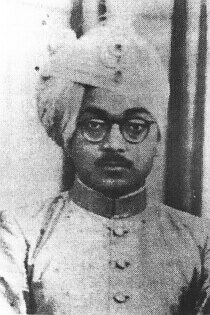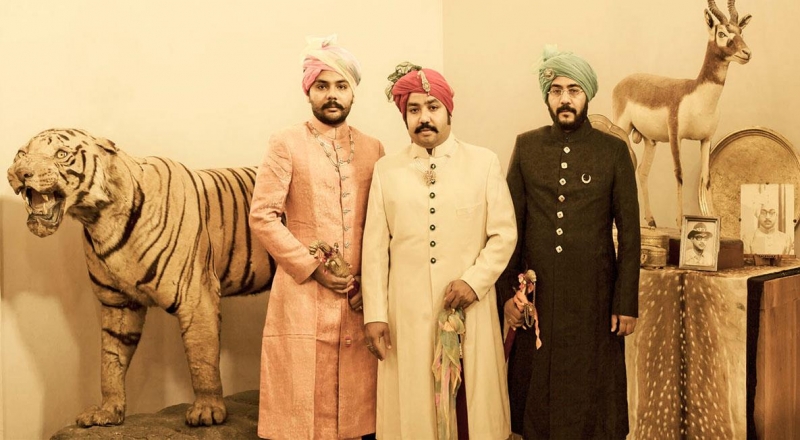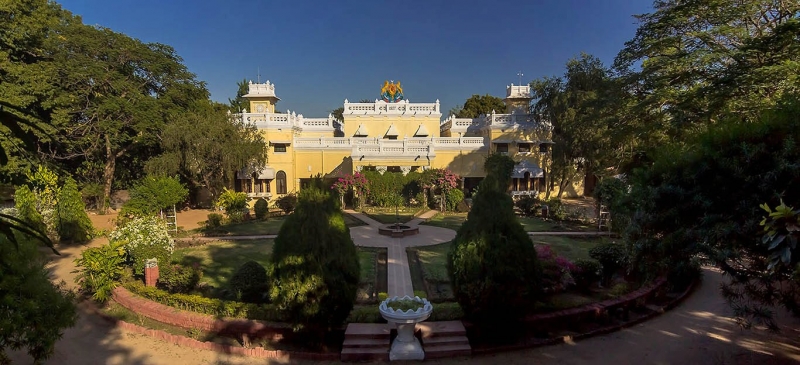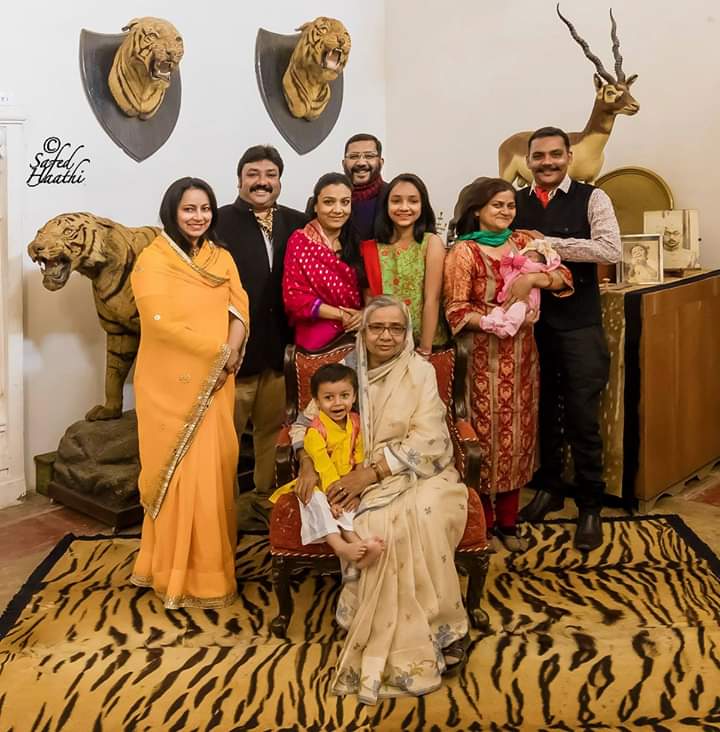
Present Head
History
Origin and Ancient Era
The historical roots of Kanker, a prominent princely state located in the southern region of modern-day Chhattisgarh, stretch deep into antiquity. According to local epigraphical records and traditional lore, the region was governed by Raja Satkarni of the celebrated Satavahana Dynasty around 106 AD. This era marked Kanker's integration into the wider geopolitical landscape of the Deccan. Following the decline of the Satavahanas, the region came under the sway of the Chalukyas of Vengi, who incorporated Kanker into their empire, ruling it efficiently until 788 AD. Over the next several centuries, a succession of local dynasties controlled the territory, culminating with the end of the Kandra dynasty’s hegemony in 1385 AD.
The Medieval Era and Foundation of the Rajput Dynasty
The modern lineage of the Kanker ruling house traces its origin to the late 14th century. In 1385 AD, Raja Veer Kanhar Dev, a prince belonging to the ruling Ganga dynasty of Jagannath Puri (Orissa), abdicated his throne. According to local tradition, Veer Kanhar Dev suffered from a skin affliction and sought spiritual solace in the dense forests of Central India. He performed severe penance and was miraculously cured by the waters of the Mahanadi River at Kanker.
Deeply impressed by his noble character and royal bearing, the local tribal population—primarily the Gonds and Halbas—raised Veer Kanhar Dev to the throne by a popular, democratic vote. This unique election laid the foundation of a resilient Rajput dynasty that would govern Kanker for over five centuries. Raja Veer Kanhar Dev ruled until 1404 AD, establishing administrative stability and integrating tribal customs with traditional Rajput governance.
Maratha Hegemony and the British Colonial Period
During the 18th century, as the Maratha Empire expanded its footprint across Central India, Kanker fell under the sphere of influence of the Bhonsle Rajas of Nagpur. Under the Marathas, the State of Kanker was held on the condition of furnishing a military contingent 500 strong whenever summoned by the Maratha Sena Sahib Subah. This arrangement, however, was fraught with geopolitical tensions.
In 1809, Vyankoji Bhonsle, the Maratha ruler of Nagpur, deprived the ruling Chief of Kanker, Raja Bhup Dev, of his state and exiled him. This period of dispossession lasted until the conclusion of the Third Anglo-Maratha War and the subsequent establishment of British paramountcy over Nagpur. In 1818, the British Resident at Nagpur, Sir Richard Jenkins, restored the chief to the gadi (throne) of Kanker on payment of an annual tribute of 500 Rupees. Recognizing the strategic importance of Kanker in maintaining peace across the tribal frontiers, the British later exempted the state from this tribute entirely, requiring instead that the ruler maintain the security of the local passes, trade routes, and highways.
Modernization and Key Reformers
The late 19th and early 20th centuries were marked by peace, administrative consolidation, and socio-economic modernization under visionary rulers:
- Maharajadhiraj Narhar Deo (1853–1903): Often regarded as the architect of modern Kanker, Narhar Deo introduced extensive administrative and judicial reforms. He abolished obsolete and oppressive taxes, established the state's first English-language school, built well-equipped dispensaries, and constructed the iconic Radhakrishna Temple. His reign saw the construction of major public buildings and the expansion of the road network, connecting Kanker to neighboring Raipur and Dhamtari. He was awarded the personal title of Maharajadhiraj by the British Crown in recognition of his exemplary governance.
- Maharajadhiraj Bhanupratap Deo (1913–1948): The last ruling chief of Kanker, Maharaja Bhanupratap Deo, was an enlightened administrator who prioritized education, agriculture, and forestry. He established numerous primary and secondary schools, promoted advanced agricultural techniques, and set up co-operative societies to protect farmers from exploitation. The town of Bhanupratappur stands as a living monument to his progressive legacy.
Heraldry, State Crest, and Flag
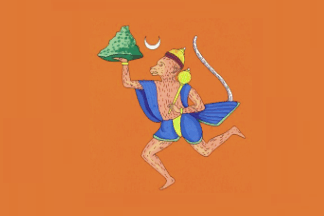
The princely state of Kanker possessed a distinct heraldic identity that reflected its royal Rajput lineage and its deep-rooted connection to the local landscape. The State Flag was a traditional Panchranga (five-colored) banner, featuring horizontal bands of red, yellow, white, green, and blue, signifying valor, prosperity, purity, fertility, and devotion.
The Coat of Arms of Kanker featured a shield supported on either side by rampant tigers, symbolizing the dense, rich forests of the Bastar region and the power of the state. The crest above the shield depicted a fort, representing the historical defensive strongholds of the state, flanked by a sacred trident (Trishul) representing the patron deity of the ruling family. Below the shield, a scroll bore the state's Sanskrit motto, emphasizing righteousness, justice, and service to the citizenry.
Post-Independence and the Modern Era
Following the independence of India in August 1947, Maharaja Bhanupratap Deo signed the Instrument of Accession, formally merging the Princely State of Kanker into the Dominion of India on January 1, 1948. Initially, Kanker was integrated into the Bastar district of Madhya Pradesh. On June 1, 1998, recognizing the administrative requirements of the region, Kanker was carved out as an independent district, officially known as the North Bastar Kanker District, which subsequently became a part of the newly formed state of Chhattisgarh in November 2000.
Today, Kanker is a vibrant district celebrated for its rich tribal heritage, dense forest ecosystems, and historical monuments. The descendants of the royal family continue to command deep respect from the local population, actively participating in cultural, religious, and social welfare initiatives that bridge the glorious historical past of Kanker with its modern democratic future.
References and Historical Citations
- Official History of Kanker District - Government of Chhattisgarh
- Central Provinces Feudatory States Gazetteer (1909) by E.A. de Brett
- Imperial Gazetteer of India, v. 14, p. 402 - Kanker State
Genealogy
- Raja GOOR SAI DEO, Raja of Kanker -/1729, married and had issue. He died .
- Raja Harpal Deo (qv)
- Rani (name unknown), married Raja Dalpat Dev of Bastar, and had issue.
- Raja HARPAL DEO, Raja of Kanker 1729/1775, died .
- Raja DHIRAJ SINGH DEO, Raja of Kanker 1775/-
- Raja RAM RAJ SINGH DEO, Raja of Kanker
- Raja SHYAM SINGH DEO, Raja of Kanker -/1802
- Raja BHOOP DEO, Raja of Kanker 1802/1809 (first time) INTERREGNUM 1809/1818 (Maratha occupation)
- Raja BHOOP DEO, Raja of Kanker 1818/1839 (second time), married and had issue. He died .
- Raja Padma Dev (qv)
- Raja PADMA DEO, Raja of Kanker 1839/1853, constructed a temple devoted to the goddess Durga, married and had issue. He died .
- Maharajadhiraj Nahar Deo (qv)
- Rajkumar Laxman Dev
- Rajkumar Shiv Charan Dev
- Rajkumar Ghanshyam Singh Dev
- one of these brothers was the father of Maharajadhiraj Komal Deo (qv)
- Maharajadhiraj NAHAR DEO, Maharaja of Kanker 1853/1903, born , he succeeded to the gadi as a minor on 5th December 1853, he was granted the right of adoption by the British authorities, and acknowledged their supremacy; during his reign he constructed a number of temples, a library and a Palace, he established a new town named Narharpur near Kanker; he married Maharanidhirani Padmalaya Devi, daughter of Raja Bhairam Deo of Bastar, and had issue. He died .
- Rajkumar (name unknown), died vpsp aged 14 years.
- Rajkumar (name unknown), died vpsp aged 16 years.
- Maharajadhiraj KOMAL DEO, Maharaja of Kanker 1903/1925, born , succeeded 9th May 1903, during his reign he established one high school, one Girls school and 15 primary schools as well as two hospitals (in Kanker and in Sambalpur). He established a new town near Kanker named Govindpur, which he wanted to make his capital; he married three times and had issue, one daughter. He died spm 8th January 1925 and was succeeded by his nephew (or relative).
- Maharajkumari Govind Kumari
- Maharajadhiraj BHANU PRATAP DEO, Maharaja of Kanker 1925/1969, adopted from Ratu (Chhota Nagpur), born and succeeded 8th January 1925, Kanker was initially administered by Shri Raghuveer Prasad Yadhav while the young ruler was educated at Rajkumar College, Raipur and later at Mayo College, Ajmer (B.A. and I.C.S. examination); also studied in England; in 1944 he was granted full ruling powers; M.L.A. (Madhya Pradesh) for two terms in 1952/1957 and 1962/1967; he established a new town named Bhanupratappur and constructed a cinema in Kanker; he was instrumental in founding a new degree college in Kanker in 1962 to which he donated furniture and books; he married in 1944, Maharanidhirani Amulya Prabha Devi, daughter of HH Maharaja Shri Sudhansu Shekhar Singh Deo of Sonepur, and his wife, HH Maharani Shrimati Khirode Kumari Devi, and had issue. He died .
- Maharajadhiraj Udai Pratap Deo (qv)
- Maharajkumari Manjushree Devi, married Kumar Shri Mahirajsinhji Surendrasinhji of Sayla, and has issue.
- Maharajadhiraj UDAI PRATAP DEO, Maharaja of Kanker 1969/2001, he was an avid conservationist and was President of the General Council, Rajkumar College from 1988 to 1993; married Maharanidhirani Tripureshwari Devi, daughter of Thakore Saheb Surendra Singh of Sayla, and his wife, Thakorani Manishwari Devi, and had issue. He died .
- Maharajkumari Anuradha Devi
- Maharajadhiraj Aditya Pratap Deo (qv)
- Maharajkumar Surya Pratap Deo (Prince Jolly) [1976-2021], educated at Rajkumar College, Raipur; he is presently (2009) actively involved in heritage tourism; married 29th January 2007, Kumari Rajeshwari Singh Jhala, daughter of Kumar Mahipal Singhji Jhala of Sayla and has issues, one daughter and a son.
- Suryakshi Deo
- Suryaditya Pratap Deo
- Maharajkumar Ashwini Pratap Deo B.Com. (Prince Jai), educated at Rajkumar College, Raipur and Zakir Hussain College, Delhi University (B.Com). He is married to Upasna Devi of Bilaspur, Chhattisgarh, and has issue, one daughter.
- Mrigshira Deo
- Maharajadhiraj ADITYA PRATAP DEO, Maharaja of Kanker (see above)