Present Head
- Thakurani Vijay Kanwar, married Thakur Daljit Singh of Ambotah State in Himachal, and has issue, one son and one daughter.
- Kumari Ritu Kumari
- Kunwar Jitendra Singh
- Tikka Dr. Rajeshwar Singh, born , married 1984 at Chandigarh, Tikkarani Suman Devi, daughter of Thakur Yudhveer Singh of Burail, and his wife, Thakurani Kaushalya Devi, daughter of Rao Pradyuman Singh of Bhukadi, and his wife, Rajkumari Charan Devi of Varaal, and has issue.
- Dei Saheb Dr. Aanchal Kumari Rajya Dei, born .
- Kunwar Sangram Singh, born , educated at St John’s High School, Chandigarh and Law Graduate from Punjab University.
- Dei Sahib Usha Rani, married Shri Dilbagh Singh Parmar of Nangal, and has issue.
- Dei Saheb Shalu Kumari
- Dei Saheb Salony Kumari
- Kunwar Ajay Singh
- Kunwarani Hembala Kanwar, married Kunwar Ravi Pratap Singh of Bariowal, son of Thakur Balbir Singh, and his wife, Thakurani Tara Devi Jaswal of Gagret, and has issue.
- Kumari Mehma Kanwar
- Bhanwar Swaraj Singh
- Thakurani Neelam Kanwar, married Thakur Rahul Singh of Garh Shankar, and has issue.
- Kunwar Nirpesh Singh
- Dei Saheb Samagya Kumari
- Kunwar Amar Singh, married Kanwarani Praveen Devi of Bhukadi, and has issue.
- Kunwar Yuvraj Singh
- Dei Saheb Gauri Kumari
History
Origin and Legendary Foundation
The history of Jadla Jagir is intimately tied to the history of the Ghorewaha Rajputs, a prominent branch of the Kachwaha dynasty of Rajputana that migrated to the fertile plains of Punjab. According to family chronicles and local bardic traditions, the lineage traces its origin back to 1070 AD. At this time, two sons of the Kachwaha Raja Man of Kot Kurman (associated with the ancestral Kachwaha lands of Amber and Narwar), named Hawaha and Kachwaha, embarked on a pilgrimage to the Punjab region.
During their journey, they met the Ghorid ruler, Sultan Shahab-ud-din Muhammad Ghauri (though historical records place Ghauri's reign in the late 12th century, traditional family genealogies often preserve 1070 AD as the initial era of migration). The brothers presented a magnificent horse to the Sultan. Highly pleased with this gesture, the ruler granted them a unique royal charter: they were promised as much territory as they could encircle on horseback within a single day, from sunrise to sunset.
At dawn, the brothers set off on their ride along the banks of the Sutlej River. At sunset, Hawaha marked the limit of his ride by throwing his spear (sela), founding the village of Selkiana. Meanwhile, Kachwaha marked his boundary by dropping his bracelet (kangan), founding the village of Kanganwal. This vast domain originally encompassed 1,860 villages. In recognition of this feat, the clan came to be known as the "Ghorewaha" (derived from ghora, meaning horse). The Sultan also granted them the strategic Fort of Garhshankar. The family retained the title of Raja for thirteen generations, after which they adopted the title of Rana.
Consolidation and Mughal Relations
Over the centuries, the Ghorewaha Chiefs established control over major Punjab strongholds, including Machiwara, Rahon, Jadla, Balachaur, Rahimabad, Bijwara, and Phillaur. They expanded their territories by defeating the Rathores at Bardar and conquering Nawanshahr from the Mahton Rajputs, alongside seizing Rahon from the Gujjars. During the Mughal era, their status was further elevated. Emperor Jehangir bestowed the title of Mian upon the clan chiefs.
During the reign of Emperor Akbar, the Ghorewaha clan was led by the influential Rana Udho II, the Raja of Machiwara. Rana Udho actively supported Akbar during the critical consolidation of the Mughal Empire, playing a key role in the capture of the rebellious imperial regent, Bairam Khan. In recognition of this military assistance, Akbar confirmed Rana Udho in his ancestral Jagir of Rahon, which then consisted of 750 villages, as documented in colonial records such as the Punjab District Gazetteers.
The Founding of Jadla Jagir
Following the death of Rana Udho II, the extensive Ghorewaha estates were divided among his descendants. At this time, all branches of the family, including the celebrated Rai Rup Chand, still practiced the Hindu faith. The principal estate of Rahon went to the eldest son (the Tikka), while the estate of Jadla was allocated to Bhoj Singh, who returned from Jaipur to claim his inheritance and establish the Jadla branch of the dynasty.
Rana Bhoj Singh and his descendants built the fort at Jadla, establishing it as a fortified seat of Rajput power in the Doaba region. They maintained local autonomy, balancing relations with neighboring chieftains and the imperial court at Delhi.
Sikh Hegemony and the British Raj
The 18th century brought severe political turbulence to Punjab with the decline of the Mughal Empire and the rise of the Sikh Misls. Jadla Fort became a target of territorial expansion for various Sikh commanders. For a brief period, a Sikh Sirdar managed to capture and hold the Jadla Fort. However, the Ghorewaha Rajputs successfully mobilized their forces, repulsed the invaders, and regained possession of their ancestral fort.
Despite their military resilience, the geopolitical shifts significantly reduced the territorial extent of the Jagir. By the advent of British rule in Punjab following the Anglo-Sikh Wars, the Jadla Jagir was consolidated into 22 villages, stretching from the village of Garhi to Daulatpur.
Under the British administration, the estate was recognized as a pattidari jagirdari. The head of the Jadla branch was officially recognized as the Ala Lambardar (chief headman) and Rana of Jadla. This status was formally confirmed upon each succession through a ceremonial Sanad (charter) issued by the British District Deputy Commissioner. The Rana of Jadla was entitled to collect and keep 15% of the total revenue of his zamindari and was vested with local administrative authority, including policing privileges and the power to adjudicate minor judicial offenses.
Post-Independence and Modern Era
Following the independence of India in 1947 and the subsequent enactment of the East Punjab Abolition of Ala Lambardari Act and other land reform legislations, the formal revenue privileges, jagirdari rights, and judicial powers of the Rana of Jadla were phased out.
Today, the legacy of the Jadla Jagir survives in the architectural heritage of the region, including the remnants of the historic Jadla Fort, and the enduring cultural identity of the Ghorewaha Rajputs in the Shaheed Bhagat Singh Nagar (formerly Nawanshahr) district of Punjab.
Genealogy
- Rana Pakho Singh, the last independent Ghorewaha Raja.
- Rana Udho II, Raja of Machiwara, Rana of Rahon; married and had issue.
- Tikka Pahlwan Singh, founder of the Senior line of the Ranas of Rahon, a jagir comprising 750 Villages and 2 Forts, annexed by Maharaja Ranjit Singh in 1809.
- Mian Bhoj Singh [Baba Bhoj Singh of Jaipur, founder of the Junior line of the Ranas of Jadla, he succeeded as Rana Bhoj Singh of Jadla (qv).
- Rana Bhoj Singh Bahadur, Jagirdar of Jadla, younger son of Rana Udho II, Raja of Machiwara, Rana of Rahon; he built a Fort at Jadla, married and had issue.
- Tikka Shringar Singh, succeeded as Rana Shringar Singh (qv)
- Mian Yashodha
- Mian (name unknown)
- Mian (name unknown)
- Rana Shringar Singh, Jagirdar of Jadla
- Jodh Singh (qv)
- Singh Sahib
- Rana Gandhi Singh
- Rana Fateh Singh, defeated the Sikh Sardar of the region appointed by Maharaja Ranjit Singh in the 1800s and occupied the fort of Jadla, annexed territories of the Sardar (total of 22 villages) and gifted his widow the village of Ranewal in Nawanshahr for subsistence for the remainder of her life.
- Rana Laxman Singh
- Rana Nand Singh, married Risaal Dei, a Dahiya (Rajput) lady from Kurali, Punjab.
- Rana Amar Singh, married Sindra Devi, daughter of Thakur Balbir Singh Taoni of Jhanjeri, Mohali.
- Shamsher Singh (died young)
- Jiwan Singh
- Vikram Singh
- Bandana Singh
- Kulwant Singh, married Anju Devi, niece of Kanwar Vijay Pal Singh - former Deputy Speaker of Haryana State Assembly in 1977 - Janata Dal Party.
- Vikas Sing
- Pooja Singh, married Samar Raghav of Haryana, son of Col. Raghav.
- Richa Rana, married Vikrant Pratap Singh Rana, Navigating Officer in Merchant Navy.
- Jaswant Singh
- Kulwinder Singh, married Mona Singh, daughter of Chandroop Singh Rana of Kungrat (senior branch of Manaswal).
- Abhimanu Singh, married Sarita Devi, daughter of Kunwar Rana Balbir Singh, younger brother of the Tikka Rana of Kungrat, Una, Himachal - senior branch of Doads of Manaswal.
- Yugeshwar Singh, PhD, married to Harpreet Kaur and has issues, two sons.
- Govind Pratap Singh, born N ovember 2020.
- Durga Singh
- Yugeshwar Singh, PhD, married to Harpreet Kaur and has issues, two sons.
- Asha Singh, married Naresh Thakur.
- Subhash Singh, married Vinod Dadhwal.
- Kunwarani Amar Dei Ji, married a Kunwar of Manaswal family.
- Rana Kuldeep Singh, President of Nawanshahr Congress Party for many years, Sarpanch of Jadla for many years, former Chairman of the Sugar Mill of Nawanshahr; currently the General Secretary of Panjab Pradesh Congress.
- Bhamwar Singh, member of Zila Parishad Nawanshahr, Punjab
- Daughter, name unknown, married to son of Rana Shyam Singh Ji Tanwar, former MLA Radaur, Haryana.
- Rana Amar Singh, married Sindra Devi, daughter of Thakur Balbir Singh Taoni of Jhanjeri, Mohali.
- Ami Chand
- Shyam Singh
- Vijay Singh, married Suchitra Singh and has issues.
- Shanu Devi
- Shivraj Singh
- Karan Singh
- Usha Devi
- Vijay Singh, married Suchitra Singh and has issues.
- Nardev Singh
- Gagan Singh
- Alka Singh, married toThakur Harnarinder Singh Ji
- Dhiren Pratap Singh
- Samriddhi Kanwar, married to Kunwar Dakshender Singh, son of Rana Yogendra Singh of Uplana, MLA of Assandh, Haryana.
- Shyam Singh
- Rana Nand Singh, married Risaal Dei, a Dahiya (Rajput) lady from Kurali, Punjab.
- Multan Singh, married a Dahiya (Rajput) lady of Kurali, Punjab.
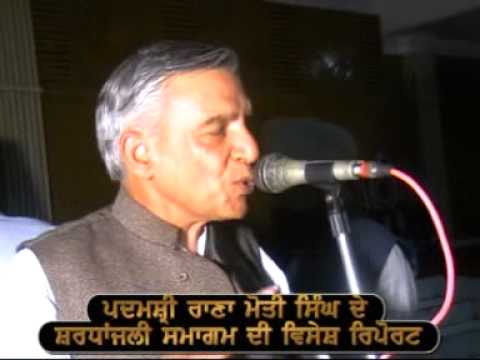
- Padam Shri Rana Moti Singh, former President of Punjab Pradesh Congress, married to daughter of Zaildar Amar Singh Ji of Sialba Majri.
- Varinder Singh, former MLA candidate for the Congress party in Garhshankar constituency. Held various roles in the Congress Party. Notably served as Punjab Youth Congress President and is currently the Chairman of the Punjab State Cooperative Bank; married Kunwarani Smriti Devi, granddaughter of the Rao of Bakhatgarh Princely State (Parmar Vansh) in Dhar, Madhya Pradesh.
- Baljinder Singh
- Sangram Singh
- Sultaan Singh
- Padma Devi, married Kunwar Digvijay Singh, son of Mian Krishan Dev Singh of Manaswal.
- Shakuntala Dei
- Padam Shri Rana Moti Singh, former President of Punjab Pradesh Congress, married to daughter of Zaildar Amar Singh Ji of Sialba Majri.
- Rana Laxman Singh
- Rana Jodh Singh, Jagirdar of Jadla.
- Rana Gandhi Singh, Jagirdar of Jadla
- Rai Mokan Singh, Jagirdar of Jadla
- Rana Gandhir Singh, Jagirdar of Jadla
- Rana Deep Chand, Jagirdar of Jadla, married and had issue.
- Tikka Sepahi Singh
- Kunwar Silai Singh, succeeded as Rana Silai Singh (qv)
- Kunwar Ghamand Singh
- Kunwar Jhagda Singh
- Kunwar Aggar Singh
- Rana Silai Singh, Jagirdar of Jadla, married and had issue.
- Kunwar Jhanda Singh, succeeded as Rana Jhanda Singh (qv)
- Kunwar Jamet Singh
- Kunwar Kushal Singh
- Kunwar Thakur Singh
- Rai Hamir Singh, married and had issue.
- Rai Suvarn Singh, married and had issue.
- Rai Pratap Singh, married and had issue.
- Rai Udai Singh
- Rai Pratap Singh, married and had issue.
- Rai Suvarn Singh, married and had issue.
- Rana Jhanda Singh, Jagirdar of Jadla
- Rana Kunnan Singh, Jagirdar of Jadla
- Mansur-i-Zaman Rana Khazan Singh Bahadur, Rana of Jadla, he was granted the title of Mansur-i-Zaman by the Rana of Rahon for his help against the Sikhs given to the Rana of Rahon and the Rai Sahib of Raikot (Garh); married Rani Babhaur wali, daughter of Mian Jodh Singh and niece of Rai Alam Chand of Babhaur. and had issue.
- Tikka Duloh Singh, succeeded as Rana Duloh Singh Bahadur (qv)
- Kanwar Kaka Singh, he died sp.
- Kunwar Gopal Singh, married and had issue, three sons.
- Kanwar Babu Singh, he died young.
- Kanwar Bhabool Singh, succeeded as Rana Bhabul Singh (qv)
- Kanwar Kapur Singh, married and had issue.
- Mian Vachiter Singh
- Kunwar Ran Singh, he died sp.
- Kunwar Mangal Singh, married and had issue.
- Kunwar Kashmir Singh, died in a ship accident enroute to England.
- Kunwar Rattan Singh, died in a ship accident enroute to England.
- Kunwar Sandal Singh, died in a ship accident enroute to England.
- Mansur-i-Zaman Rana Duloh Singh Bahadur, Rana of Jadla, Viceregal Darbari and a Chief in the Punjab; married a daughter of the Sardar Sahib of Nagla, sister of the Sardar Saheb Shamsher Singh, Jagirdar of Nagla; married and had issue.
- Tikka Labh Singh, succeeded as Rana Labh Singh Bahadur (qv)
- Rana Labh Singh Bahadur, Rana of Jadla, he was awarded the World War ll Defence and General Service Medals; married 1stly, Rani Nirmal Dei Raj Laxmi, and two other Rajput Ranis. He died sp and was succeeded by his cousin.
- Rana Bhabool Singh, Rana of Jadla, educated at Rahon and at Lahore; he retired as a British Railways Official; married Rani Sundar Deiji of Daiya, and had issue.
- Kunwar Baldev Singh, died young
- Tikka Manohar Singh, born , educated at the Arya College in Nawanshahr and at Lahore, married Rani Kushalwati Deiji, died , daughter of Thakur Jai Chand of Beheda-Sandalsingh, and his wife, Thakurani Bibiji Roshan Deiji, daughter of Lt. Kunwar Shivdayal Singh of Jeoli, and his wife, a Kumari Sahib of Raipur Rani. He died in .
- Rani Vidya Deiji, married Rana Jagdish Singh of Manaswal.
- Kunwar Jagdish Singh, he succeeded as Rana Jagdish Singhji Bahadur (qv)
- Rana Jagdish Singhji Bahadur, Rana of Jadla (see above)
- Kunwar Saheb of Jadla, married and had issue.
- Kunwar Chain Singh, married Kumari Nindera Devi (sister of Rani Surendra Devi of Jadla), daughter of Thakur Jai Chand of Beheda-Sandalsingh, and his wife, Thakurani Bibiji Roshan Deiji, daughter of Lt. Kunwar Shivdayal Singh of Jeoli, and his wife, a Kumari Sahib of Raipur Rani, and had issue. He died in in Canada.
- Kumari Kushala married Kunwar Sahib Katoch of Sri Karanpur and has issue.
- Kunwar Sher Singh, married Rajkumari Anupama Kumari, daughter of Maharaj Shri Pratap Singhji of Bikaner.
- Capt. (Hon.) Rai Bahadur Kunwar Diwan Chand, a descendant of Mansur-i-Zaman Rana Khazan Singh Bahadur of Jadla, he was granted the title of Rai Bahadur, raised to the rank of Honorary Captain and was awarded the Burma Star Medal.