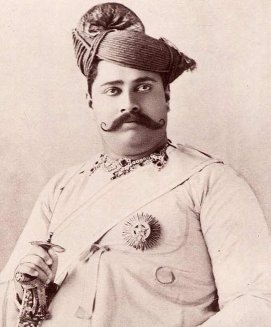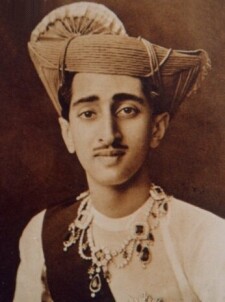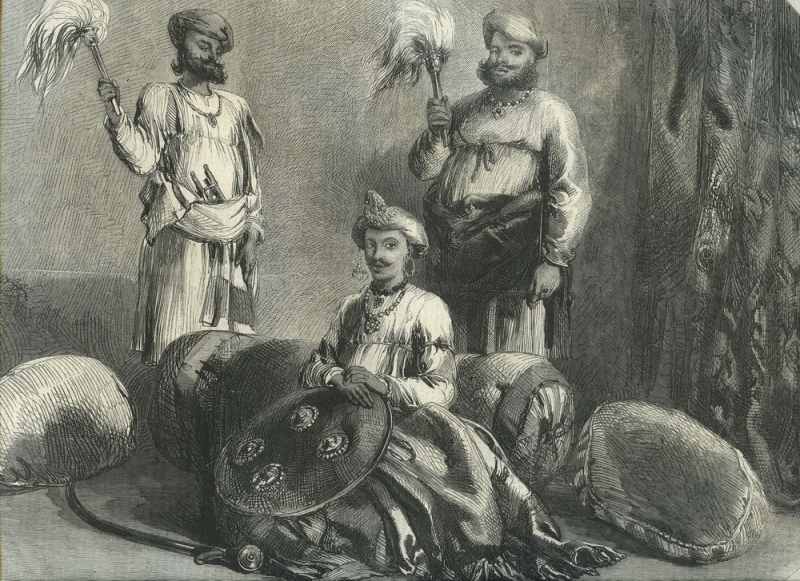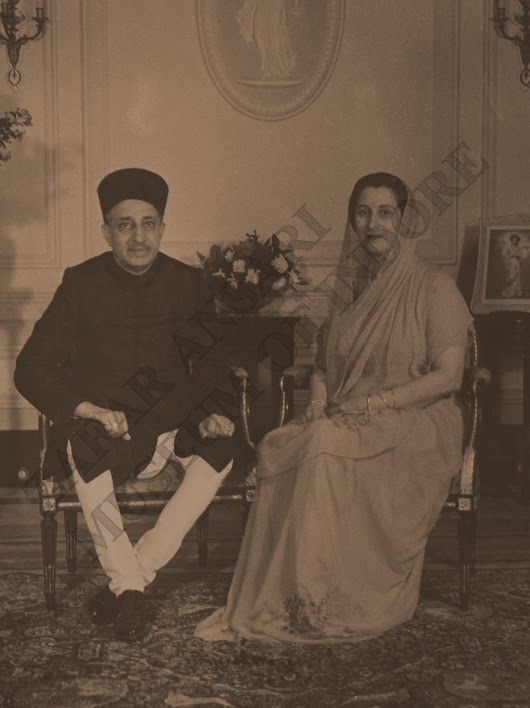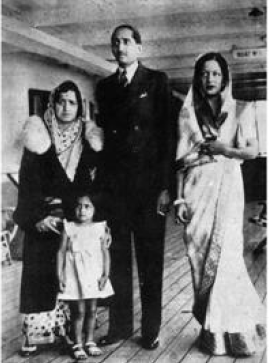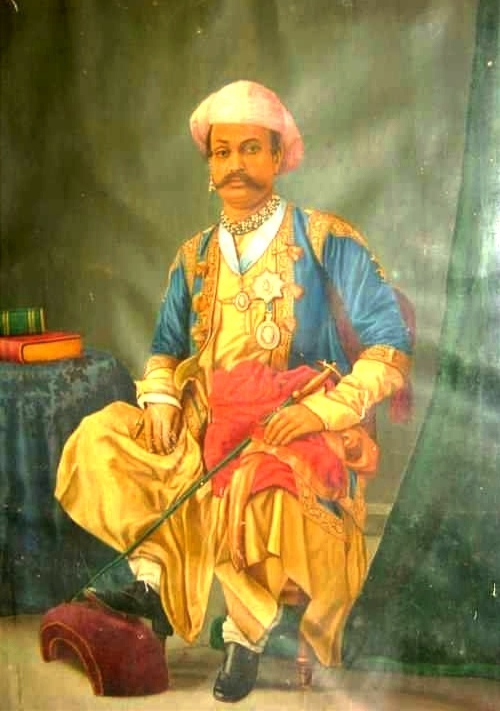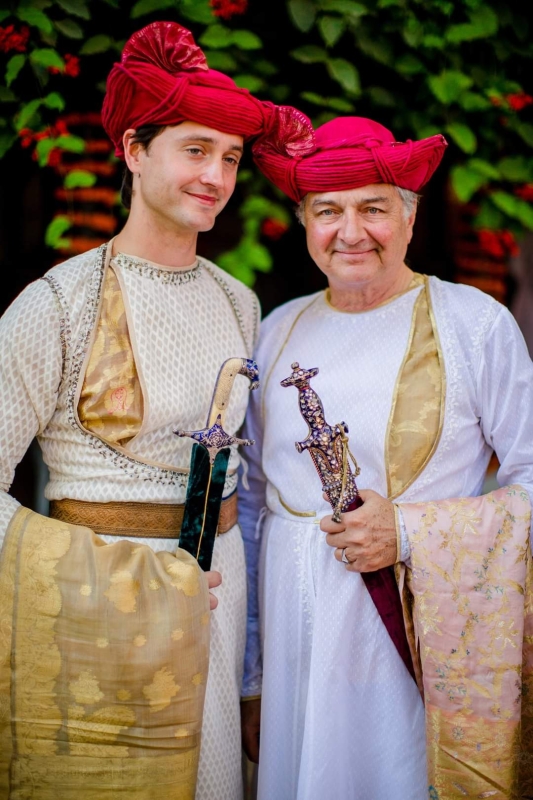
Present Head

- Shri Dilip Malhotra
History
Origin and Foundation of the Holkar Dynasty
In 1728, the Maratha Peshwa of Poona (today Pune) granted what is now the Indore State to Malhar Rao Holkar, a cavalry commander in his service. Malhar Rao, who hailed from the Dhangar community of Maharashtra, had earned the Peshwa’s trust through his extraordinary military prowess and leadership during the Maratha campaigns in Northern India. By 1733, he was formally appointed as the Maratha subedar (governor) of the Malwa region, laying the foundations of the sovereign Holkar Dynasty of Indore.
Malhar Rao consolidated his territory, making Maheshwar his administrative base. Under his leadership, the Holkar state became one of the key pillars of the Maratha Confederacy, standing alongside the Scindias of Gwalior and the Gaekwads of Baroda. After his demise in 1766, he was briefly succeeded by his grandson, Male Rao Holkar, whose untimely death led to one of the most remarkable chapters in Indian history: the regency of Ahilyabai Holkar.
The Golden Era of Devi Ahilyabai Holkar (1767–1795)
Following her son's demise, Maharani Ahilyabai Holkar took the reins of the state with the approval of the Peshwa. Known reverently as "Devi Ahilyabai," she shifted her capital from Indore to Maheshwar on the banks of the Narmada River. Her reign is celebrated as a golden era of peace, prosperity, and spiritual revival. She was a visionary administrator who championed low taxation, judicial fairness, and the welfare of farmers and traders.
Ahilyabai's legacy is etched across India through her extensive patronage of religious architecture. She rebuilt several of India's most sacred Hindu temples that had been desecrated in earlier centuries, most notably the Kashi Vishwanath Temple in Varanasi and the Vishnupad Temple in Gaya. She also constructed numerous ghats, dharamshalas (rest houses), and wells along major pilgrimage routes across the Indian subcontinent. For details on her immense cultural contributions, you can read more on the Indian Culture Portal.
The Anglo-Maratha Wars and British Suzerainty
Following the death of Ahilyabai in 1795, the Holkar State entered a period of turbulence. Yashwant Rao Holkar I (reigned 1797–1811) emerged as a formidable military commander. Referred to by several historians as the "Napoleon of India" due to his strategic brilliance, Yashwant Rao launched daring campaigns against the British East India Company during the Second Anglo-Maratha War. He successfully defended his territories and signed the Treaty of Rajpurghat in 1805, which recognized his sovereignty.
However, during the Third Anglo-Maratha War, the Holkar forces suffered a decisive defeat at the Battle of Mahidpur in December 1817. This led to the signing of the Treaty of Mandsaur in January 1818, under which Indore became a British protectorate. The capital of the state was permanently relocated from Maheshwar back to the city of Indore. The state was placed under the political supervision of the Central India Agency.
By the late 19th century, the princely state maintained a strong and disciplined military apparatus to secure its domains. The Maharaja maintained a military force of 3231 cavalry, 6128 infantry, and 65 guns. He was entitled to a salute of 21 guns within the limits of Indore territory, and 19 guns elsewhere (as recorded in 1893). Historical administrative records of this period can be explored via the Imperial Gazetteer of India.
Administrative Reforms and Modernization
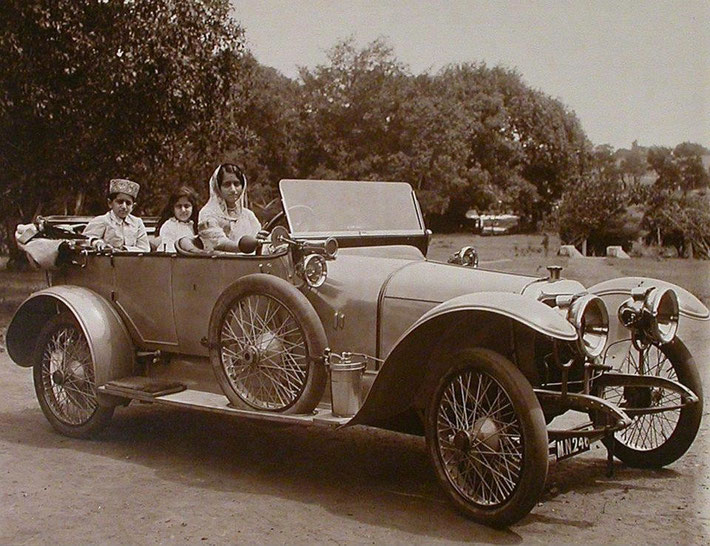
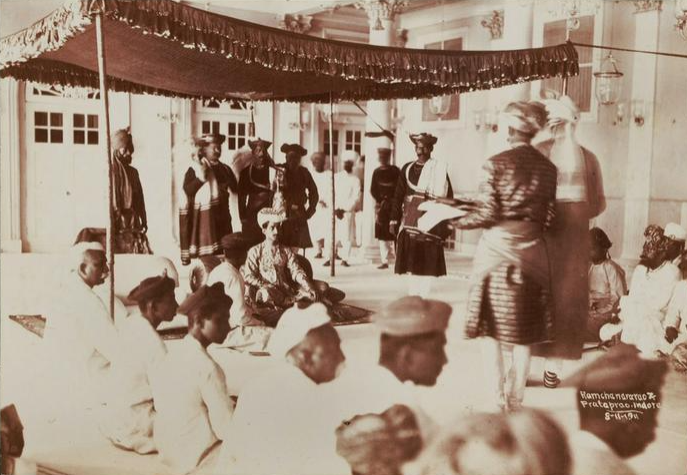
During the late 19th and early 20th centuries, Indore underwent rapid modernization under rulers like Maharaja Tukoji Rao Holkar II and Maharaja Tukoji Rao Holkar III. They introduced extensive administrative reforms, established modern courts of law, constructed railways (including the Rajputana-Malwa Railway), and founded schools and colleges. Indore emerged as a major industrial and textile hub, earning the moniker "Mini Bombay."
The last ruling Maharaja, Yashwant Rao Holkar II (reigned 1926–1948), was a highly educated, forward-thinking patron of modern art and architecture. He commissioned the famous Manik Bagh palace, which became an internationally celebrated masterpiece of the Art Deco movement. He also actively supported the development of aviation, public health, and social welfare within his territory.
State Heraldry, Emblem, and Flag
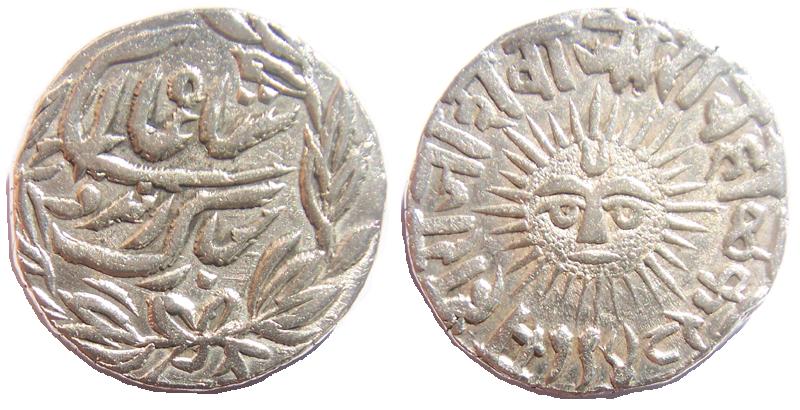
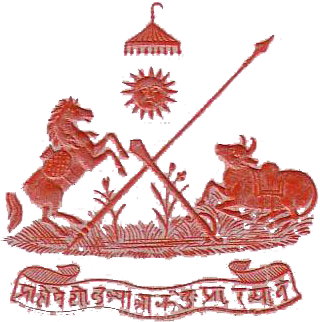
The princely state of Indore possessed a distinctive heraldic identity. The state flag was a rectangular field of saffron (representing the traditional Maratha Bhagwa flag) featuring a white horizontal strip in the middle. The coat of arms of Indore represented a synthesis of the dynasty’s military heritage and spiritual devotion. It featured:
- The Shield: A central shield displaying a sun (representing the Suryavanshi lineage) flanked by a crossed sword and lance (sangeet), signifying military power.
- Supporters: A rampant horse on one side representing the Maratha cavalry heritage, and a sacred bull (Nandi) on the other, representing Lord Shiva, to whom the Holkars were deeply devoted.
- Crest: A royal umbrella (Chhatra), denoting sovereignty.
- Motto: The state motto, "Pratichi Vyomni Bhasate", written in Devanagari script, which refers to the rising glory of the state.
Post-Independence and Modern Era
Following India's independence in 1947, Maharaja Yashwant Rao Holkar II signed the Instrument of Accession, merging Indore State into the Union of India on June 15, 1948. Initially, Indore became the summer capital of the newly created state of Madhya Bharat. In 1956, under the States Reorganisation Act, Madhya Bharat was merged into the state of Madhya Pradesh, with Indore continuing to serve as its premier commercial capital.
Today, modern Indore has evolved into a bustling metropolitan city, recognized globally as a major educational hub housing both an Indian Institute of Technology (IIT) and an Indian Institute of Management (IIM). It has consistently achieved national acclaim, being repeatedly ranked as the cleanest city in India under the Swachh Survekshan national campaign.
Genealogy
- Maharaja Holkar MALHAR RAO I HOLKAR, 1st Maharaja of Indore 1731/1766, born , married and had issue. He died .
- Maharajkumar Khandi Rao Holkar, born , married Maharani Ahalya Bai, daughter of Shri Mankoji Shinde of Choundi, and had issue. He died vp on 15th March 1754.
- Maharaja Holkar Male Rao Holkar (qv)
- Maharajkumar Khandi Rao Holkar, born , married Maharani Ahalya Bai, daughter of Shri Mankoji Shinde of Choundi, and had issue. He died vp on 15th March 1754.
- Maharaja Holkar MALE RAO HOLKAR, 2nd Maharaja of Indore 1766/1767, born , died sp on 5th April 1767. REGENT Maharani Ahalya Bai 1767/1795, born , died .
- Maharaja Holkar TUKOJI RAO I HOLKAR, 3rd Maharaja of Indore 1795/1797, born , married and issue. He died .
- Maharaja Holkar Yashwant Rao I Holkar (qv)
- Maharaja Holkar Kashi Rao Holkar (qv)
- Maharaja Holkar Malhar Rao II Holkar (qv)
- Maharajkumar Vithoji Rao Holkar, married and had issue. He died .
- Maharaja Holkar Hari Rao Holkar (qv)
- Maharajkumar Wittaji Rao Holkar, died .
- Maharaja Holkar MALHAR RAO II HOLKAR, 4th Maharaja of Indore 1797/1798, born , married and had issue. He died .
- Maharajkumar Khande Rao Holkar, born , died .
- Maharaja Holkar KASHI RAO HOLKAR, 5th Maharaja of Indore 1798/1806, died sp in 1806.
- Maharaja Holkar YASHWANT RAO I HOLKAR, 6th Maharaja of Indore 1806/1811, married and had issue. He died .
- Maharaja Holkar Malhar Rao III Holkar (qv)
- Maharaja Holkar Martand Rao Holkar (qv)
REGENT Maharani Tulsi Bai 1811/1815
- Maharaja Holkar MALHAR RAO III HOLKAR, 7th Maharaja of Indore 1811/1833, born , died sp on 27th October 1833.
- Maharaja Holkar MARTAND RAO HOLKAR, 8th Maharaja of Indore 1833/1834, died sp on 2nd February 1834
- Maharaja Holkar HARI RAO HOLKAR, 9th Maharaja of Indore 1834/1843, born , married and had issue. He died .
- Maharaja Holkar Khande Rao II Holkar (qv)
- Maharaja Holkar KHANDE RAO II HOLKAR, 10th Maharaja of Indore 1843/1844, died sp on 17th February 1844.
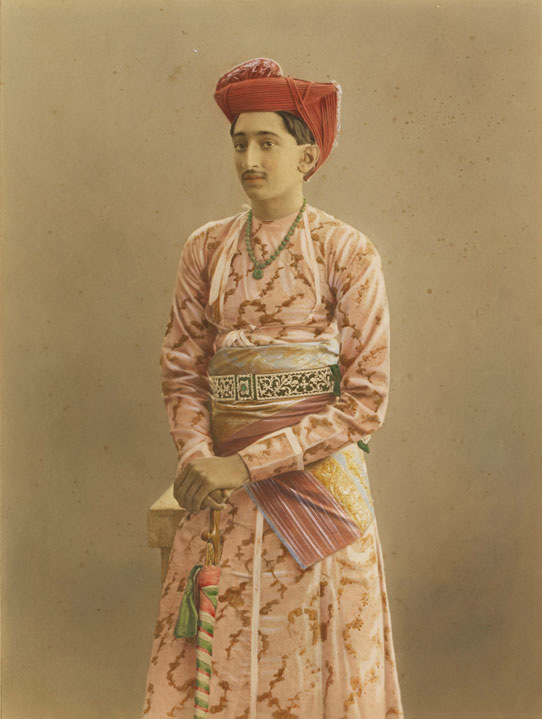
- Maharaja Holkar TUKOJI RAO II HOLKAR, 11th Maharaja of Indore 1844/1886, born , married and had issue. He died .
- HH Maharajadhiraj Holkar Raj Rajeshwar Sawai Shri Shivaji Rao Holkar (qv)
- HH Maharajadhiraj Holkar Raj Rajeshwar Sawai Shri SHIVAJI RAO HOLKAR, 12th Maharaja of Indore 1886/1903 (abdicated), born , married and had issue. He died .
- HH Maharajadhiraj Holkar Raj Rajeshwar Sawai Shri Sir Tukoji Rao III Holkar (qv)
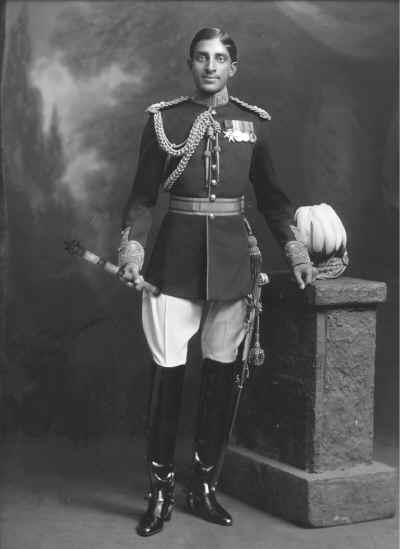
- HH Maharajadhiraj Holkar Raj Rajeshwar Sawai Shri Sir TUKOJI RAO III HOLKAR, 13th Maharaja of Indore 1903/1926 (abdicated), born , G.C.I.E. [cr.1918], the ruler enjoys a 21 local gun salute, married 1stly, HH Maharani Shrimant Akhand Soubhagyavati Chandrawati Bai (Senior Maharani), married 2ndly June 1913, HH Maharani Shrimant Akhand Soubhagyavati Indira Bai (Junior Maharani), married 3rdly, 12th March 1928 at Barwaha, Her Highness Maharani Shrimant Akhand Soubhagyavati Sharmishtha Devi Bai Sahiba (née Nancy Anna Miller), born in Seattle, died , and had issue, one son and five daughters. He died in Paris, France.
- Field Marshal (Hon.) HH Maharajadhiraj Holkar Raj Rajeshwar Sawai Shrimant Yeshwant Rao II Holkar Bahadur (by Chandrawati Bai) (qv)
- Maharajkumari Manorama Raje (by Chandrawati Bai), died o f tuberculosis at the age of twenty.
- Maharajkumari Sharada Raje (by Sharmistha Bai)
- Maharajkumari Sita Raje (by Sharmistha Bai), married Shrimant Sardar Fatehsinhrao Dattajirao Ghatge of Kagal-Jnr, and has issue.
- Field Marshal (Hon.) HH Maharajadhiraj Holkar Raj Rajeshwar Sawai Shrimant YESHWANT RAO II HOLKAR Bahadur, 14th Maharaja of Indore 1926/1961, G.C.I.E., LL.D., born , educated at Cheam Public School, Surrey and Charter House; Christchurch College, Oxford; married 1stly 1924, HH Maharani Sanyogitabai Raje Ghatge, born , died in Paris, daughter of Meherban Shrimant Rajamanya Rajashri Dattajirao Narayanrao [Kaka Sahib] Ghatge Sarjerao, Chief of Kagal-Jnr, b his third wife, married 2ndly, 19th September 1938 (div.1942) in Mexico City, Marguerite Lawler (married 1stly (div. 1938), John Branyen, married 3rdly 1945, Charles W. Masters), born in Fargo, ND, she died in Corona del Mar, CA, married 3rdly, 6th July 1943 (div. 1960), Euphemia Fay Watt (born , died ), and had issue. He died at Bombay.
- HH Maharanidhiraja Rani Rajeshwar Sawai Shrimant Akhand Soubhagyavati Usha Devi Holkar, (by 1st wife) (qv)
- Shrimant Maharajkumar Richard Shivajirao Yeshwantrao Holkar, (by 3rd wife), born , Chairman of Rehwa Society (founded 1977), a fine gourmet and cook, he has co-authored a book on "The Cooking of the Maharajas" with Sally (he now pens a column "Maheshwar Musings" for a Delhi-based magazine), his favourite pastime is fishing, married 1stly, 8th November 1966 in Dallas (div. 2002), Shrimant Akhaund Soubbagyavati Shalinidevi Holkar [née Sally Sue Budd], born , married 2ndly, Pamela Rooks, died , and has issue.
- Shrimant Akhand Soubbagyavati Sabrinaraje Sanyogita Holkar (by Shalinidevi), born , educated in the USA, married 3rd March 2006, Ari Kanakdari Ellis.
- Shrimant Maharaj Yeshwantrao Holkar (by Shalinidevi), born , educated in the USA.
- HH Maharanidhiraja Rani Rajeshwar Sawai Shrimant Akhand Soubbagyavati Usha Devi Holkar, 15th Maharani of Indore (see above)
Notable Figures
Malhar Rao Holkar I (r. 1731–1766)
Malhar Rao Holkar was the illustrious founder of the Holkar dynasty of Indore. Rising from humble origins as a shepherd in the village of Hol (from which the family name "Holkar" is derived), he joined the Maratha service under Peshwa Baji Rao I. Through sheer military brilliance and loyalty, he quickly rose through the ranks to become one of the premier generals of the Maratha Empire, playing a pivotal role in establishing Maratha supremacy in Northern and Central India. He was granted the fiefdom of the Malwa region in 1731, making Maheshwar and Indore his primary strongholds.
Malhar Rao was instrumental in various historic military campaigns, including the Battle of Delhi (1737) and the Third Battle of Panipat (1761). Despite the devastating defeat of the Marathas at Panipat, Malhar Rao successfully managed to consolidate his territories in Malwa, preserving the power of the Holkar state until his death in 1766. For further details on his life, consult the Wikipedia page on Malhar Rao Holkar.
Ahilyabai Holkar (r. 1767–1795)
Maharani Ahilyabai Holkar, the daughter-in-law of Malhar Rao Holkar, is widely revered as one of the most remarkable and progressive female rulers in Indian history. Following the premature deaths of her husband Khande Rao, her father-in-law Malhar Rao, and her young son Male Rao, she personally took over the administration of the Indore State. She moved her capital to the scenic town of Maheshwar on the banks of the Narmada River, transforming it into a flourishing cultural, textile, and administrative hub.
Ahilyabai's reign was characterized by absolute justice, superb administrative reforms, and a deep commitment to religious and social welfare. She is globally famous for rebuilding and restoring hundreds of Hindu temples, ghats, and dharamshalas across the Indian subcontinent, including the famous Kashi Vishwanath Temple in Varanasi and the Somnath Temple in Gujarat. Under her benevolent rule, Indore grew from a small village into a prosperous and secure city. To read more about her enduring legacy, visit the Wikipedia page on Ahilyabai Holkar.
Tukoji Rao Holkar I (r. 1795–1797)
Tukoji Rao Holkar was an adopted son of Malhar Rao Holkar who served as the commander-in-chief of the Holkar forces during the reign of Maharani Ahilyabai Holkar. He maintained a deeply respectful and cooperative relationship with Ahilyabai, handling the state's military campaigns and external defense while she managed civil administration. Upon her demise in 1795, Tukoji Rao formally assumed the rulership of the state, though his reign was short-lived due to his own advanced age and failing health.
During his long military career, Tukoji Rao fought bravely in the Anglo-Maratha Wars and consolidated the northern borders of the Maratha territory. His death in 1797 triggered a period of succession struggles among his sons, which eventually shaped the future course of the Holkar state. For more historical context, view the Wikipedia page on Tukoji Rao Holkar.
Yashwant Rao Holkar I (r. 1797–1811)
Yashwant Rao Holkar I was a brilliant military strategist and a ruler of extraordinary courage, often described by historians as the "Napoleon of India." He emerged victorious from the internal family conflicts after the death of his father, Tukoji Rao I, and assumed power during a highly volatile period. Yashwant Rao took on both the rival Scindias of Gwalior and the British East India Company. He built a modern, disciplined army and inflicted several severe defeats on the British forces in battles such as the Battle of Monson's Retreat and the Siege of Bharatpur.
He was the only Indian ruler of his era whom the British had to approach for an unconditional peace treaty, culminating in the Treaty of Rajghat in 1805, which restored all his lost territories. Yashwant Rao's efforts to forge a grand coalition of Indian rulers against British hegemony make him a celebrated nationalist figure. Learn more about his military campaigns on the Wikipedia page on Yashwant Rao Holkar.
Malhar Rao Holkar II (r. 1811–1833)
Malhar Rao Holkar II ascended the throne as a minor under the regency of his mother, Maharani Krishna Bai Holkar. His reign witnessed the decisive Third Anglo-Maratha War, which ended in the defeat of the Holkar forces at the Battle of Mahidpur in 1817. This led to the signing of the Treaty of Mandsaur in 1818, which permanently altered the status of the Indore State, reducing it to a British protectorate under the subsidiary alliance system.
Following the treaty, the capital of the Holkar state was permanently shifted from Maheshwar back to Indore, and major administrative restructurings were carried out under British supervision. Despite the loss of political sovereignty, Malhar Rao II's reign saw the stabilization of borders and the beginning of modern administrative practices in Indore. For additional reading, check the Wikipedia page on Malhar Rao II Holkar.
Tukoji Rao Holkar II (r. 1844–1886)
Tukoji Rao Holkar II was one of the most visionary and modernizing rulers of the Holkar dynasty. Installed on the throne by the British after a succession dispute, he turned out to be an extremely independent-minded and capable administrator. During the Indian Rebellion of 1857, he walked a delicate diplomatic tightrope; while his state troops revolted against the British Residency in Indore, Tukoji Rao covertly supported national elements while officially maintaining peace with the British to prevent the total annexation of his state.
Under his long reign, Indore underwent a massive infrastructural transformation. He introduced railways to the region (the Rajputana-Malwa Railway), established the Indore State Cotton Mills, pioneered modern judicial systems, and opened numerous schools and hospitals, laying the foundation of modern Indore as a commercial powerhouse. More information can be found on the Wikipedia page on Tukoji Rao II Holkar.
Shivaji Rao Holkar (r. 1886–1903)
Shivaji Rao Holkar succeeded his father Tukoji Rao II and was known for his philanthropic endeavors and patronage of education. He established the prestigious Holkar College in 1891 and constructed the spectacular Lal Bagh Palace, which stands as a testament to the architectural opulence of the era. However, his administration was often marked by financial eccentricity and tense relations with the British political agents.
As disputes with the British authorities intensified regarding state administration and fiscal management, Shivaji Rao decided to abdicate the throne in 1903 in favor of his minor son. To explore his contributions to the city's architecture, visit the Wikipedia page on Shivaji Rao Holkar.
Tukoji Rao Holkar III (r. 1903–1926)
Tukoji Rao Holkar III ascended the gaddi as a minor, with the state initially administered by a regency council until he attained full ruling powers in 1911. He was a highly educated and cultured prince who continued the modernization of Indore, constructing civic amenities, expanding the education sector, and continuing the embellishment of Lal Bagh Palace. He was also a passionate patron of classical Indian music and arts.
His reign came to an abrupt end in 1926 due to his involvement in the sensational "Bawla Murder Case" in Bombay, which involved the attempted abduction of his former court dancer, Mumtaz Begum. To avoid a formal British inquiry and public trial, he chose to abdicate in favor of his son, Yashwant Rao II. Detailed accounts of his life are available on the Wikipedia page on Tukoji Rao III Holkar.
Yashwant Rao Holkar II (r. 1926–1948)
Maharaja Yashwant Rao Holkar II was the last ruling Maharaja of the Indore Princely State. Educated at Oxford, he was a highly sophisticated, cosmopolitan, and modern ruler. He is internationally famous for his love of the Art Deco movement; he commissioned the iconic Manik Bagh palace in Indore, which was furnished with avant-garde European designs of the 1930s, making him one of the most stylish royals of his time.
Yashwant Rao II was deeply committed to the welfare of his people and introduced several democratic reforms in his administration. Following India's independence in 1947, he signed the Instrument of Accession to the Dominion of India on August 11, 1947, and subsequently merged his state into the newly formed union of Madhya Bharat in 1948, serving as its senior Up-Rajpramukh. Read more about his modern legacy on the Wikipedia page on Yashwant Rao Holkar II.
Usha Devi Holkar (b. 1933)
Maharani Usha Devi Holkar is the daughter and sole successor of Maharaja Yashwant Rao Holkar II. Following the demise of her father in 1961, she succeeded him as the titular head of the Holkar dynasty of Indore. Highly respected by the people of Indore, she has maintained a private profile while actively engaging in charitable, educational, and heritage conservation initiatives in Madhya Pradesh.
Under her guidance, several historical properties and institutions of the Holkar family have been preserved for public and educational benefit. For more details on the contemporary lineage of the family, see the Wikipedia page on Usha Devi Holkar.