History
Introduction to Raj Darbhanga
Raj Darbhanga, also known as the Darbhanga Raj or the Khandavala Dynasty, was one of the largest and wealthiest zamindari estates in India during the British Raj. Headquartered in the town of Darbhanga (situated on the left bank of the Little Baghmati river in Bihar), this estate extended from the Nepal frontier to the Ganges, encompassing parts of modern-day Darbhanga, Muzaffarpur, Monghyr, Purnea, and Bhagalpur districts. Governed by the rule of primogeniture based on the traditional Kulachar (family custom) recognized by the Privy Council and the Supreme Court of India, the Maharajas of Darbhanga were the titular heads of the highest sub-caste of Maithil Brahmins, the Srotriyas.
Origin and Foundation of the Khandavala Dynasty
The Khandavala dynasty was founded in the mid-16th century by Mahamahopadhyaya Mahesh Thakur, a highly revered scholar of Sanskrit and Mimansa philosophy. Following the collapse of the Oiniwar dynasty, the region of Mithila was in a state of political instability. Recognizing the scholarship and influence of Mahesh Thakur, the Mughal Emperor Akbar granted him the territory of Tirhut (Mithila) around 1556 AD. The name of the dynasty, "Khandavala," is derived from the village of Khandwa in Madhya Pradesh, where the ancestors of the family had temporarily settled. Under Mahesh Thakur and his immediate successors, Darbhanga emerged as the cultural and intellectual epicenter of the Mithila region. For more details on the founder, see the Mahesh Thakur Wikipedia page.
The Mughal and British Eras
During the Mughal era, the rulers of Darbhanga maintained cordial relations with the imperial court, paying regular tributes while exercising autonomous administrative authority over their territories. Important early rulers like Hemangada Thakur made significant contributions to sciences, particularly astronomy, through works such as the Grahanimala.
With the decline of the Mughal Empire and the grant of Diwani rights of Bengal, Bihar, and Orissa to the British East India Company in 1765, the status of the Darbhanga rulers transitioned into that of permanent landholders or Zamindars under the Permanent Settlement of 1793. In 1875, the district of Darbhanga was formally constituted out of the larger district of Tirhut due to administrative necessity.
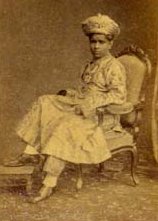
During the late 19th and early 20th centuries, the Raj underwent a period of extensive modernization. Between 1860 and 1879, due to the minority of the heirs, the estate was managed by the British Court of Wards, which helped clear ancestral debts and modernized the agricultural and administrative machinery of the province.
The Golden Era: Key Reformers and Philanthropists
The late 19th and early 20th centuries marked the golden age of Raj Darbhanga under three highly educated and progressive Maharajas:
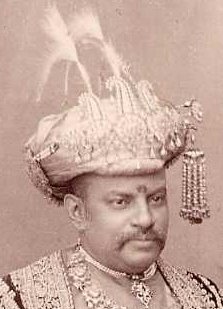
- Maharaja Lakshmeshwar Singh Bahadur (reigned 1879–1898): A highly progressive ruler and one of the pioneering figures of modern Bihar. He was a close associate of early nationalists and was one of the founding members of the Indian National Congress. He established schools, hospitals, and dispensaries, and spent massive sums on famine relief operations in Bihar.
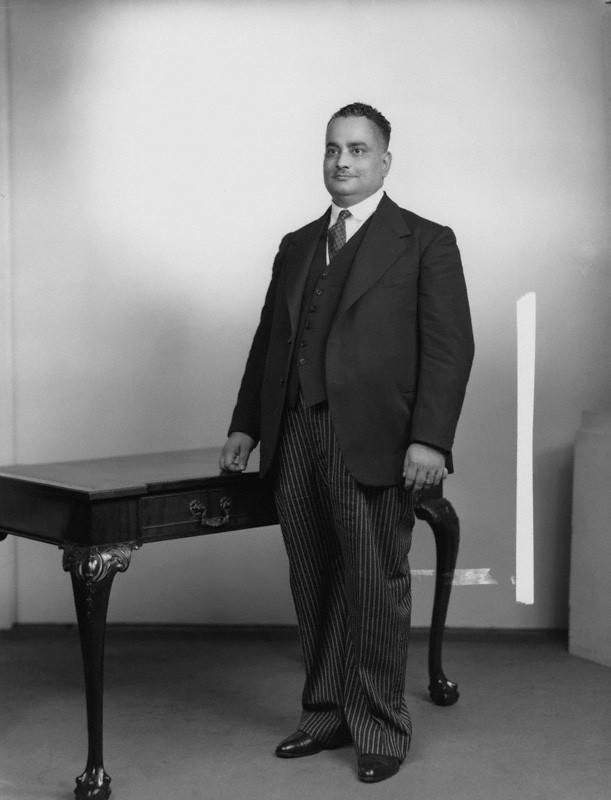
- Maharaja Rameshwar Singh Bahadur (reigned 1898–1929): A devout Hindu scholar and a member of the India Council. He was a major patron of education, donating vast sums of money to the establishment of the Banaras Hindu University (BHU) and the University of Calcutta. He also built the magnificent Rajnagar Palace complex in Madhubani district.
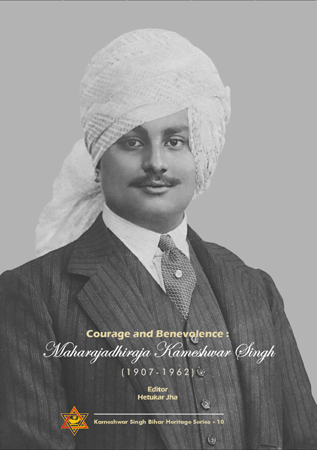
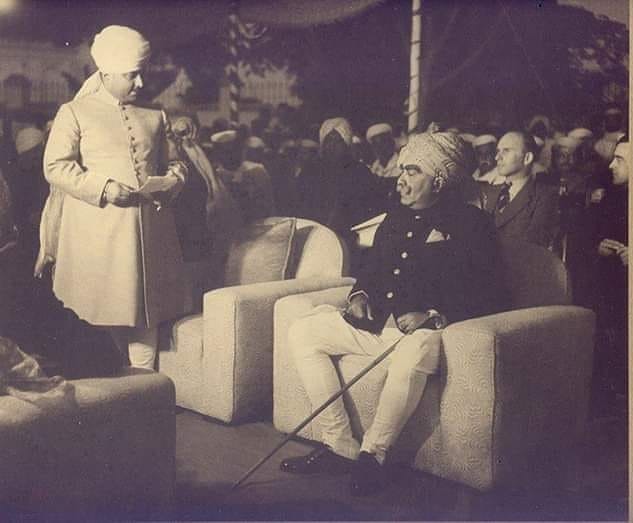
- Maharaja Kameshwar Singh Bahadur (reigned 1929–1962): The last ruling Maharaja of Darbhanga. Known for his industrial vision, he set up several sugar, paper, and jute mills, and also owned prominent newspapers like The Indian Nation. He represented India at the Round Table Conferences in London and was a member of the Constituent Assembly of India. Read more about his contributions on the Kameshwar Singh Bahadur Wikipedia page.
Post-Independence and the Modern Era
Following the independence of India in 1947, the newly formed Indian government enacted land reform laws, culminating in the abolition of the Zamindari system in 1952. This marked the official end of the political and administrative power of Raj Darbhanga.
Maharaja Kameshwar Singh passed away in 1962 without leaving a direct male heir or a clear successor, which led to a prolonged legal battle over the massive family assets and trusts. In a remarkable gesture of philanthropy, a substantial portion of the grand palaces in Darbhanga was donated by the royal family to educational institutions. The famous Anand Bagh Palace was donated to establish the Kameshwar Singh Darbhanga Sanskrit University, while the Nargona Palace and Raj Head Office became the campus of the Lalit Narayan Mithila University. Today, the legacy of Raj Darbhanga survives through these educational centers, its magnificent architectural heritage, and its indelible contribution to Maithili culture and identity.
Genealogy
- Raja MAHESH THAKUR, Raja of Darbhanga, he was granted title of Raja and Darbhanga Raj by Akbar, married and had issue. He died .
- Kunwar Ramchandra Thakur
- Raja Gopal Thakur (qv)
- Kunwar Achit Thakur
- Raja Parmanand Thakur (qv)
- Raja Subhankar Thakur (qv)
- Raja GOPAL THAKUR, Raja of Darbhanga, ruled for a short time only.
- Raja PARMANAND THAKUR, Raja of Darbhanga, ruled for a short time only.
- Raja SUBHANKAR THAKUR, Raja of Darbhanga -/1607, married and had issue. He died .
- Raja Purushottam Thakur (qv)
- Raja Sundar Thakur (qv)
- Raja Narayan Thakur (qv)
- Raja PURUSHOTTAM THAKUR, Raja of Darbhanga 1607/1642 (1623), died sp in 1642 (1623).
- Raja NARAYAN THAKUR, Raja of Darbhanga 1623/1642, married and had issue.
- generation, married and had issue.
- generation, married and had issue.
- generation, married and had issue.
- Raja Pratap Singh (see below)
- Raja Madho Singh (see below)
- generation, married and had issue.
- generation, married and had issue.
- generation, married and had issue.
- Raja SUNDAR THAKUR, Raja of Darbhanga 1642/1662, married and had issue. He died .
- Raja Mahinath Thakur (qv)
- Raja Nirpat Thakur (qv)
- Raja MAHINATH THAKUR, Raja of Darbhanga 1662/1684, died sp 1684.
- Raja NIRPAT THAKUR, Raja of Darbhanga 1684/1700, married and had issue. He died .
- Raja Raghu Singh (qv)
- Raja RAGHU SINGH, Raja of Darbhanga 1700/1736, he obtained lease of whole of Sarkar Tirhut including Darbhanga and Muzaffarpur at an annual rent of Rs.100,000, which was a huge amount at that time. The annual revenue of Sarkar Tirhut in 1685 AD was officially returned at Rs.7,69,287. At one time, during reign of Raja Raghu Singh, Nawab Mahabat Jung, Nawab Subahdar of Behar, got jealous of the wealth of Raja Raghu Singh and imprisoned his family at Patna. Raghu Singh escaped capture and later succeeded in getting the estate back along with large grant with Mughal Governor on the condition that "Do Justice, Relieve Distress, And Put The Country In Flourishing Condition. This condition was fulfilled by Raja Raghu Singh and subsequent Maharajas of Darbhanga. He built a mud fort at Bhawara near Madhubani; married and had issue. He died .
- Raja Bishnnu Singh (qv)
- Raja Narendra Singh (qv)
- Raja BISHNU SINGH, Raja of Darbhanga 1736/1740, died sp in 1740.
- Raja NARENDRA SINGH, Raja of Darbhanga 1740/1760, adopted his distant relative as his successor. He died sp in 1760.
- Raja PRATAP SINGH, Raja of Darbhanga 1760/1776, built a Rajbari at Darbhanga and shifted the capital to Darbhanga from Bhawara. He died .
- Raja MADHO SINGH, Raja of Darbhanga 1776/1808, received grant of Dharampur in District of Purnea, Bihar from Shah Alam, Mughal Emperor of Delhi. Raja Madho Singh had a long dispute with British Government over revenue payment and extent of his right over the land; married and had issue. He died .
- Maharaja Chhatra Singh Bahadur (qv)
- Kunwar Kishan Singh, died sp.
- Maharaja CHHATRA SINGH Bahadur, Raja of Darbhanga 1808/1839, he was granted the title of Maharaja Bahadur, as a personal distinction, he resigned his powers to his eldest son, but died shortly afterwards; married and had issue. He died 1839.
- Raja Rudra Singh (qv)
- Rajkumar Bisdeo Singh
- Raja RUDRA SINGH, Raja of Darbhanga 1839/1850, married and had issue. He died .
- Raja Maheshwar Singhr (qv)
- Rajkumar Ganeshwar Singh [aka Babu Ghunpat]
- Rajkumar Nitreshwar Singh, married and had issue.
- Babu Ekradeswar Singh
- Babu Janeswar Singhm, married Musammat Janeswari Babuain. He died sp on 18th April 1906.
- Rajkumar Gopeshwar Singh
- One of above, married and had issue.
- Babu (name unknown), married and had issue.
- Babu Madheshwar Singh, Deputy Magistrate
- Babu (name unknown), married and had issue.
- Raja MAHESHWAR SINGH, Raja of Darbhanga 1850/1860, married and had issue. He died .
- Raja Lachmeshwar Singh (qv)
- Hon. Maharajadhiraja Sir Rameshwar Singh Bahadur (qv)
- Raja LACHMESHWAR SINGH, Raja of Darbhanga 1860/1898, born , educated by an English tutor, succeeded to the Raj after attaining his majority, he served as a member of the legislative council of the viceroy with conspicuous ability and moderation of view. As representative of the landowners of Berar and Bengal he took an important part in the discussion on the Bengal Tenancy Bill. He entirely devoted himself to public work and was recognized as one of the greatest nobles and philanthropists of India at that time, and as a tribute to him, his statue was installed in Calcutta in 1904 at Dalhousie Square. He died sp on 17th December 1898
- Hon. Maharajadhiraja Sir RAMESHWAR SINGH Bahadur, Maharaja of Darbhanga 1898/1929, born , K.C.I.E. [cr.1902], G.C.I.E. [cr.1915], K.B.E. (civil)[cr.1918], Raja Bahadur [cr.1886], Maharaja Bahadur (personal) [cr.1898], Maharaja Bahadur (hereditary) [cr.1907], Maharajadhiraja (hereditary) [cr.1920], 17th in succession from the founder of the House, the premier territorial noble of Bihar, educated by an English tutor, appointed to the Indian Civil Service in 1878, serving as assistant magistrate successively at Darbhanga, Chhapra and Bhagalpur, he was exempted from attendance at the civil courts, and was appointed a member of the legislative council of Bengal, MLC of Bengal 1885, Member of Council of Governor General of India in 1899 and 1904, President of Bihar Landholder's Association, President of All India Landholder's Association, President of Bharat Dharma Mahamandal, Member of Council of State, Trustee of Victoria Memorial, Calcutta, President of Hindu University Society, M.E.C. of Bihar and Orissa, Member of Indian Police Commission 1902/1903, awarded the Kaiser-i-Hind medal in 1900, married 1stly, 1877, married 2ndly, 1901, and had issue. He died .
- Maharajkumari (name unknown), born .
- Col. Honourable Maharajadhiraja Sir Kameshwar Singh Bahadur (qv)
- Raja Vishweshwar Singh Bahadur, born , in 1938, he was granted the estate of Rajnagar, the title of Raja and a pension of 30,000Rs which was later raised to 48,000Rs; he married and had issue, three sons.
- Babu Saheb Jeeveshwar Singh, became an ascetic later in life and renounced worldy possessions, married twice and had issue, seven daughters. He died .
- Babu Saheb Yajneshwar Singh, mentally unstable and was overlooked in the succession, married and had issue, three sons.
- Kumar Ratneshwar Singh, presently contesting the succession to the title.
- Kumar Rashmeshwar Singh, died .
- Kumar Rajneshwar Singh
- Maharajadhiraja Subheshwar Singh Bahadur (qv)
- Col. Honourable Maharajadhiraja Sir KAMESHWAR SINGH Bahadur, Maharaja of Darbhanga 1929/1962, born , K.C.I.E., LL.D., D.LITT., Member of the Council of State 1933/1946, Member of the Constituent Assembly 1947/1950, Member of the Provisional Parliament 1950/1951 and the Rajya Sabha 1952/1958 and 1960/1962, married 1stly, Maharani Rajlakshmi Devi, died sp in 1976, married 2ndly, 1935, Maharani Kameshwari Priya Sahiba, died , married 3rdly, 1945, Maharani Kamasundari alias Maharani Kalyani Devi. He died sp on 8th November 1962 or 2nd October 1962.
- Maharajadhiraja SUBHESHWAR SINGH Bahadur, Maharaja of Darbhanga 1962/2006, born about 1945, Indian Nation proprietor, appointed head of the Shrotriya Brahmins, who are the leaders of Maithili Brahmins; married and had issue, two sons. He died .
- Rajeshwar Singh, married and has issues, lives in USA.
- Kapileshwar Singh, presently contesting the succession to the title; married Kumarani Kavita Kumari, lives in Delhi.