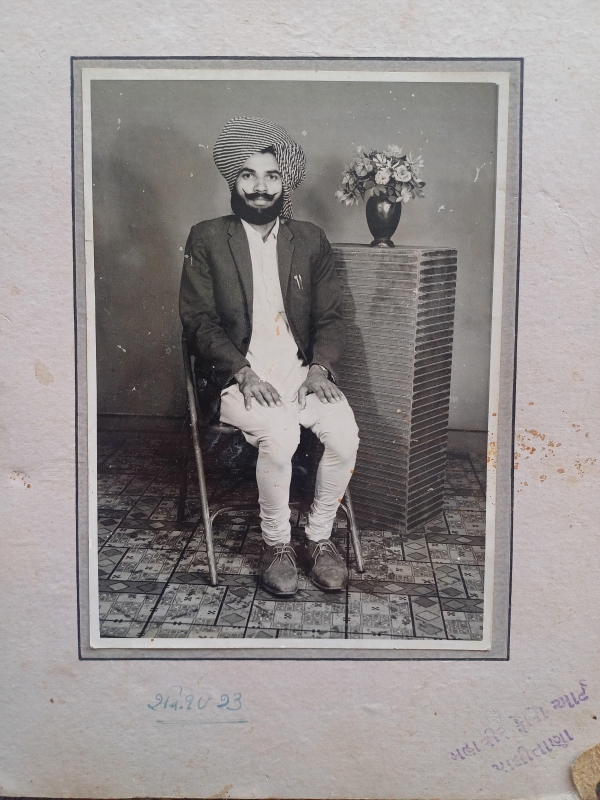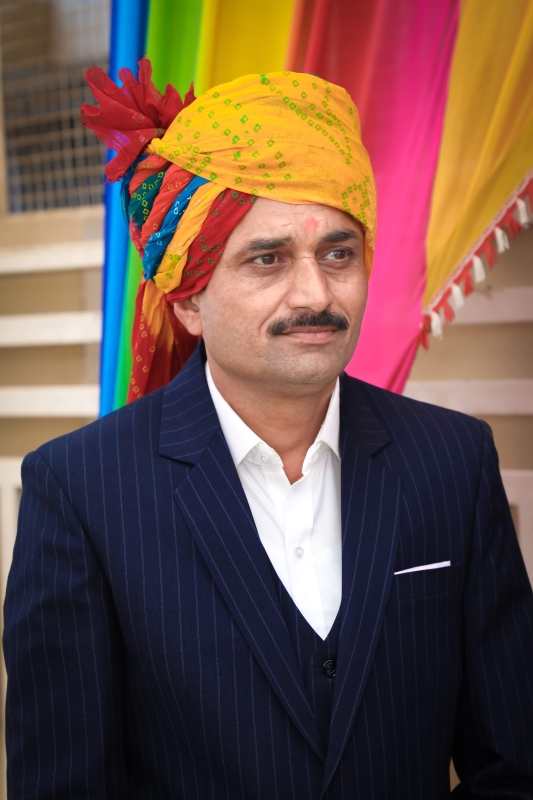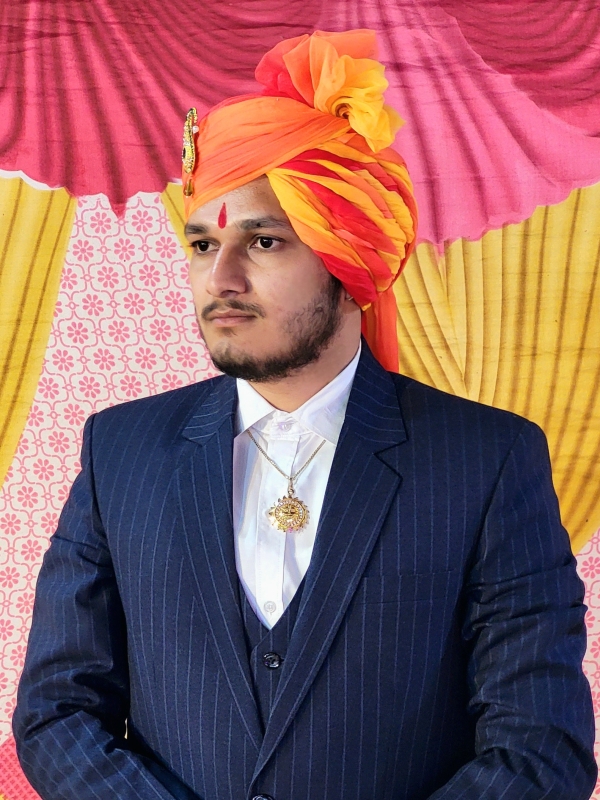
Present Head
- Kumar Jaypalsinhji Batuksinhji (qv)
- Kumar Yashpalsinhji Jaypalsinhji
- Kumar Prahladsinhji Batuksinhji
- Kumar Vishwajeetsinhji Prahladsinhji
- Kumar Rajpalsinhji Batuksinhji
- Kumar Omdipsinhji Rajpalsinhji
History
Origin and Foundation of Chomal Thikana
The history of the Chomal-Chonda estate is deeply intertwined with the illustrious history of the Gohil Rajput clan of Saurashtra. The Gohils, who trace their ancestry back to the Suryavanshi lineage, migrated from Marwar to the Kathiawar peninsula under the leadership of Shalivahan and later Sejakji in the 13th century. Over the generations, several offshoots emerged from the parent state, one of which was the princely Lathi State, established by Sarangji, one of the sons of Sejakji.
In the early 16th century, during the reign of Thakor Saheb Shri Ramsinhji of Lathi, the feudal system of Kathiawar saw the distribution of land appanages, known as Garas, to the younger sons of the ruling chiefs. This was done to ensure their maintenance and to establish a protective defensive ring around the principal state. Consequently, in Vikram Samvat 1585 (circa 1528 AD), Thakor Saheb Ramsinhji granted the land estate of Chomal and Chonda to his younger son, Kumar Kumbhoji. This grant marked the foundation of the Chomal Thikana, establishing Kumar Kumbhoji as the progenitor of the Chomal branch of Gohil Rajputs.
Religious Patronage and Cultural Heritage
The rulers of the Chomal Thikana were devout patrons of Vaishnavism and local deities. Upon settling in their newly granted fief, the Garasdars (fief-holders) of Chomal established the temple of their patron deity, Shri Murlidhar Dada (a manifestation of Lord Krishna), in the village of Chonda. This temple remains a significant spiritual center for the local population and the descendants of the clan.
During the mediaeval period, the Garasdars of Chomal-Chonda maintained close political and marital alliances with other offshoots of the Gohil clan, including the states of Bhavnagar, Palitana, and Vala. They contributed actively to the military defense of the region against various external incursions.
The British Period and Administrative Status
With the advent of the British East Intelligence and the subsequent settlement of Kathiawar by Colonel Alexander Walker in 1807–1808, the feudal estates of Saurashtra were brought under British suzerainty. According to the Gazetteer of the Bombay Presidency: Kathiawar, the Chomal-Chonda estate functioned as a subordinate landholding unit (Garasia holding) under the wider administrative umbrella of the Kathiawar Agency.
Throughout the 19th and early 20th centuries, the Garasdars of Chomal retained their local judicial and revenue-collecting rights over their agricultural lands, paying tribute through the primary state of Lathi or directly to the British authorities as per the local settlement rules. They focused heavily on agricultural development, water conservation, and the upkeep of local religious institutions.
Post-Independence and Modern Era
Following India's independence in 1947, the princely state of Lathi and its subordinate Thikanas, including Chomal, signed the Instrument of Accession to merge into the United State of Kathiawar (later known as Saurashtra State). This union was later integrated into the Bombay State, and subsequently became part of the newly formed state of Gujarat in 1960.
With the passage of the Saurashtra Land Reforms Act of 1951, the traditional Garasdari system was formally abolished, and land ownership was transferred to the tenant cultivators. Despite the loss of their feudal privileges, the descendants of the Chomal Thikana transitioned successfully into modern professions, public service, and agriculture, while continuing to serve as the custodians of the historic Shri Murlidhar Dada temple in Chonda village, located in the present-day Gadhada taluka of the Bhavnagar district.
Genealogy
- Darbar Shree Kumbhoji Ramsinhji
- Kumar Nakoji Kumbhoji (qv)
- Darbar Shree Nakoji Kumbhoji
- Kumar Vaghji Nakoji (qv)
- Kumar Bhimji Nakoji
- Darbar Shree Vaghji Nakoji
- Kumar Hemji Vaghji (qv)
- Darbar Shree Hemji Vaghji
- Kumar Ratanji Hemji (qv)
- Darbar Shree Ratanji Hemji
- Kumar Singoji Ratanji (qv)
- Kumar Vaghji Ratanji
- Kumar Nagji Ratanji
- Kumar Nonghanji Ratanji
- Darbar Shree Singoji Ratanji
- Kumar Khodaji Singoji (qv)
- Kumar Jivanji Singoji
- Darbar Shree Khodaji Singoji
- Kumar Nathuji Khodaji (qv)
- Kumar Punjaji Khodaji
- Kumar Devaji Khodaji
- Darbar Shree Nathuji Khodaji
- Kumar Togaji Nathuji (qv)
- Kumar Raghuji Nathuji
- Darbar Shree Togaji Nathuji
- Kumar Samantsinhji Togaji (qv)
- Kumar Agarsinhji Togaji
- Kumar Bhagwansinhji Togaji
- Kumar Jorsinhji Togaji
- Kumar Narsinhji Togaji
- Darbar Shree Samantsinhji Togaji
- Kumar Takhatsinhji Samantsinhji (qv)
- Darbar Shree Takhatsinhji Samantsinhji
- Kumar Batuksinhji Takhtsinhji (qv)
- Darbar Shree Batuksinhji Takhtsinhji (see above)