Present Head
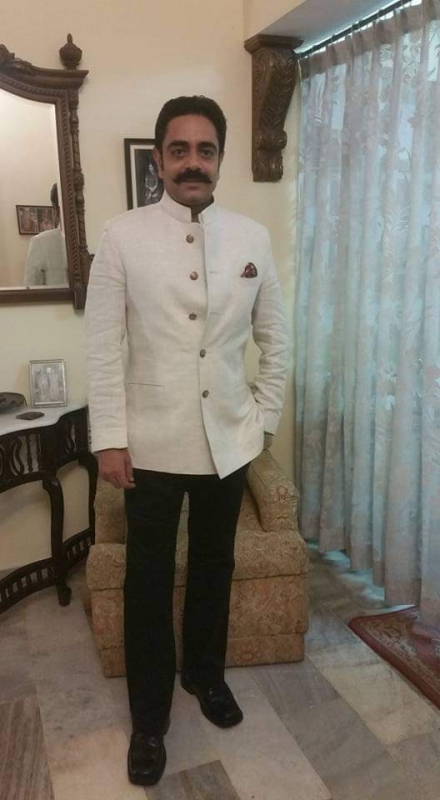
- Rajkumar Lakshyaraj Singh Ju Deo Bahadur, born .
History
Introduction and Geographical Overview
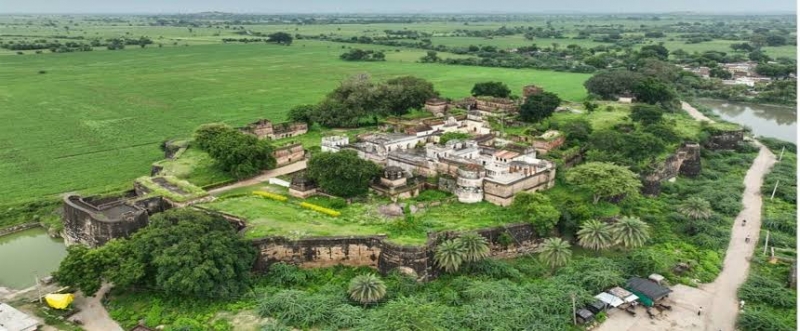
Bijna was a historic princely state situated in the Bundelkhand Agency of Central India. Encompassing an area of approximately 73 square kilometers (28 square miles), the state had a recorded population of 1,878 in 1890. Its capital was established in the historic town of Bijna, located in the modern Jhansi district of Uttar Pradesh, roughly 70 kilometers from the city of Jhansi.
Geographically, the state of Bijna occupied a strategic pocket in the eastern portion of the Jhansi province. It shared its borders with the sister Bundela states of the Hasht-Bhaiya (Eight Brothers) jagirs, namely Tori Fatehpur, Dhurwai, Banka Pahari, and Pasraai.
The Dynastic Origins: Bundela Rajputs and the Hasht-Bhaiya Jagirs
The ruling house of Bijna belonged to the Suryavanshi clan of Bundela Rajputs, who trace their legendary descent from Kusha and Luv, the sons of Lord Rama. The Bundelas established their hegemony in Central India following the decline of the Chandela dynasty, constructing a vast network of fortified states and jagirs across the rugged terrain of Bundelkhand.
The specific lineage of the Bijna state is tied to the Hasht-Bhaiya (meaning "Eight Brothers") jagirs of Orchha. In the 17th century, Diwan Rai Singh of Baragaon, a son of Maharaja Madhukar Shah of Orchha, divided his ancestral estates among his eight sons. These subdivisions came to be known as the Hasht-Bhaiya jagirs. Over decades of political consolidation, military campaigns, and territorial mergers, only four of these original eight estates survived as independent entities under British suzerainty: Bijna, Dhurwai, Tori Fatehpur, and Banka Pahari. The royal houses of Orchha, Digora, and Chirgaon share a direct agnatic kinship with the ruling family of Bijna.
The Era of Sovereignty and the 18th Century
Originally held as a subordinate jagir from 1690 to 1765 under the suzerainty of the Orchha State, Bijna's political status shifted significantly during the mid-18th century. When Raja Mahendra Sawant Singh Ju Deo succeeded to the throne of Orchha in 1752, the geopolitical landscape of Bundelkhand was under constant threat from Maratha expansions led by the Peshwas.
In 1765, recognizing the need for decentralized military resistance and local administrative autonomy, Raja Mahendra Sawant Singh Ju Deo declared Bijna an independent state. His eldest son, Ajeet Singh, ascended the newly established throne as the first formal "Raja of Bijna," adopting the hereditary royal title of Raja Mahendra.
The British Raj and the Sanad of 1823
With the decline of Maratha influence following the Treaty of Bassein (1802) and the Anglo-Maratha Wars, the British East India Company established political dominance over the Bundelkhand region. The British chose to recognize the proprietary rights of the local Bundela chiefs to secure peace on their southern frontiers.
In 1823, a formal Sanad (charter of recognition) was granted to Dewan Mukund Singh of Bijna by the British Government, confirming his family's perpetual possession of the state's territories in exchange for allegiance and defensive cooperation. Following Mukund Singh's reign, the state was ruled by successive Bundela chiefs, including Dewan Lokendra Singh, and later Dewan Himmat Singh, who succeeded to the gadi (throne) in the early 20th century. Throughout this era, Bijna remained a non-salute state under the political supervision of the Bundelkhand Agency.
Heraldry, Flag, and State Insignia
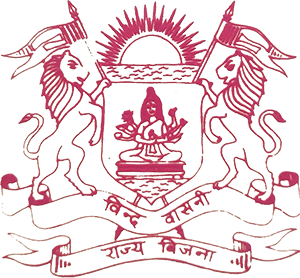
Like most princely states of Bundelkhand with Orchha lineage, the state of Bijna utilized traditional Rajput military heraldry. The state flag was a rectangular bicolour or a single-coloured saffron (yellow/orange) flag, symbolizing Rajput valor, purity, and devotion. The state coat of arms featured the Bundela lion, representing strength and sovereignty, flanked by traditional weapons such as the katar (dagger) and talwar (sword), reflecting the clan's martial history.
Post-Independence Integration and Modern Era
Following India's independence from British rule, the ruler of Bijna signed the Instrument of Accession to the Dominion of India. On 1st January 1950, the state officially merged into the newly formed Indian administrative union of Vindhya Pradesh.
In 1956, following the States Reorganisation Act, Vindhya Pradesh was merged into Madhya Pradesh; however, certain territorial adjustments resulted in the ancestral lands of Bijna being integrated into the Jhansi district of Uttar Pradesh. Today, the historical legacy of the Bijna state survives in its local architecture, fort ruins, and the enduring cultural traditions of the Bundela Rajputs in the region.
References and Historical Citations
- The Imperial Gazetteer of India, Volume VIII (1908) - Detailed geographical and statistical records of the Bundelkhand Agency states.
- Memoranda on the Indian States (1940) - Official records regarding the political relations, sanads, and successions of the Hasht-Bhaiya Jagirs.
- Aitchison, C. U. - A Collection of Treaties, Engagements and Sanads Relating to India and Neighbouring Countries - Documenting the 1823 Sanad granted to the rulers of Bijna.
Genealogy
- Raja Mahendra Sawant Singh Ju Deo, (CE 1690-1752), 2nd founder of Bijna. He was granted the title of “Mahendra” by Padshah Alamgir - Jahangir. He succeeded the throne of Orchha in 1752 till 1765, after the death of Maharaja Prithvi Singh of Orchha. He separated Bijna from orchha in 1765 and declared Bijna independent state.Married and had issue, three sons
- Kunwar Ajeet Singh (qv)
- Kunwar Jagatraj Singh, married and had issue, two sons.
- Kunwar Bharti Chand, succeeded the throne of Orchha in 1775-1776.
- Kunwar Vikramajeet, married and had issue, one daughter and a son.
- Princess Kanchan Ju Raja, born in Bijna Fort.
- Kunwar Dharampal, born in Bijna Fort, he succeeded the the throne of Orchha in 1817-1834.
- Kunwar Pran Singh
- Raja Mahendra Ajeet Singh Ju Deo, (CE 1765), married and had issues, 19 sons. A kingdom is just as strong as it's king- wrote a wise, old philosopher. Raja Ajeet Singh exemplified it by administering his state, Bijna, capably. Being a wise king, he generously supported enterprising and intrepid soldiers, courtiers and subjects He put the fear of his sword in the hearts of marauding ravagers, despoilers and plundering dacoits, providing peace and stability in his State to the peasants and traders alike. During his reign Bijna prospered and progressed. He raised an army of his own. He meted out harsh punishment to those who proved to be treacherous or disloyal and thus earned the name of being despotic and authoritarian. Once his brother from Chirgaon sought his help in chasing off a troop of British soldiers who had camped on the border of Chirgaon and killed two pet white peacocks of the jagirdar. The British soldiers also threatened to attack Chirgaon. Raja Ajeet Singh left for Chirgaon with his army without delay, fought with the British troops and drove away the aggressors. Even the most valiant hesitated to nettle the British troops, but Ajeet Singh refused to be intimidated by them. The people of Chirgaon still remember him for his valour and indomitable spirit.
- Raja Mahendra Surjan Singh Ju Deo, died , married and had issue, one son.
- Kunwar Durjan Singh - Khanderao (qv)
- Raja Mahendra Durjan Singh Ju Deo, died , Raja of Bijna 1839-1850, married and had issue, one son. He followed in his father's footsteps and judiciously maintained the kingdom established by him. A man of imposing personality and impressive physique, he governed the state astutely. His administrative and economic policies led to progress and development in the region. The hilly terrain of Bundelkhand was drought prone and had extreme climate. Braving these difficulties the Kings established kingdoms that lasted for centuries. Surjan Singh laid down stringent laws to check dacoiety and robbery in his state. He dealt strictly with those who broke the law. He provided protection to skilled and worthy traders, craftsmen, artisans and farmers. He piously preserved the time tested traditions of his great ancestors. He ruled wisely for eleven years.Raja Surjan Singh's brothers ascended the throne of Orchha when the royal line of Orchha ended without a successor. Raja Bharti Chand Ii ruled for a year from 1775 to 1776. A serious illness took his life and Orcha again adopted a King from Bijna, the younger brother of the deceased Raja Bharti Chand II. Raja Vikramajeet was crowned the King of Orchha and he ruled the State with great success for twenty one years, from 1776 to 1817. Vikramajeet had a daughter Kanchan ju raja and a son Rajkumar Dharampal who were both born in Bijna. During his reign he built the magificient Kanchan Mahal at Baldeogarh for his daughter, Princess Kanchan ju raja. He also constructed a smaller replica of Bijna Fort at Bhamori near Mowranipur. This fort was specifically built to keep the Reserve Army of Bijna. Both the monuments stand till date and bear a testimony to the contribution of Bijna in the development of Bundekhand.Raja mahendra surjan Singh ju deo received the Grant (Sanad) of 16 sixteen villages from the British government in 11April 1823. Bijna, Basaar, Vijaygarh, Hanota, Bhagora, Dhawai, Majra, Bagroni, Ghanghari, Durbutiyao, Lathesara, Rajgir, Dadpura, Tai, Silohi, Huddiyan goan.
- Kunwar Mukund Singh (qv)
- Raja Mahendra Mukund Singh Ju Deo, born , died , Raja of Bijna 1850-1908, married and had issue, 2 sons. The history of Bundelkhand at the beginning of the 19th centuary is full of turmoil and wars. A famine also struck around 1830 causing great suffering and loss of human life.Surjan Singh Ju Deo of Bijna was succeeded by his son, Raja Durjan Singh ju Deo, also known as Khanderao. He dealt with the growing complexities of transient political powers and their struggles to gain supremacy with great foresight . The Marathas, the East India Company, the Mughals, the minor alien forces and the indigenous clans battled to overpower the weak and assert their authority. Durjan Singh maintained peace and tranquillity in his region during his reign from 1839 to 1850. He followed the systems laid down by his father . Under his able administration the people of Bijna survived the onslaught of nature and conflicting powers.
- Hira Shah, married and had issues, 4 sons. He was excluded from the succession for administrative incompetence.
- Kunwar Himmat Singh
- Kunwar Dilipat Singh
- Kunwar Laxman Singh
- Kunwar Raghuveer Singh
- Mardan Singh, received Tai as Jagir from Bijna State in 1919. Raja Mukund Singh Ju Deo of Bijna ruled from 1858 to 1908. By this time the British Crown had taken over the power in its hands. In 1854 the Bundelkhand Agency was placed under the authority of Central India Agency, headquartered at Indore. British granted administrative powers to Raja Mukund Singh Ju Deo . He was to maintain 21cavalry, 150 infantry and 15 guns. He successfully maintained law and order in the region. He carried forward the most cherished traditions of his illustrious forefathers. At the same time he encouraged modern ideas among the common people.
- Hira Shah, married and had issues, 4 sons. He was excluded from the succession for administrative incompetence.
- Raja Mahendra Himmat Singh Ju Deo Bahadur, (CE November 18th,1894-November 27th, 1955) Raja of Bijna 1908-1955. He did two marriages, married 1stly to daughter of Thakur Barjor Singh pawar (Thakur of Katharvada in Charkhari), married 2ndly to daughter of Thakur Meharban Singh Pawar of Katili in Datia and had issues, three sons and two daughters.
- Chhatrapati Singh (qv)
- Lokendra Singh (CE 1926-2009), received Bagroni as Jagir from Bijna State.
- Vijay Bahadur Singh, received Hanota as Jagir from Bijna State. After the turbulent years of freedom struggle all the States of India merged with the newly constituted nation, India, liberating themselves from the yoke of imperialist colonizers. The State of Bijna, held in the steady hands of Raja Mahendra Himmat Singh ju Deo Bundela steered itself through this storm with calm and fortitude. Himmat Singh ju deo had been trained to govern and administer the state from the tender age of ten when the then king of Bijna passed away. The British Political Agent turned down the claim made to the throne of Bijna by Mardan Singh, the younger brother of the deceased king as he was not able to read an English book. Himmat Singh ju Deo Bundela was educated in Nowgaon Maharaja School. He ascended the throne after the completion of his education in 1908. He was granted the additional title of 'Bahadur' by the British. He attended the Imperial Darbar in 1911 along with the King of Tori-Fatehpur. He was awarded a sword and two medals for personal distictinction. Till date people of Bijna remember him as an able administrator. He extended the area under cultivation, developed proper agricultural practices, negotiated with the British to construct canals, set up a flour mill, invited artisans and craftsmen, scholars and vaidyas, trained soldiers, constructed and restored the fort. He relentlessly strove to improve the State and its citizens. As a result of his efforts, Bijna acquired an enviable position in Bundelkhand. He embraced the modern ideas of education and economic development but at the same time retained the long standing social, cultural and religious traditions in place since times immemorial. He faced the dilemma of accepting or rejecting traditions at every step and with great sagacity took extremely tough decisions both at personal and public levels.He educated his younger sons at the prestigious Scindia School in Gwalior, a public school for royal princes. His eldest son, Raja Chhatrapati Singh ju Deo, however immersed himself in music much against his father's will. Later as he grew proficient in his art and became a cynosure of musicians, Himmat Singh ju Deo half-heartedly relented, allowing him to pursue his passion and calling. Though he did not live to see his son achieve international and national fame as a Pakhawaj virtuoso.
- Raja Mahendra Chhatrapati Singh Ju Deo Bahadur, (CE April 6th, 1919 - September 12th, 1998) Raja of Bijna (1955-1998). He did two marriages, married 1stly to daughter of Rao Sahib Shivapati Singh Pawar in Karahiya, married 2ndly to daughter of Rao Sahib Durjan Singh Pawar in Garrauli and had issues, one son and two daughters.
- Kunwar Surya Pratap Singh (qv)
- Princess Saroj Kanwar Ju Raja, married Rawal Summer Singh of Khadwali - Ujjain (M.P.)
- Princess Chandra Kanwar Ju Raja, married Col. H.K. Singh of Lakhimpur Kheri, U.P.
- Raja Mahendra Surya Pratap Singh Ju Deo Bahadur (CE 1940 - January 20th, 2003) Raja of Bijna (1998-2003); married to Uma Kumari, daughter of Thakur Saheb Daulat Singh of Naila Thikana of Jaipur and had issues, one son and a daughter.
- Princess Navneeta Kumari, married Maharaj Maheshwar Singh of Banswara State in 1997.
- Kunwar Jaiveer Singh (qv)
- Raja Mahendra Jaiveer Singh Ju Deo Bahadur (see above)