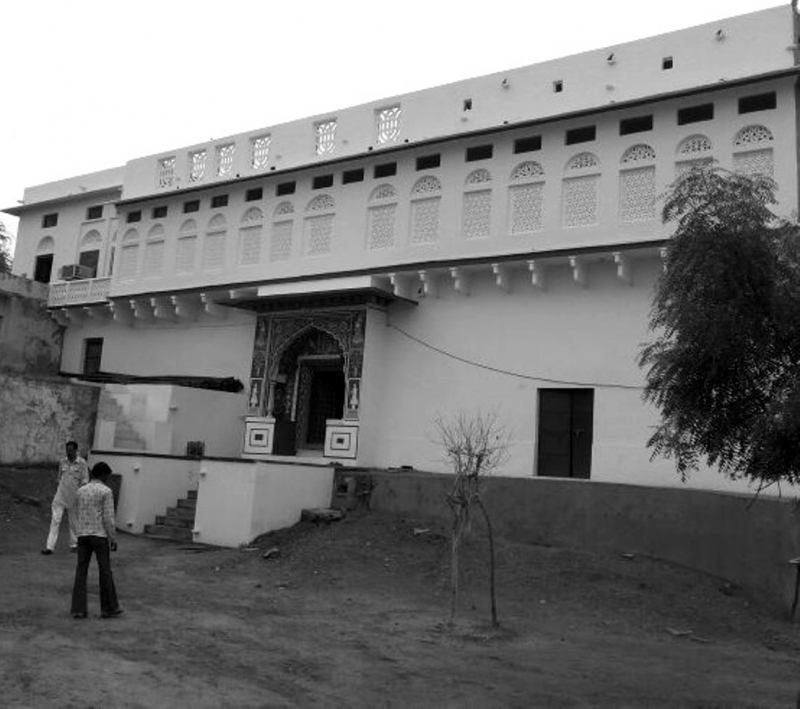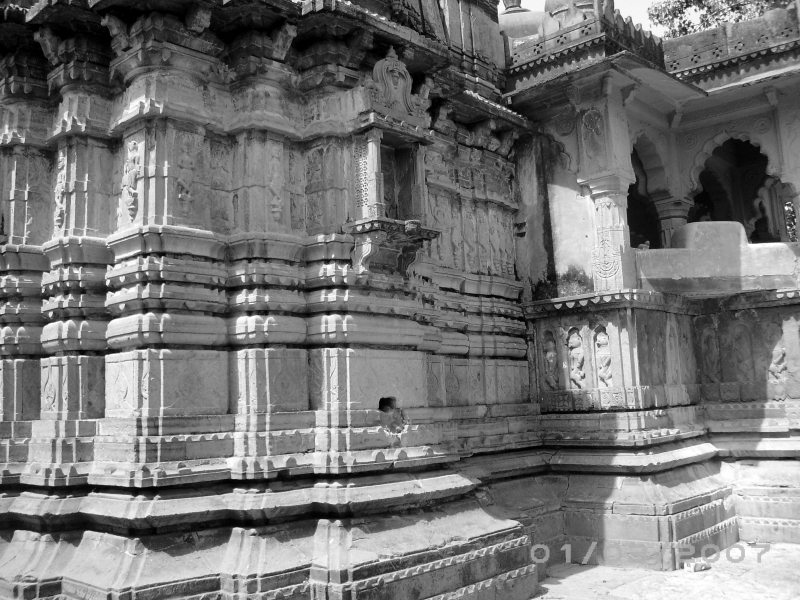
Present Head
- Kunwar Chandravijay Singh Hada, married to Bhavana Rathore, daughter of Col. Karan Singh Rathore of Gunawati.
History
Origin and Foundation of Bada Khera Thikana
The Thikana of Bada Khera holds an illustrious position in the annals of the Hada Chauhan dynasty of Bundi State. This premier estate was established by Kunwar Jait Singh, a nobleman of exceptional pride and resolve. Jait Singh was the son of Maharajadhiraj Bairisal Singh, the founder of the neighboring Balwan State, and the grandson of Maharaj Kunwar Gopinath Singh. His great-grandfather was the legendary Rao Raja Ratan Singh (Sir Buland Rai), one of the most celebrated rulers of Bundi, who reigned during the Mughal era and earned great renown for his valor in imperial campaigns.
The foundation of Bada Khera is rooted in a striking act of self-reliance and honor. Upon reaching adulthood, Kunwar Jait Singh chose to forego his designated share of the paternal inheritance and property in Balwan State. Seeking to carve out his own destiny rather than rely on ancestral subdivisions, he marched out to establish his own independent domain. This quest led to the birth of the separate estate of Bada Khera, which quickly grew in strategic importance and emerged as one of the most prominent fiefdoms under the suzerainty of the Maharao Raja of Bundi.
Preeminent Court Honors and Privileges
Bada Khera was not merely an ordinary fief but a "Triple Title Thikana," enjoying the highest tier of protocol and honors in the Bundi Darbar. The rulers of Bada Khera were invested with three highly coveted marks of distinction:
- Sona (Gold): The rare privilege to wear gold anklets and ornaments on the feet, a distinction strictly regulated in Rajput courts and reserved only for the highest-ranking nobles of royal blood.
- Taazim: The ceremonial honor wherein the Maharao Raja of Bundi would rise from his throne twice—once upon the arrival of the Maharaja of Bada Khera and again upon his departure—to show mutual respect.
- Hath ka Kurb: A highly personal and prestigious form of courtly greeting where the sovereign would extend his hand to touch or embrace the noble, signifying deep familial and political bonding.
In addition to these ceremonial honors, the Maharaja of Bada Khera possessed first-class judicial powers within his territory, exercising both civil and criminal jurisdiction, a testament to the Thikana's administrative autonomy. Uniquely, the Thikana was exempt from paying annual tribute (known as Khiraj or Rekh) to the Bundi Darbar, a rare concession granted only to close kinsmen of supreme status. In the seating hierarchy of the Bundi Darbar, the Maharaja of Bada Khera occupied the coveted first seat on the right-hand side of the Maharao Raja, reinforcing his status as the premier noble of the state.
British Period and Strategic Importance
During the British Raj, when Bundi State entered into a treaty of alliance with the British East India Company in 1818 (as detailed in historical records of Bundi State treaty relations), the high status of Bada Khera was continuously recognized. The British political agents and the administration of Bundi respected the judicial sovereignty and tax-exempt status of the Thikana. Bada Khera remained a stable pillar of the Haroti region's administration, contributing to the defense and social stability of the province during periods of transition.
Post-Independence and Modern Era
With India's independence in 1947 and the subsequent integration of the princely states, Bundi State merged into the United State of Rajasthan in 1948. Consequently, the feudal privileges, judicial powers, and jagirdari rights of Bada Khera were formally abolished under the Rajasthan Land Reforms and Resumption of Jagirs Act, 1952. Despite the political transition, the family of Bada Khera continues to preserve their rich cultural heritage, ancestral traditions, and historical archives, maintaining a highly respected position among the historical nobility of the Haroti region.
Genealogy
- Maharaja Shri Jait Singh Hada (Kaka Jait Singh) [16th centuary A.D], founder of Bada Khera. He was the second son of Maharaja Bairisal Singh Hada of Bundi, founder of Balwan estate. He died in a war at Delhi, there is a cenotaph of him at the front of Red Fort, Delhi. married and issues.
- Kunwar Dev Singh (qv)
- Kunwar Nahar Singh
- Kunwar Naval Singh
- Kunwar Soubhag Singh
- Maharaja Shri Dev Singh Hada, 2nd Maharaj of Bada Khera, married and had issue.
- Kunwar Shiv Singh (qv)
- Maharaja Shri Shiv Singh Hada, 3rd Maharaj of Bada Khera, married and had issue.
- Kunwar Bharat Singh (qv)
- Maharaja Shri Bharat Singh Hada, 4th Maharaj of Bada Khera, married and had issues.
- Kunwar Nag Singh (qv)
- Kunwar Mehtab Singh
- Maharaj Magan Singh
- Maharaj Shree Devi Singh (Jhujhar Ji Babosa Maharaj), jhujhar during the war at Sheopur, M.P.
- Kunwar Soor Singh
- Kunwar Pratap Singh
- Kunwar Jodh Singh
- Maharaj Sumer Singh
- Maharaj Tejraj Singh, married to Krishna Kanwar Rathore of Khedla, Bundi.
- Kunwar Suraj Pratap Singh Hada, married to Chandra Kanwar Rajawat, daughter of Kunwar Nand Singh Rajawat of Mangrol, Baran.
- Kunwar Chandra Pratap Singh Hada, married to Priya Kanwar Shaktawat, daughter of Thakur Devendra Singh Shaktawat of Bisundani, Sawar, Ajmer.
- Bhanwar Mahiraj Singh Hada
- Maharaj Tejraj Singh, married to Krishna Kanwar Rathore of Khedla, Bundi.
- Maharaj Kishan Singh
- Maharaj Narpat Singh Hada
- Kunwar Arjun Singh Hada
- Maharaj Swaroop Singh Hada
- Maharaj Narpat Singh Hada
- Maharaj Bhagwan Singh Hada, married to Bhagwati Devi Jadoun, daughter of Thakur Ram Singh Jadoun of Kathon, Vijaypur, M.P.
- Kunwar Dilip Singh Hada, married with Tapasvi Kanwar Ranawat of Dhandhola, Mewar and has issues.
- Bhanwar Pradeep Singh Hada
- Bhanwar Himanshu Singh Hada
- Aastha Singh Hada
- Kunwar Lekhraj Singh Hada, married to Pratibha Rathore, daughter of Thakur Shri Shambhu Singh Rathore of Sholian, Bhinai, Ajmer and has issues, two daughters and a son.
- Divya Hada
- Neha Hada
- Bhanwar Yuvraj Singh Hada
- Kunwar Dilip Singh Hada, married with Tapasvi Kanwar Ranawat of Dhandhola, Mewar and has issues.
- Maharaj Sumer Singh
- Kunwar Jodh Singh
- Kunwar Pratap Singh
- Maharaj Indrasal Singh
- Maharaj Magan Singh
- Kunwar Suraj Singh
- Kunwar Amaan Singh
- Kunwar Guman Singh of Guhata
- Kunwar Surat Singh Of Guhata
- Kunwar Girvar Singh Of Guhata
- Maharaja Shri Nag Singh Hada, 5th Maharaj of Bada khera, married and had issue.
- Kunwar Ram Singh (qv)
- Maharaja Shri Ram Singh Hada, 6th Maharaj of Bada Khera.
- Maharaja Shri Indrasal Singh Hada, 7th Maharaj of Bada Khera, married and had issue.
- Kunwar Jaswant Singh (qv)
- Maharaja Shri Jaswant Singh Hada, 8th Maharaj of Bada Khera.
- Maharaja Shri Karan Singh Hada, 9th Maharaj of Bada khera. He was adopted from Guhata. He was the son of Maharaja Kalu Singh Hada of Guhata.
- Kunwar Prithviraj Singh (qv)
- Kunwar Mahendra Singh
- Kunwar Dharamraj Singh
- Kunwar Anand Singh
- Maharaja Shri Prithviraj Singh Hada, 10th Maharaj of Bada Khera, married to Rani Sa Kush Kanwar, daughter of Rawat Himmat Singh Ji of Bhainsrorgarh, and had issues.
- Kunwar Jaideep Singh (qv)
- Kunwar Pradeep Singh
- Maharaja Shri Jaideep Singh Hada, 11th Maharaj of Bada Khera (see above).