Present Head
History
Introduction and Geographic Significance
Alai was the titular 'sona-nareshi' Tazimi thikana of Marwar princely state. Due to its geographic concerns, thikana of Alai was a strong bastion of ammunition and cavalry to protect the realm of Marwar. Alai was the epicenter where princely state of Bikaner ends and Marwar starts. 'Tazimi' of 12 villages was granted by Darbar Vijay Singh of Jodhpur, to late Thakur Harnath Singh in vikram sanvat 1837 (233 years ago). Thikana of Alai is the Head seat of Mandnot Rathores.
Situated in the strategic northern frontier of the erstwhile Marwar state (modern-day Nagaur district of Rajasthan), Alai functioned as a vital buffer zone. Its positioning at the intersection of the rival kingdoms of Marwar (Jodhpur) and Bikaner made it an indispensable military outpost. The rulers of Alai maintained a highly mobilized force of Rajput cavalry and a well-stocked armory to repel border incursions and safeguard the trade routes passing through the region.
Origin of the Mandnot Rathores
The Thikana of Alai is historically recognized as the premier seat (Patvi Thikana) of the Mandnot (Mandanot) Rathores, a prominent sub-clan of the Rathores of Marwar. The Mandnot Rathores trace their lineage back to Rao Mandan Singh, a valiant prince who was the son of Rao Ranmal (Rinmal), the ruler of Mandore and Marwar in the early 15th century.
Rao Ranmal's descendants established various fiefdoms across Rajputana. The descendants of his son Mandan Singh came to be known as Mandnot Rathores. Over generations, they distinguished themselves through their military service to the Jodhpur crown. Recognizing their loyalty and martial prowess, consecutive Maharajas of Marwar granted them strategically crucial estates along the borders, of which Alai was the most prominent.
The Golden Period: Grant of Tazim in VS 1837
The late 18th century was a turbulent epoch in Rajputana, marked by Maratha incursions and shifting internal alliances. During this critical period, Maharaja Vijay Singh of Marwar (who ruled from 1752 to 1793 AD) sought to consolidate his borders and reward his most dependable chieftains.
In Vikram Samvat 1837 (circa 1780 AD), Maharaja Vijay Singh elevated the status of Alai to a Tazimi Thikana, granting a lordship over 12 villages to Thakur Harnath Singh Mandnot. The honor of Tazim was one of the highest courtly protocols in Rajput states, wherein the Maharaja would rise from his throne to welcome the noble upon his arrival at the royal court.
Furthermore, the Thikana was recognized as Sona-Nareshi, a prestigious designation that permitted the Thakur of Alai to wear gold anklets or ornaments (Toda) on their feet within the royal durbar of Jodhpur—a privilege reserved strictly for the highest echelon of the Marwar nobility.
British Raj and Feudal Administration
With the signing of the treaty of alliance between Jodhpur State and the British East India Company in 1818, the nature of military obligations shifted from active warfare to territorial administration and policing. Under British paramountcy, the Thakurs of Alai continued to manage their estates efficiently, collecting land revenues and resolving local disputes.
The fortress of Alai remained a symbol of regional authority. The nobles of Alai actively participated in the administrative reforms of Marwar State and maintained close socio-political relations with neighboring thikanas in both Jodhpur and Bikaner. Their contribution to the preservation of local culture, horse breeding (particularly the famous Marwari horse breed), and patronizing local temples and bards is well-documented in the historical archives of Jodhpur.
Post-Independence and Modern Era
Following India's independence in 1947, Jodhpur State integrated into the United State of Rajasthan in 1949. With the promulgation of the Rajasthan Land Reforms and Resumption of Jagirs Act in 1952, the feudal system was officially abolished, and the administrative privileges of the Alai Thikana were transitioned to the democratic government.
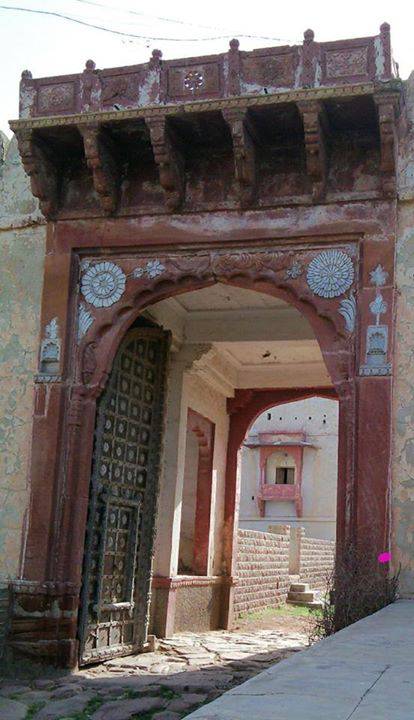
Today, Alai is a thriving historical town in the Nagaur district. The heritage of the Mandnot Rathores is preserved in the architectural remains of the thikana, including its traditional forts, cenotaphs (chhatris), and religious temples. The descendants of the royal house of Alai continue to be respected as custodians of the region's rich historical and cultural legacy.
Genealogy
- Rao Ridmal Ji, brother of Rao jodha, who left marwar with his nephew Rao Bika.
- Rao Maandan Ji
- Rao Saado Ji
- Thakur Jogidas Singh
- Thakur Harirup Singh
- Thakur Likhmidas Singh
- Thakur Raghunath Singh
- Thakur Durjan Singh
- Thakur Jodh Singh
- Thakur Saheb Harnath Singh Ji
- Thakur Saheb Ram Singh Ji
- Thakur Saheb Bharon Singh Ji
- Thakur Saheb Shobha Singh Ji
- Thakur Saheb Daulat Singh Ji
- Thakur Saheb Acchal Singh Ji
- Thakur Saheb Guman Singh Ji
- Thakur Saheb Tej Singh Ji
- Thakur Saheb Sumer Singh Ji
- Thakur Saheb Ganga Singh Ji
- Kunwar Chandan Singh (qv)
- Kunwar Laxman Singh
- Kunwar Devi Singh
- Kunwar Gaje Singh
- Thakur Saheb Chandan Singh Ji (see above)