Present Head
History
Introduction and Ancestral Lineage
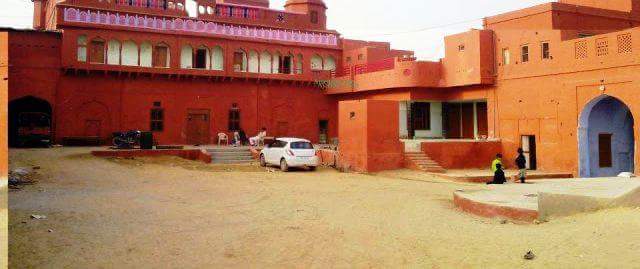
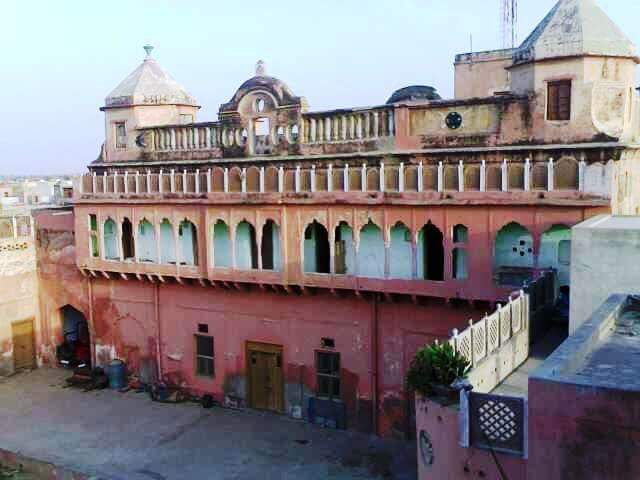
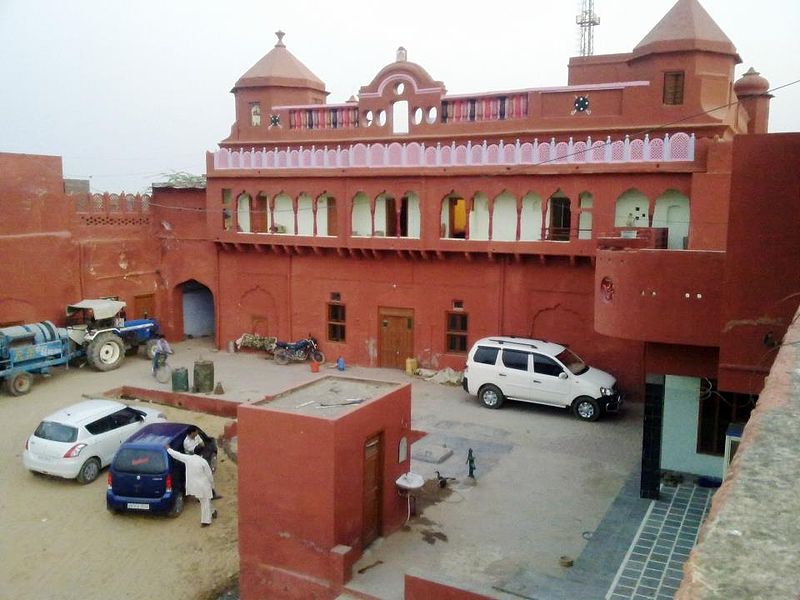
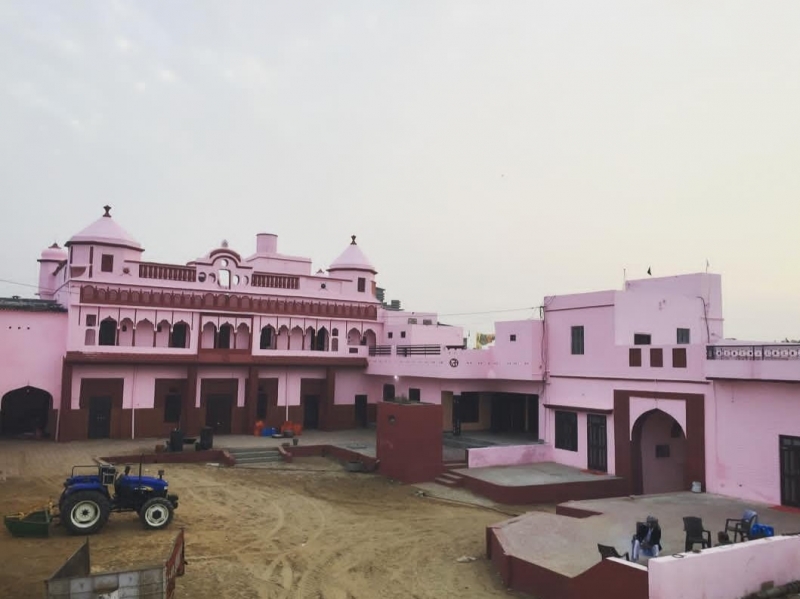
Ajitpura is a historic and prominent estate (Thikana) within the erstwhile princely state of Bikaner State, located in the present-day Hanumangarh-Churu border region of Rajasthan, India. It represents one of the premier ancestral seats of the Sringot (also spelled Shringot) clan of the Bika Rathores. The rulers of Ajitpura trace their lineage back to Maharaj Sring ji (Shringji), a prominent son of Rao Jait Singh (Jetsiji), the ruler of Bikaner who reigned from 1526 to 1542 AD. As descendants of Maharaj Sring ji, the nobles of this house held a privileged position of high honor in the administrative and martial hierarchy of Bikaner.
Within the feudal structure of the Bikaner Darbar, the Thakur (Chief) of Ajitpura was recognized as a noble of high status. The chief enjoyed the rare honor of Ikladi Tazim (a formal reception where the Maharaja stands up once to welcome the noble) and Banho Pasanv (a ceremonial privilege of physical proximity or seating arrangement near the sovereign). These honors placed the Thikana among the trusted inner circle of the Bikaner ruling family.
Foundation and Mughal-Era Grants
The formal establishment of the Ajitpura estate dates back to the late 16th century. In 1594 AD, the estate was officially granted to Thakur Saheb Manohardasji by Raja Rai Singh I of Bikaner. Raja Rai Singh was a celebrated general of the Mughal Empire under Emperor Akbar, and his reign saw the reorganization of Bikaner's feudal lands to reward loyalty and military valor. Manohardasji, representing the Sringot line, received the land grant of Ajitpura to consolidate Bikaner's northern frontier borders.
The Era of Maharaja Surat Singh and the Sidhmukh Connection
During the late 18th and early 19th centuries, the political dynamics of Bikaner underwent significant shifts under Maharaja Surat Singh (who ruled from 1787 to 1828 AD). It was during this period that the status of the Ajitpura chieftaincy was further elevated.
Thakur Saheb Kishen Singhji of Ajitpura was a powerful and influential noble of his time. Recognizing his loyalty and strategic importance, Maharaja Surat Singhji conferred upon him the prestigious Dohri Tazim (double tazim) Thikana of Sidhmukh. Although the grant of Tazim for Ajitpura is historically recorded as being reaffirmed during this era (circa 1816 AD), Thakur Kishen Singhji made the strategic decision to consolidate his family's holdings. He subsequently abdicated his claim over Ajitpura in favor of his son, Kunwar Ram Singh, who succeeded him as the Ruler of Ajitpura, while the elder line maintained a presence in Sidhmukh.
British Raj and Military Obligations
Following the treaty of 1818 between Bikaner State and the British East India Company, the internal administration of the Thikanas became more systematic and documented. The Thikana of Ajitpura was a vital contributor to the state's treasury and military readiness.
According to state records of 1893, Ajitpura was responsible for providing Rekh (tribute or feudal revenue) collected from 16 vassal villages under its jurisdiction. Furthermore, the Thikana maintained a standing cavalry unit, contributing Chakari Asvar (Horse Cavalry) of 20 heavily armed horsemen to the Bikaner State Army. These forces were utilized by the state during regional campaigns and border security duties alongside the British forces, showcasing the martial heritage of the Sringot Rathores.
Post-Independence and Modern Era
With India's independence in 1947, and the subsequent merger of Bikaner State into the United State of Greater Rajasthan in 1949, the feudal administrative powers of the Thikanas were gradually phased out. Under the Rajasthan Land Reforms and Resumption of Jagirs Act of 1952, the ceremonial and revenue-collecting rights of the Ajitpura estate were officially abolished.
Despite the loss of administrative authority, the royal descendants of the Ajitpura estate have transitioned successfully into modern democratic India. Members of the family have remained prominent in local agriculture, business, and community leadership, preserving the heritage, forts, and historic temples of their ancestors while contributing to the development of the Hanumangarh and Churu districts.
References
- Bikaner State History and Administration - Wikipedia
- The History of Bikaner State by G.H. Ojha - Internet Archive
- Maharaja Surat Singh of Bikaner - Wikipedia
Genealogy
- Thakur Saheb Manohardas, 3rd Thakur of Bhukarka, married and had issues, two sons.
- Kunwar Karamsen, heir apparent to Bhukarka.
- Kunwar Kishen Singh, granted Thikana of Ajitpura and later Sidhmukh (qv)
- Thakur Saheb Kishen Singhji, 1st Thakur of Ajitpura and Sidhmukh, he provided military services to Maharaja Karan Singhji of Bikaner against ingress of Rao Amar Singh of Nagore in 1644 AD, married and had issues, two sons.
- Kunwar Pratap Singh, heir apparent of Thikana Sidhmukh.
- Kunwar Ram Singh, granted Thikana of Ajitpura in 1616 A.D.(qv)
- Thakur Saheb Ram Singhji, 2nd Thakur of Ajitpura, married and had issue.
- Kunwar Fateh Singh (qv)
- Thakur Saheb Fateh Singhji, 3rd Thakur of Ajitpura, married and had issue.
- Kunwar Kirti Singh (qv)
- Thakur Saheb Kirti Singhji, 4th Thakur of Ajitpura, married and had issue.
- Kunwar Deep Singh (qv)
- Thakur Saheb Deep Singhji, 5th Thakur of Ajitpura, married and had issue.
- Kunwar Shivdan Singh (qv)
- Thakur Saheb Shivdan Singhji, 6th Thakur of Ajitpura, married and had issue.
- Kunwar Dalel Singh (qv)
- Thakur Saheb Dalel Singhji, 7th Thakur of Ajitpura, married and had issue.
- Kunwar Guman Singh (qv)
- Thakur Saheb Guman Singhji, 8th Thakur of Ajitpura, married and had issue.
- Kunwar Lal Singh (qv)
- Thakur Saheb Lal Singhji, 9th Thakur of Ajitpura, married and had issue.
- Kunwar Bhairon Singh (qv)
- Thakur Saheb Bhairon Singhji, 10th Thakur of Ajitpura. In 1905 AD a plot for rebellion was hatched by few Nobles of Bikaner State which included Thakur of Ajitpura, among the suspected rebel Sardars, he was put under house arrest at Junagarh Fort, Bikaner, and Tazim was abolished, married and had issue.
- Kunwar Shiv Singh (qv)
- Thakur Saheb Shiv Singhji, 11th Thakur of Ajitpura, Tazim was reinstated by Maharaja Ganga Singhji of Bikaner, married and had issue.
- Kunwar Ram Singh (qv)
- Thakur Saheb Ram Singhji
- Thakur Saheb Mangej Singhji
- Kunwar Brihmdev Singhji (qv)
- Kunwar Raj Dev Singhji
- Kunwar Shridev Singhji
- Kunwar Kaladev Singhji
- Kunwar Subhkaran Singhji
- Kunwar Govind Singhji
- Thakur Saheb Brihmdev Singhji (see above)