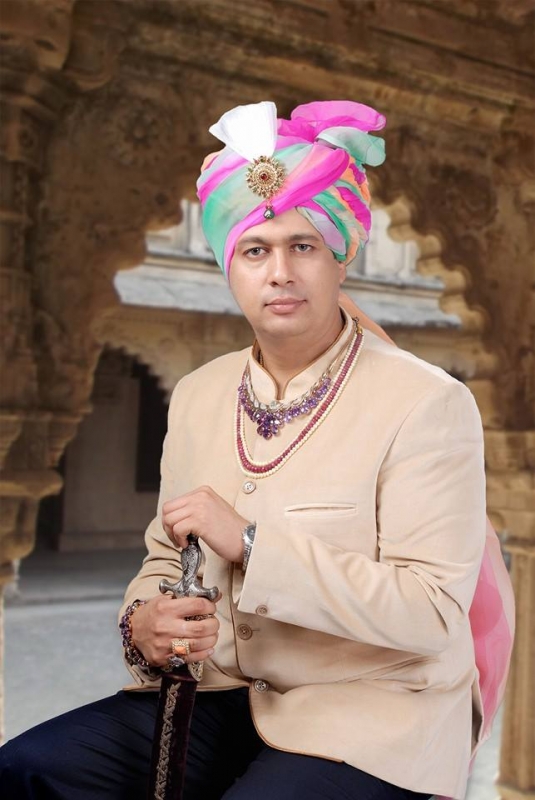

Present Head

- Rajkumari Shri Anjali Raje Nitranjan Pawar, born .
- Rajkumari Shri Runaali Raje Nitranjan Pawar, born .
- Rajkumari Shri Kavita Raje Nitranjan Pawar, born .
- Deshmukh Shri Atishraje Nitranjan Pawar, born .
History
Origins and Foundation of Surgana State
The state of Surgana, nestled in the rugged and heavily forested terrain of the Western Ghats (Sahyadri range), was founded prior to 1800. The ruling dynasty belonged to the Konkani Kunbi lineage, who later adopted the surname Pawar (Paramara) to assert their Maratha status. Historically, the chiefs of Surgana served as essential frontier guardians. Their principal duty was to safeguard the strategic mountain passes around the historic fort of Hatgad, preventing predatory incursions into the Deccan plains by the fiercely independent Bhil and Koli tribes of the neighboring Dangs region.
In recognition of their vital policing and military services, the neighboring regional powers invested the Surgana rulers with the hereditary title of Deshmukhs of the Hatgad division of Nasik. Along with this title, they were granted the town of Surgana and a cluster of surrounding forest villages, establishing a localized autonomous fiefdom that controlled trade routes between the port of Surat and the Deccan plateau. More details on the geographical setting can be found on the Surgana State Wikipedia Page.
The Maratha and Mughal Periods: The "Bandi Mulk"
During the seventeenth and eighteenth centuries, as the Mughal Empire and the Maratha Confederacy vied for hegemony over Western India, the rulers of Surgana fiercely defended their independence. Positioned in a highly defensible, mountainous jungle corridor, the Surgana Chieftains consistently refused to pay regular tribute to either the Mughal Governors or the Maratha Peshwas. Consequently, their territory was labeled in administrative records as Bandi Mulk (the rebel land).
Despite their insubordination, the Marathas adopted a highly conciliatory policy toward Surgana. The strategic location of the state—straddling the critical transit routes between Pune, Nasik, and the wealthy trading emporium of Surat—meant that any disruption by the Surgana chiefs could paralyze trade and troop movements. The Peshwas preferred diplomatic appeasement and nominal vassalage over costly military campaigns in the malaria-ridden, impenetrable jungles of the Dangs borderland.
British Intervention and Political Turmoil (1818–1877)
Following the fall of the Peshwa in 1818, the British East India Company sought to establish absolute administrative control over the Nasik hills. Unused to foreign interference, the Surgana authorities acted as sovereign rulers and attacked a British police detachment passing through their territory in 1818. This act of defiance met with swift British retaliation. In 1819, the Chief, Malharrao, was captured, court-martialed, and hanged.
The British subsequently recognized his cousin, Bhikaji Rao, as the new Chief of Surgana in gratitude for his personal assistance to British forces during the Anglo-Maratha hostilities. However, Bhikaji Rao's collaboration made him deeply unpopular locally. He was soon assassinated in an uprising engineered by the mother of the executed Malharrao and her brother-in-law, Pilaji. The British military response was decisive; Pilaji was hunted down, captured, and executed. Historical records of these campaigns are detailed in the Imperial Gazetteer of India.
To restore long-term stability, the British brokered a compromise in 1846, allowing the descendants of the executed Malharrao to share in the state's forest and land revenues. This complex revenue-sharing arrangement was formally codified in 1877 through an allowance grant, ensuring peaceful succession and administrative stability under the supervision of the British Political Agent at Nasik. Historical documentation of these settlements can be accessed via the official Maharashtra State Gazetteers.
Late British Period, Administration, and Reform
By the late nineteenth and early twentieth centuries, Surgana transitioned from a turbulent tribal frontier into a well-administered princely state. The state's primary source of revenue shifted to organized forestry, particularly the export of high-quality teak, bamboo, and wild forest produce. Under British suzerainty, Surgana was classified as a non-salute state within the Nasik Agency of the Bombay Presidency.
The rulers introduced basic infrastructural reforms, including primary schools, forest conservation laws, and dispensaries. Between 1921 and 1947, the political status of the state was elevated when the Chief of Surgana was granted the right to elect a Representative Member to the Chamber of Princes (Narendra Mandal), representing the smaller states of the Bombay Presidency on a national platform.
The State Coat of Arms featured:
- The Shield: Depicting a landscape of the Sahyadri mountains and the historic Hatgad Fort, signifying their role as guardians of the passes.
- Supporters: A leopard and a tiger, representing the dense, wildlife-rich forests of the Dangs and Surgana.
- Motto: A Sanskrit inscription emphasizing protection, duty, and courage in the face of adversity.
Post-Independence and Modern Era
At the time of Indian independence in 1947, Surgana was bordered to the south by the Peint taluka of Nasik, and to the west by the princely states of Bansda and Dharampur. In March 1948, the last ruling chief, Meherban Shrimant Dhairyashil Rao Yeshwantrao Pawar, signed the Gujarat States Merger Agreement, officially integrating the state into the Dominion of India.
Following the reorganization of states on a linguistic basis, Surgana was incorporated into the Nasik district of Bombay State, which later became the state of Maharashtra in 1960. Today, Surgana exists as a taluka (administrative block) within the Nashik district, celebrated for its rich tribal heritage, dense forest cover, and historic links to the defense of the Sahyadri mountain passes.
Genealogy
- Deshmukh MALHAR RAO, Deshmukh of Surgana 1818/1819, executed in 1819.
- Deshmukh BHIKAJI RAO, Deshmukh of Surgana 1819/1820
- Deshmukh YESHWANT RAO I BHIKAJIRAO, Deshmukh of Surgana 1820/1854
- Deshmukh RAVI RAO, Deshmukh of Surgana 1854/1867
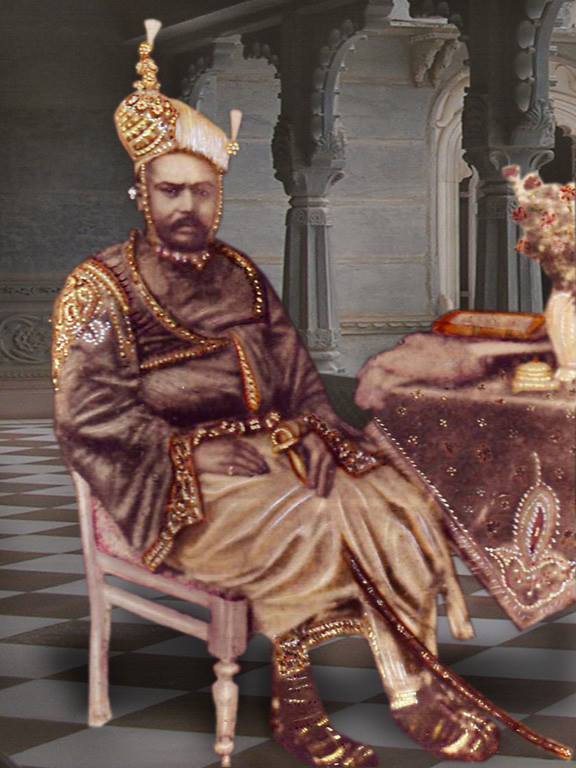
- Deshmukh SHANKAR RAO RAVI RAO, Deshmukh of Surgana 1867/1898, born .
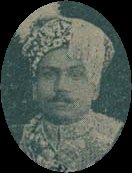
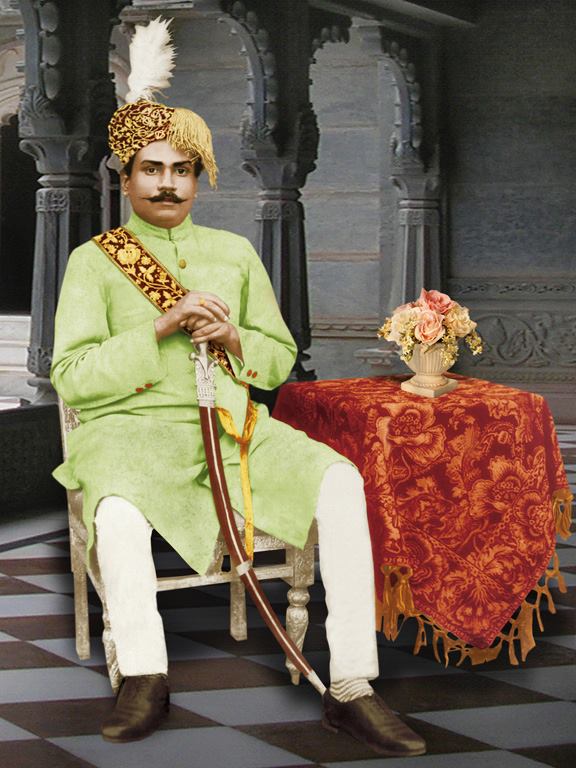
- Deshmukh PRATAP RAO SHANKAR RAO, Deshmukh of Surgana 1898/1930, born , succeeded 17th June 1899, formally installed on 4th December, 1901.
- Deshmukh YESHWANT RAO II PRATAPRAO, Deshmukh of Surgana 1930/1936
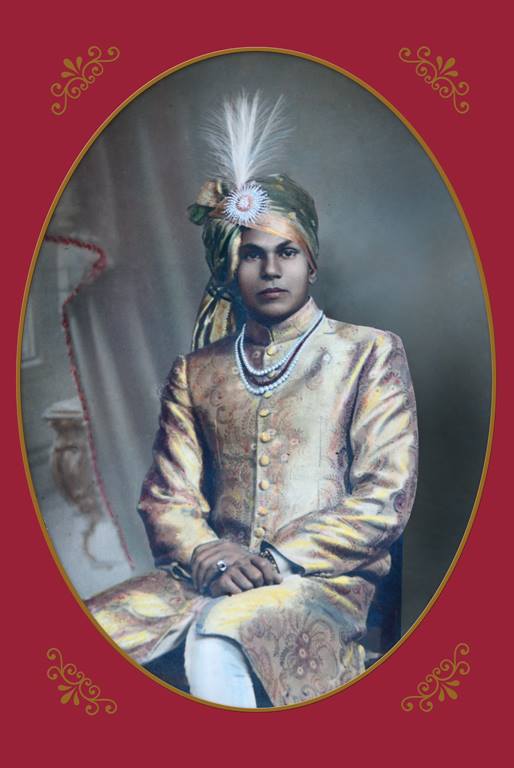
- Deshmukh Shri DHAIRYASHILRAO YESHWANTRAO, Deshmukh of Surgana or 'the Chief of Surgana state' 1936/2003, born , succeeded to the gadi in April, 1936; Member of the Rajya Sabha 1952/1968 and 1972/1978, married Shrimati Rani Udayani Devi, and had issue, two sons and one daughter. He died on .
- Deshmukh Shri Nitranjan Dhairyashilrao Pawar (qv)
- Shrimant Rajkumar Tejsinhraje Pawar, married Shrimant Rani Usharaje Tejsinh Pawar, and has issue.
- Shri Rohitraje Tejsinhraje Pawar, born , educated at Pune University (M.B.A.), married 9th December 2001, Shrimant Vrushaliraje Rohitraje Pawar, and has issue.
- Shri Kaustubhadityaraje Pawar
- Shri Ratnasheelraje Tejsinhraje Pawar, born ; presently he is actively involved in politics and social service and is also managing a petrol pump in Surgana in the name of Asawari Petroleum, Surgana, married to Soubhagyakankshini Sonaliraje and and has issue, one son.
- Shri Rudrapratap Pawar
- Shri Rohitraje Tejsinhraje Pawar, born , educated at Pune University (M.B.A.), married 9th December 2001, Shrimant Vrushaliraje Rohitraje Pawar, and has issue.
- Shrimant Rani Kalpanaraje, married Chhatrapati Shri Pratapsinhraje Shahumaharaj Bhonsle of Satara, and has issue.
- Deshmukh Shri NITRANJAN DHAIRYASHILRAO PAWAR, Deshmukh of Surgana (see above)