Present Head
History
The Origin and Foundation of Savantvadi
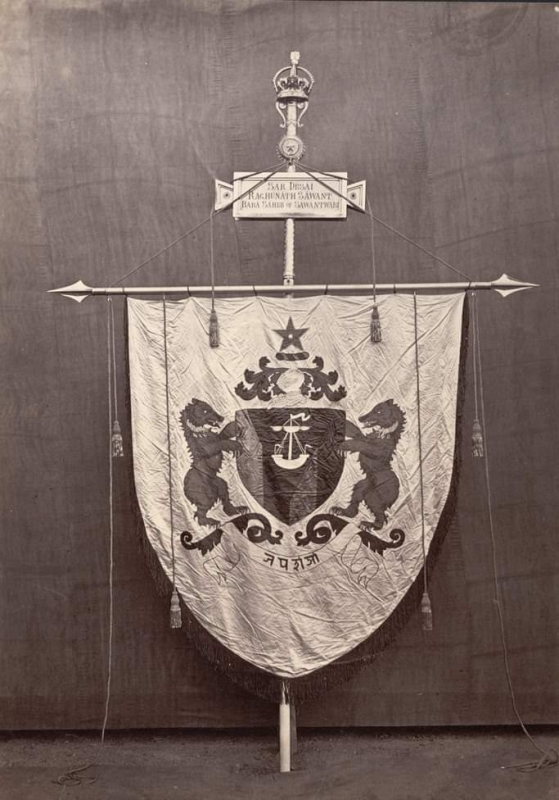
The historical state of Savantvadi (frequently spelled as Sawantwadi) was a prominent princely state during the British Raj, ruled by the Bhonsle dynasty of the Maratha-Rajput clan. The ruling family traces its origins to the Sisodia Rajput clan of Udaipur (Mewar), members of whom migrated southwards to the Deccan region. In the Konkan region, they established their hegemony and came to be known as the Savants of Wadi (hence, Savantvadi).
The independent principality was founded around 1580 by Mang Sawant, who revolted against the Adil Shahi Sultanate of Bijapur and established his rule in the rugged terrain of the Western Ghats. Although Mang Sawant’s immediate successors temporarily lost full autonomy to the Bijapur kings, they retained substantial local influence as feudal lords (Deshmukhs) of the region.
The Maratha Period and Royal Consolidation
The mid-17th century marked a crucial turning point for Savantvadi under the leadership of Lakham Sawant. Recognizing the rising power of Chhatrapati Shivaji Maharaj, the founder of the Maratha Empire, Lakham Sawant entered into a strategic alliance with him. In 1650, Lakham Sawant acknowledged Shivaji's suzerainty, securing his position as the hereditary ruler of the South Konkan region.
The state achieved high prosperity during the reign of Khem Sawant I (1675–1709) and later Khem Sawant III (who ruled from 1755 to 1803). Khem Sawant III, often regarded as one of the greatest rulers of the dynasty, married into the prominent Scindia (Shinde) family of Gwalior. His reign was marked by territorial expansion, administrative consolidation, and a significant cultural renaissance. However, his rule also saw frequent conflicts with the neighboring State of Kolhapur and the Portuguese rulers of Goa over territorial boundaries and maritime trade routes.
British Paramountcy and the Treaty of 1819
By the early 19th century, the geopolitical landscape of India was rapidly changing with the expansion of the British East India Company. Savantvadi, plagued by internal succession disputes and constant skirmishes with Kolhapur, faced significant instability. Furthermore, maritime piracy off the Konkan coast, often attributed to vessels from Savantvadi's ports, drew the ire of the British administration.
In 1819, during the reign of Khem Sawant IV, Savantvadi signed a treaty of protective alliance with the British East India Company. Under this treaty, the state surrendered its maritime ports, agreed to refer all foreign disputes to British arbitration, and accepted British paramountcy. In return, the British guaranteed the internal sovereignty of the Bhonsle rulers. The state was subsequently placed under the political supervision of the Kolhapur-Belgaum Agency (later part of the Deccan States Agency).
Cultural Legacy: Art, Lacquerware, and Ganjifa
Savantvadi is internationally renowned for its unique contribution to Indian art and handicrafts, largely fostered by the royal family. Under the patronage of the Bhonsle rulers, the town of Sawantwadi became a major hub for lacquerware, wooden toys, and traditional crafts.
Most notably, the state preserved the ancient Indian card game of Ganjifa. The rulers invited traditional artists (known as Chitrakars) to settle in Savantvadi, where they produced exquisite, hand-painted circular Ganjifa cards depicting various Hindu deities, particularly the Dashavatara (ten incarnations of Lord Vishnu). This royal patronage saved the art form from extinction, and Sawantwadi remains one of the few places in India where genuine Ganjifa cards are still handcrafted today.
Post-Independence and the Modern Era
Following India's independence in 1947, the last ruling Maharaja of Savantvadi, Major General Shivramraje Sawant Bhonsle, signed the Instrument of Accession to the Dominion of India on March 1, 1948. The princely state was subsequently merged into the Bombay Province, which was later reorganized into the modern state of Maharashtra in 1960. Today, Savantvadi is a municipal council in the Sindhudurg district of Maharashtra.
The royal family of Savantvadi, operating from the majestic Sawantwadi Palace, continues to play an active role in preserving the region's cultural heritage. The palace serves as a museum and a dedicated workshop for local artisans, keeping the traditional arts of lacquerware and Ganjifa painting alive for future generations.
References and External Links
- To learn more about the history of the princely state, visit the Sawantwadi State Wikipedia Page.
- For geographical and administrative details of the modern region, see the Official Website of Sindhudurg District.
- Read about the Deccan States and British treaties in the Encyclopædia Britannica.
Genealogy
- Sar Desai KHEM SAVANT BHONSLE I, Sar Desai of Savantvadi 1627/1640
- Sar Desai LAKHAM SAVANT BHONSLE, Sar Desai of Savantvadi 1640/1665
- Sar Desai PHOND SAVANT BHONSLE I, Sar Desai of Savantvadi 1665/1675
- Sar Desai KHEM SAVANT BHONSLE II, Sar Desai of Savantvadi 1675/1709, he made Savantvadi as the capital of the state in 1692.
- Sar Desai PHOND SAVANT BHONSLE II, Sar Desai of Savantvadi 1709/1738
- Sar Desai RAMKHANDER SAVANT BHONSLE I, Sar Desai of Savantvadi 1738/1755
- Raja Bahadur KHEM SAVANT BHONSLE III, Sar Desai of Savantvadi 1755/1803, Raja Bahadur [cr.1763], died . Rani Lakshmi Bai, Regent of Savantvadi 1803/1805
- Raja Bahadur RAMKHANDER SAVANT BHONSLE II, Sar Desai of Savantvadi 1805/1807 Rani Durga Bai, Regent of Savantvadi 1807/1818
- Raja Bahadur PHOND SAVANT BHONSLE III, Sar Desai of Savantvadi 1807/1812
- Raja Bahadur KHEM SAVANT BHONSLE IV, Sar Desai of Savantvadi 1812/1867, born , died
- Raja Bahadur PHOND SAVANT BHONSLE IV, Sar Desai of Savantvadi 1867/1869
- Raja Bahadur RAGHUNATH SAVANT BHONSLE Raje Bahadur, Sar Desai of Savantvadi 1869/1899, born , succeeded 29th August 1870, married 21st December 1879, Rani Tara Bai Sahib, daughter of Maharaja Gaekwad Khanderao Gaekwad Shamsher Bahadur of Baroda, and his wife, Maharani Jamna Bai Sahiba.
- HH Raja Bahadur RAM SAVANT BHONSLE, Sar Desai of Savantvadi 1899/1913
- HH Raja Bahadur KHEM SAVANT BHONSLE V, Sar Desai of Savantvadi 1913/1937, born , married, 1922, HH Rani Lakshmi Devi, daughter of Yuvaraj Fatehsinghrao Gaekwad of Baroda, and his wife, Yuvarani Padmavati Bai Saheba, and had issue. He died .
- Rajkumari Satyavatiraje Bhonsle, married Meherban Shrimant Rajamanya Rajashri Ajitsinh Yeshwantrao Ghatge Sarjerao of Kagal-Junior, and has issue.
- HH Raja Bahadur SHIVRAM SAVANT BHONSLE, Sar Desai of Savantvadi 1937/- , born in Poonch, married, HH Rani Satwashiladevi Sahib, born about 1935, daughter of HH Maharaja Sir Pratapsinhrao Gaekwad of Baroda, and his first wife, HH Maharani Sita Devi Sahib.
- HH Raja Bahadur KHEM SAVANT BHONSLE VI, Sar Desai of Savantvadi (see above)
Notable Figures
Mang Sawant (c. 1305)
Mang Sawant was the founder of the Sawant Bhonsle clan of Savantvadi. Around the year 1305, he established his independence from the Delhi Sultanate (specifically during the Alauddin Khalji era) and set up his rule in the region of Hodavade, near Sawantwadi. He successfully defended his small principality against neighboring threats, laying the foundation for the future Maratha state of Savantvadi. His descendants came to be known as the Sawants of Wadi.
For more historical details, you can refer to the Sawantwadi State Wikipedia Page and the historical records in the Gazetteer of the Bombay Presidency: Ratnagiri and Savantvadi on Internet Archive.
Khem Sawant I (r. 1627–1640)
Khem Sawant I is recognized as the ruler who consolidated the family's hold over the region during the early 17th century. He established himself as an influential chieftain, securing a jagir (fiefdom) from the Adil Shahi dynasty of Bijapur. Under his rule, the administrative and military capabilities of the Savantvadi state began to take a formal shape, balancing relations with both the Adil Shahs and the emerging power of the Marathas under Shahaji Raje.
Reference: Sawantwadi State History on Wikipedia.
Lakham Sawant (r. 1641–1675)
Lakham Sawant succeeded Khem Sawant I and ruled during a highly turbulent period in Deccan history. Initially a vassal of the Adil Shahi Sultanate of Bijapur, he was appointed as the Sardesai of Kudal. However, with the rise of Chhatrapati Shivaji Maharaj, Lakham Sawant recognized the shifting balance of power. He entered into several treaties and alliances, eventually acknowledging the suzerainty of the Maratha Empire under Shivaji, which helped secure the autonomy of Savantvadi.
Reference: Sawantwadi State on Wikipedia.
Phond Sawant I (r. 1675–1709)
Phond Sawant I was a capable ruler who navigated the complex geopolitics of the late 17th century, marked by the Mughal-Maratha wars following the death of Chhatrapati Shivaji. He maintained the territorial integrity of Savantvadi by skillfully managing relations with the Mughals, the Maratha regency, and the Portuguese in neighboring Goa. His reign ensured that Savantvadi survived as an autonomous Maratha principality during one of the most destructive phases of Deccan history.
Reference: Sawantwadi State on Wikipedia.
Khem Sawant II (r. 1709–1738)
Khem Sawant II was a strategic diplomat and administrator who succeeded Phond Sawant I. He took advantage of the internal divisions within the Maratha Empire (between Shahu I of Satara and Tarabai of Kolhapur) to strengthen his own position. He maintained a neutral stance that preserved Savantvadi's independence. In 1730, he entered into a treaty with the British East India Company, which was primarily directed against the Maratha naval commander Kanhoji Angre, thereby opening up formal diplomatic ties with Western powers.
Reference: Sawantwadi State on Wikipedia.
Khem Sawant III (r. 1755–1803)
Khem Sawant III, also known as "Great Khem Sawant," was perhaps the most prominent and illustrious ruler of the Bhonsle dynasty of Savantvadi. He married Princess Devi Laxmibai, the daughter of Jayajirao Scindia (Shinde) of Gwalior, which elevated the political prestige of the state. His long reign was marked by continuous military engagements with the neighboring Kingdom of Kolhapur and the Portuguese administration in Goa. Despite these conflicts, he was a great patron of arts, literature, and temple architecture, and he consolidated the cultural identity of Savantvadi.
Reference: Details on his reign can be found in the Sawantwadi State Wikipedia Page.
Rani Laxmibai (Regent, 1803–1807)
Following the death of Khem Sawant III without a direct male heir, his widow, Rani Laxmibai, assumed the regency of the state. She was a woman of strong character and political acumen, navigating intense internal court conspiracies and external threats from the Peshwas and the Kolhapur State. Her regency was characterized by efforts to stabilize the state treasury and protect the young adopted successor, Ramchandra Sawant II, from rival factions.
Reference: Sawantwadi State on Wikipedia.
Khem Sawant IV "Bapu Saheb" (r. 1812–1867)
Khem Sawant IV, popularly known as Bapu Saheb, ascended the throne during a period of intense British expansion in India. In 1819, he signed a treaty of protective alliance with the British East India Company, which stripped Savantvadi of its foreign relations and military autonomy but guaranteed the internal sovereignty of the Bhonsle rulers under British paramountcy. His long reign saw the introduction of modern administrative reforms, revenue surveys, and the establishment of formal judicial courts in the state.
Reference: Sawantwadi State on Wikipedia.
Khem Sawant V "Bapu Saheb" (r. 1913–1937)
Khem Sawant V was an enlightened and modern ruler of the early 20th century. Educated at Rajkumar College in Rajkot and later in England, he initiated wide-ranging progressive reforms in the fields of education, healthcare, and forestry. He was a major patron of the traditional wooden toys industry and Ganjifa card art, which remain synonymous with Sawantwadi today. He also served in the British army during World War I, earning military decorations and elevating the status of Savantvadi to an 11-gun salute state.
Reference: Sawantwadi State on Wikipedia.
Shivram Sawant (r. 1937–1947)
Shivram Sawant Bhonsle was the last ruling Maharaja of Savantvadi. He ascended the gadi (throne) in 1937 and ruled during the final decade of the British Raj. Following India's independence in 1947, Maharaja Shivram Sawant demonstrated patriotic statesmanship by signing the Instrument of Accession, merging his state into the Dominion of India on 15th August 1947. The state was subsequently integrated into the Bombay State in 1948. He and his queen, Maharani Satvashila Devi, remained highly respected public figures and dedicated themselves to preserving the cultural heritage of Sawantwadi, particularly its traditional crafts.
Reference: Sawantwadi State on Wikipedia.