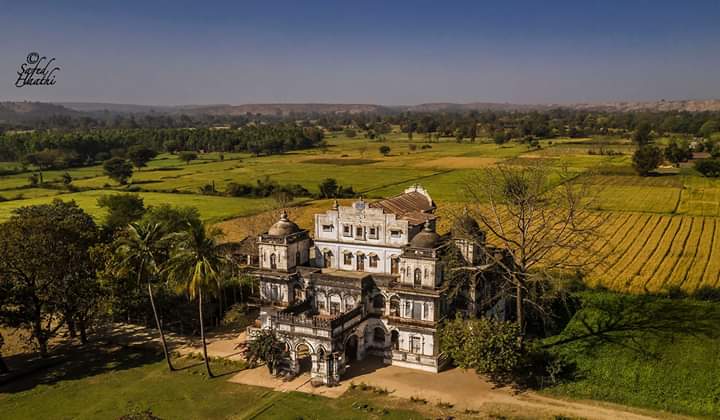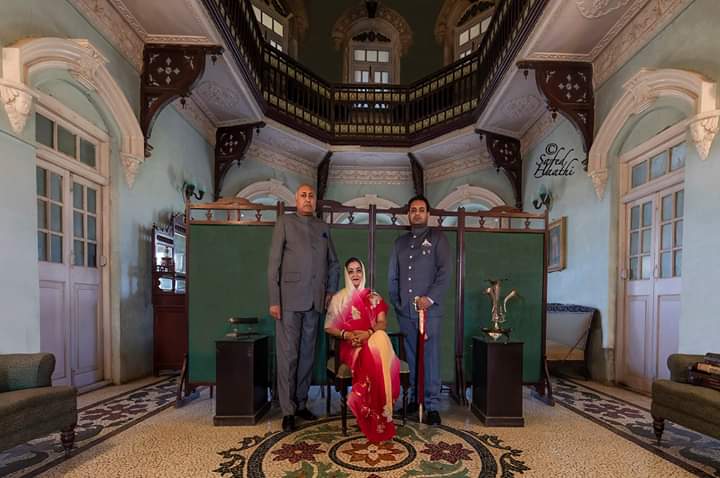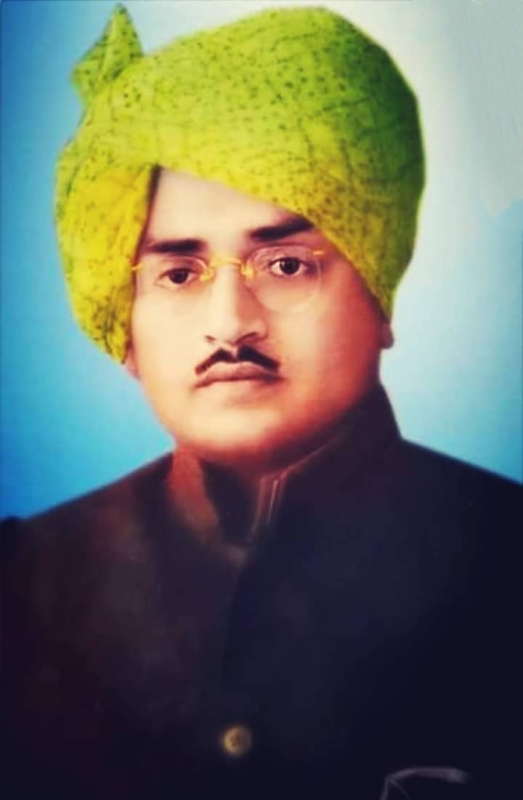
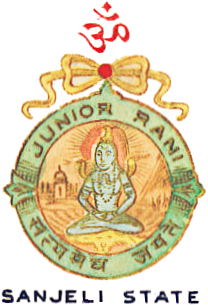
Present Head
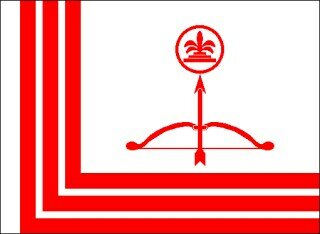
History
Origin and Foundation of Sanjeli State
Sanjeli State was established in the year 1159 AD by a Rajput chieftain belonging to the illustrious Songara Chauhan (historically referred to as Sogira Chauhan) clan. The Songaras are a prominent branch of the Chauhan dynasty, famous for their historic rule over Jalore in Rajasthan. Attracted by the highly defensible and undulating terrain of eastern Gujarat, the founding Thakur carved out a small, sovereign domain amidst dense forests and hills. This dynasty successfully preserved its lineage and political autonomy, ruling this tiny principality uninterrupted for nearly nine centuries.
The rulers of Sanjeli took the title of Thakur, signifying their position as feudal lords and sovereign chieftains of the land. Throughout its history, the state remained closely connected to neighboring Rajput principalities like Sunth, Devgadh Baria, and Lunawada, maintaining its unique identity through strategic marriages and localized diplomacy.
The Medieval Era and Tribal Administration
During the medieval period, the territory of Sanjeli was predominantly inhabited by indigenous tribal communities, chiefly the Bhils and Patelias. Unlike larger empires that sought to subjugate these communities, the Songara rulers of Sanjeli adopted an inclusive approach to governance. The Thakurs patronized tribal customs and relied heavily on tribal warriors for defending the borders of the state against external incursions.
The rugged geographical layout of the state, spanning approximately 88 square kilometers, acted as a natural fortress. This prevented the Gujarat Sultanate and later the Mughal Empire from establishing direct administrative control over Sanjeli. Instead, the state paid occasional nominal tributes to regional powers to preserve its internal administrative sovereignty. Detail on these early regional relationships can be found in the historical records compiled in the Gazetteer of the Bombay Presidency.
Maratha Incursions and British Protectorate (1820)
With the decline of the Mughal Empire in the 18th century, the Maratha Confederacy, led by the Gaekwads of Baroda and the Scindias of Gwalior, extended their influence into the Rewa Kantha region. Sanjeli, along with neighboring states, faced frequent demands for tribute (known as toka or ghasdana).
To secure peace and guard against Maratha expansionism, the rulers of Sanjeli entered into a treaty with the British East India Company in 1820. Under this treaty, Sanjeli formally became a British protectorate. The state was placed under the administrative oversight of the Rewa Kantha Agency. Under British suzerainty, the border lines of the state were stabilized, ensuring that Sanjeli’s territory of 88 square kilometers of picturesque, undulating landscape remained intact and secure.
Minority Administration and Modern Reforms (1901–1914)
The turn of the 20th century marked a transition toward modern administration. In 1901, due to the minority of the ruling heir, Thakur Pratapsinhji, the state of Sanjeli was placed under direct British India administration. This period of regency lasted until 1914, bringing significant developmental and structural reforms to the region:
- Educational Infrastructure: The first state-sponsored schools were established, offering free primary education to the tribal youth.
- Forest Conservation: Scientific forestry was introduced to protect the valuable timber and forest assets of the undulating terrains.
- Revenue Regularization: The traditional feudal revenue system was reorganized into a systematic land revenue department, reducing the burden on tribal farmers.
- Public Health: Basic healthcare facilities and mobile dispensaries were initiated to curb endemic diseases in rural areas.
Upon attaining maturity in 1914, Thakur Pratapsinhji was invested with full ruling powers. He continued the modernizing legacy, earning high regard as a progressive ruler who cared deeply for his subjects.
Integration, Post-Independence, and Modern Sanjeli
Following the departure of the British from India, the last ruling Thakur signed the Instrument of Accession to the Dominion of India. On 10 June 1948, Sanjeli State officially ceased to exist as an independent entity, merging into the Bombay State. The ruling family was granted a privy purse of 40,000 rupees, which continued until the privy purses were abolished by the 26th Amendment to the Constitution of India in 1971.
With the linguistic reorganization of Indian states in 1960, the territory of Sanjeli became a part of the newly formed state of Gujarat. Today, Sanjeli is organized as a taluka (administrative sub-district) within the Dahod District. It remains celebrated for its vibrant tribal culture, historic temples, and scenic landscapes, preserving the legacy of the nearly 900-year-old Songara Chauhan principality. More information about its current administrative setup can be found on the official Dahod District Website.
External Historical References
- For detailed 19th-century administrative accounts of the Rewa Kantha Agency, refer to the Gazetteer of the Bombay Presidency (Volume VI) on Archive.org.
- Learn more about the geographical and socio-economic profiling of modern Sanjeli on the Government of Gujarat Dahod District Portal.
- Consult general lineage and state information on the Sanjeli State Wikipedia Article.
Genealogy
- Thakore Shri PRATAPSINGHJI, Thakore Shri of Sanjeli, born .
- Thakore Shri PUSHPASINGHJI PRATAPSINGHJI, Thakore Shri of Sanjeli 1902/-, born , succeeded 1902, married and had issue. He died after 1948.
- Raja Narendra Singh (qv)
- Kumar Shri Mohan Singh, married Rajkumari Devi Shiv Kumari, daughter of Thakore Shivsinghji Gohil of Lakhanka in Bhavnagar, and had issue.
- Kunwer Prithviraj Singh Chauhan, married Maharajkumari Laxmikumari, daughter of Maharajkunwer Himmatsinhji Solanki of Gorada in Lunawada State.
- Kunwer Dharmaraj Singh Chauhan
- Kunwer Digvijay Singh Chauhan, married to Gayatri Devi of Chaliyeer State.
- Kumar Shri Rajendra Singh Pusph Singh, married Kumarani Susila Kumari, a daughter of Thakor Saheb Pravin Singh Jadeja of Adesar in Kutch, and has issue, three sons and two daughters.
- Kumar Shri Bhavin Pratap Singh, married Kumarani Girja Kumari, daughter of the Thakor Saheb of Ranpur.
- Kumar Shri Ajay Pratap Singh, an advocate, married Kumarani Vandana Kumari, a grand daughter of the Late Thakur Amar Singh of Chomu.
- Kumar Shri Chandraj Singh, married Kumarani Bhuvnashvari Kumari.
- Durga Kumari, married to Bharatsingh Mahida (Distt. Judge) of Rajpipla and has issue, one son.
- Mahirajsingh Mahida
- Sahaydri Kumari, married to Mahrajkunwar Mahendra Palsingh of Bhavarani (Marwad) and has issues, two daughters and a son.
- Thakore Shri NARENDRA SINGH, Thakore Shri of Sanjeli, born , married Rani (later Rajmata) Laxmi Kunwar, daughter of Raj Rana Jaswant Singh of Delwara, and his wife, the sister of the Maharaj of Khatoli in Kotah, and had issue. He died after 1970.
- Rajkumari Bhuwaneshwari, married Kunwar Dharmendra Singh Parihar of Nagod (C.I.), and has issue.
- Kumari Dr. Bhawna Singh, a Cardiac Surgeon, married Kunwar Piyush Singh.
- Kumari Namrata Singh, married Kumar Debjit Prasad Singh Deo of Panchkote Raj in West Bengal.
- Capt. Kunwar Bharatendra Singh Parihar, born in Dahod, Gujrat; educated at the University of Delhi (B.Com. with Hons.) and at Bond University, Gold Coast, Q.L.D., Australia (M.B.A.), presently serving as a Captain in the Indian Territorial Army, married 29th February 2004 in Ranchi, Kunwarani Manideepa, daughter of Kumar Dinamani Nath Shah Deo of Chhota Nagpur, and has issue.
- Kumari Shivranjini Parihar, born at Kolkatta, India.
- Yuvraj Manvendra Singh Chauhan, he succeeded as Thakore Shri Manvendra Singh (qv)
- Rajkumari Maheshwari, married Rana Rajendra Singh of Barwah, and has issue.
- Kumari Devija Rana
- Kumari Ravija Rana
- Kunwar Mrityunjay Rana
- Rajkumar Kalika Kumar Chauhan, married to Maharajkumari Giriraj Kumari, daughter of the Raja Saheb of Verawar, younger brother of the Maharaja of Vijaynagar, and has issue, one son.
- Kumar Kamakhya Chauhan
- Rajkumari Bhuwaneshwari, married Kunwar Dharmendra Singh Parihar of Nagod (C.I.), and has issue.
- Thakore Shri MANVENDRA SINGH, Thakore Shri of Sanjeli -/2006, educated at Daly College, Indore; married to Maharajkumari Geeta Devi [Thakorani Geeta Devi of Sanjeli], daughter of HH Maharaja Pratap Kesari Deo of Kalahandi, and had issue, two daughters. He died at Indore after a prolonged illness.
- Rajkumari Padmini Kumari, married 19th February 2000, Rajkumar Keshvendra Singh of Rampura in Uttar Pradesh, and has issue, one son.
- Rajkumari Sarvani Kumari.
- (see above)
- Rani Chauhaniji Dariao Kanwar, married Maharaj Madho Singh of Bhindar, and had issue, one daughter.