Present Head
History
Origin and Foundation of Ramdevra Thikana
The history of the Ramdevra Thikana is deeply intertwined with the legacy of the Tanwar (Tomar) clan of Rajputs, who claim direct descent from the legendary King Anangpal Tomar of Delhi. Following the migration of the Tomars from Delhi after its fall, branches of the clan settled in various parts of Rajputana. Rawal Ajmal Singh Tanwar, a prominent chieftain of this lineage, established his seat of power at Pokhran in the 14th century. His son, the legendary warrior-saint Baba Ramdevji, founded the settlement of Runicha—later renamed Ramdevra—around a large water reservoir known as the Ramsar lake, which he commissioned to alleviate water scarcity in this arid desert region.
The Spiritual and Temporal Guardianship
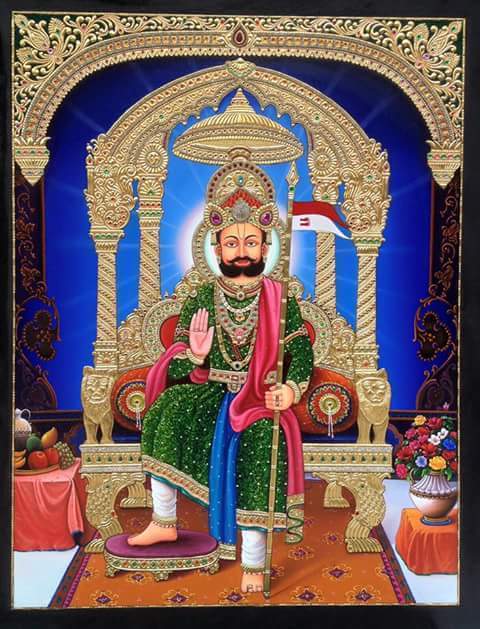
Baba Ramdevji is revered across Western India as an incarnation of Lord Krishna. He worked extensively for the social upliftment of the downtrodden, advocating for the eradication of the caste system and promoting communal harmony. After Ramdevji took Samadhi (conscious exit from the mortal body) in 1384 CE at the young age of 33, his descendants, the Tanwar Rajputs of the Thikana, assumed the dual role of spiritual custodians of his shrine and temporal administrators of the estate. The Thikana maintained a unique political status, navigating the complex geopolitical rivalries between the princely states of Jaisalmer and Jodhpur (Marwar), under whose nominal suzerainty the territory of Pokhran and Ramdevra occasionally shifted.
The British Era and Royal Patronage
During the British Raj, the shrine and the surrounding estate of Ramdevra received significant patronage from the rulers of various Rajputana states, who recognized the immense spiritual influence of the Tanwar lineage. In 1931 CE, Maharaja Ganga Singh of Bikaner constructed a grand temple over the Samadhi of Baba Ramdevji, replacing the older, modest structure. This act of royal devotion cemented the shrine's position as a symbol of syncretic worship, attracting both Hindu and Muslim pilgrims (who revere the saint as Ramshah Pir).
Post-Independence and the Modern Era
Following the integration of princely states into the Indian Union in 1949, the feudal privileges of the Ramdevra Thikana were abolished under the Rajasthan Land Reforms and Resumption of Jagirs Act. However, the cultural and spiritual authority of the Tanwar family remains highly respected. Today, the modern town of Ramdevra is a prominent pilgrimage center managed by the local temple trust, traditionally headed by the descendants of the Tanwar clan. The annual Ramdevra Fair (held during the Hindu month of Bhadrapada) attracts millions of devotees from Rajasthan, Gujarat, Haryana, and Madhya Pradesh, keeping the centuries-old legacy of the Tanwar Thikana alive. For more historical details on the shrine and its cultural significance, you can visit the Official Rajasthan Tourism Portal.
Genealogy
- Anagpal Tomar II
- Amji (Pokran - Jaisalmer)
- Salivaahan (Torawati - Patan)
- Tejpal (Dilli)
- Rana Amji
- Rana Akheraj
- Rana Bheevraj
- Rana Jograj
- Rana Ransi
- Rana Ajmalji
- Rao Veeramdev (Veeramdevra)
- Rao Ramdev (Baba Ramdevji of Ramdevra)
- Rajsi
- Biko
- Lakha (Lakshmanji)
- Rao Ramdevji
- Rao Devraj
- Sadoji
- Giriraj ji
- Mehraj ji
- Bheev ji
- Jaito ji
- Rao Devraj
- Rao Ratan
- Rao Govind
- Rao Devkarn
- Rao Prithviraj
- Rao Mal Singh - I
- Rao Bhopal Singh
- Rao Raghunathji
- Rao Mal Singh - II
- Rao Ajay Singh
- Rao Kishore Singh
- Rao Sawai Singh
- Rao Chainn Singh
- Rao Balidaan Singh
- Rao Hemant Singh
- Rao Gaj Singh
- Rao Rinmal Singh
- Rao Jaswant Singh
- Rao Bhom Singh (see above)