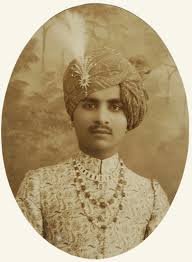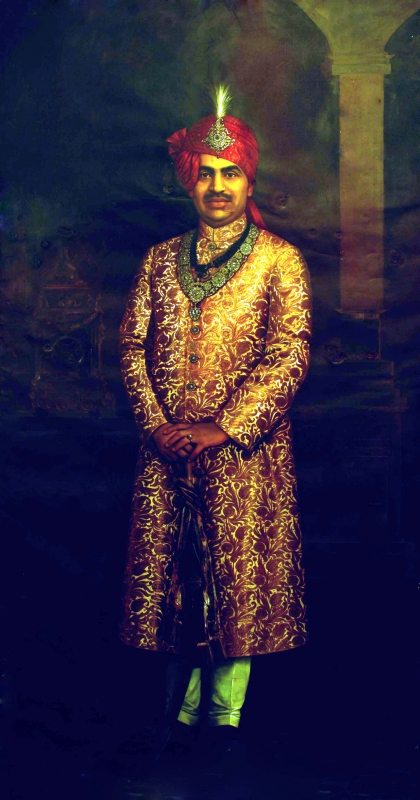
Present Head
- Bhanwar Neel Singh Rathore
History
The estate of Masuda was founded by Thakur Hanwant Singh in 1557, grandson of Rao Viram Deo of Merta, himself grandson of Rao Jodhaji of Jodhpur. It represents one of the most prominent branches of the Mertia Rathore clan of Rajputs, who played a significant role in the military and political history of Central Rajasthan.
Origin and Foundation
The ruling family of Masuda traces its lineage to Rao Jodha, the founder of Jodhpur. Rao Jodha's son, Rao Duda, established the independent principality of Merta, and his descendants came to be known as the Mertia Rathores. Following the political upheavals in Merta during the mid-16th century, Thakur Hanwant Singh, a descendant of the legendary Rao Viram Deo, carved out a distinct territory at Masuda in 1557 AD. The region of Masuda, strategically located in the Ajmer-Merwara division, became the permanent seat of this branch of the Rathore dynasty.
Mughal and Maratha Periods
Due to its proximity to the historic city of Ajmer—which served as a vital Mughal subah (province)—Masuda maintained delicate diplomatic and military relations with the Mughal Empire. During the reign of Emperor Akbar and his successors, the Mertia Rathores of Masuda served in various imperial campaigns while retaining internal autonomy over their thikana (estate).
In the late 18th century, as Mughal authority waned, the Marathas, particularly the Scindias of Gwalior, asserted dominance over the Ajmer region. The rulers of Masuda, along with other local chieftains, faced heavy exactions and military pressure from Maratha commanders. Despite these turbulent times, the estate managed to survive through strategic alliances and localized defense.
The British Raj and Istimrari Status
With the signing of the Treaty of 1818 between the British East India Company and Daulat Rao Scindia, the territory of Ajmer-Merwara was ceded to the British. Under the British administration, the land tenure system of Ajmer was formalized, and Masuda was recognized as an Istimrari estate.
Unlike ordinary jagirdars in other parts of Rajputana, the Istimrardars of Ajmer-Merwara held a unique and prestigious status. They were considered tributary chiefs who held their estates in perpetuity subject to the payment of a fixed annual tribute (jamma). The Thakur of Masuda held judicial and administrative powers within his territory and was highly respected among the nobility of the province. Detailed accounts of the administrative status of Masuda can be found in the historical records of the Imperial Gazetteer of India.
Modernization and Key Reformers
In the late 19th and early 20th centuries, Masuda transitioned into a highly progressive estate. The rulers focused heavily on modern education, judicial reforms, and infrastructure development.
Among the key reformers was Rao Bahadur Singh and later Rao Bahadur Narayan Singh of Masuda. Under their patronage, several schools, cooperative societies, and water conservation bodies were established. The ruling family maintained close ties with Mayo College in Ajmer, an institution where generations of Masuda nobles received modern education, preparing them for leadership in a rapidly changing India.
Post-Independence and the Modern Era
Following India's independence in 1947, Ajmer-Merwara initially became a Part 'C' State within the Indian Union before merging into the state of Rajasthan in 1956. With the passage of the Rajasthan Land Reforms and Resumption of Jagirs Act, the feudal privileges and Istimrari rights of Masuda were formally abolished.
Transitioning from feudal lords to democratic leaders, members of the Masuda royal family actively participated in public service and state politics. Rao Bahadur Shiv Charan Singh of Masuda became a prominent political figure in post-independence Rajasthan, serving as a member of the legislative assembly (MLA) and as the Deputy Speaker of the Rajasthan Legislative Assembly. Today, the family continues to be respected for its historical legacy, philanthropy, and contributions to the socio-economic development of the Ajmer district.
Genealogy
- Thakur HANWANT SINGH, Thakur of Masuda 1557/1583, married and had issue.
- Thakur Narsinhdas (qv)
- Thakur NARSINHDAS, Thakur of Masuda 1583/1623, married and had issue.
- Thakur Junjhar Singh (qv)
- Kunwar Sabal Singh
- Kunwar Shyam Singh
- Kunwar Roop Singh
- Kunwar Chatar Singh
- Kunwar Durjan Singh
- Kunwar Raj Singh
- Thakur JUNJHAR SINGH, Thakur of Masuda 1623/1650, married and had issue.
- Thakur Ajab Singh (qv)
- Kunwar Balbhadra Singh
- Kunwar Kan Singh
- Kunwar Kusha Singh
- Kunwar Mokham Singh
- Kunwar Udai Singh
- Kunwar Gopaldas
- Thakur AJAB SINGH, Thakur of Masuda 1650/1684, married and had issue.
- Thakur Mohan Singh [Muan Singh] (qv)
- Thakur Kesar Singh of Sathana, Lamba and Nagar.
- Thakur Bakht Singh of Kesarpura, Lalawas, and Akrol.
- Thakur Jas Karan of Sakrani.
- Thakur Girdhar Das of Jamola.
- Thakur Amar Singh of Khuntia.
- Thakur MOHAN SINGH, Thakur of Masuda 1684/1700, married and had issue.
- Thakur Sultan Singh (qv)
- Thakur Sher Singh of Shergarh.
- Thakur Bhairi Sal of Kailu Fatehgarh.
- Thakur SULTAN SINGH, Thakur of Masuda 1700/1713, married and had issue.
- Thakur Jai Singh (qv)
- Thakur JAI SINGH, Thakur of Masuda 1713/1761, married and had issue.
- Kunwar Shyam Singh, died before succession, married and had issue.
- Thakur Ratan Singh (qv)
- Thakur Samrat Singh of Nandwara.
- Kunwar Sujan Singh
- Baisa (name unknown) [Rani Mertaniji of Banera], married (as his fourth wife), Raja Sardar Singhji of Banera.
- Kunwar Shyam Singh, died before succession, married and had issue.
- Thakur RATAN SINGH, Thakur of Masuda 1761/1784, married and had issue.
- Thakur Bhairon Singh (qv)
- Thakur Devi Singh, married and had issue.
- Thakur Rirmal Singh, married and had issue.
- Kunwar Bahadur Singh, adopted by Thakur Shivnath Singh (see below), and succeded as Thakur Bahadur Singh (later Rao Saheb) of Masuda.
- Thakur Rirmal Singh, married and had issue.
- Thakur BHAIRON SINGH, Thakur of Masuda 1784/1806, married and had issue.
- Thakur Devi Singh (qv)
- Thakur Padam Singh, married and had issue.
- Kunwar Shivnath Singh, adopted by Thakur Devi Singh (see below), and succeded as Thakur Shivnath Singh of Masuda.
- Thakurani Pratap Kanwar, married (as his first wife), Thakur Megh Singh of Diggi.
- Thakur DEVI SINGH, Thakur of Masuda 1806/1843, he adopted Kunwar Shivnath Singh, son of Thakur Padam Singh (see above), married and had adoptive issue.
- Thakurani (name unknown), married (as his second wife), Thakur Pratap Singh of Diggi.
- (A) Thakur Shivnath Singh (qv)
- Thakur SHIVNATH SINGH, Thakur of Masuda 1843/1863, succeeded by adoption' married 1stly to a Khangarot princess, married 2ndly in 1863 to Ranawat princess from Banera; he adopted Kunwar Bahadur Singh, son of Thakur Rirmal Singh (see above), married and had adoptive issue.
- (A) Rao Saheb Bahadur Singh (qv)
- Rao Saheb BAHADUR SINGH, Thakur of Masuda 1863/1903, born as Kunwar Bahadur Singh, son of Thakur Rirmal Singh (see above), succeeded by adoption, educated at Mayo College, Ajmer; Honourary Magistrate and Munsif within the limits of his own estate, C.I.E. [cr.1893], Kaiser-i-Hind, Rao Saheb [cr.1.1.1877], married 1stly to Rani Mansinghotji from Barwara (Jaipur), married 2ndly to Ranawat princess from Amla (Gwalior) and married 3rdly to Rani Ugam Kanwar, daughter of Thakur Mukand Singh of Mukangarh, and had issue. He died .
- Kunwar Sawai Ram Singh, died in his teens, and is revered as a saint by villagers at his cenotaph.
- Rao Saheb BIJAY SINGH, Rao Sahib of Masuda 1905/1938, educated at Mayo College, Ajmer (Class-Captain 1916/17), married and had issue.
- Rao Saheb Narayan Singh (qv)
- Kunwar Shabhu Singh
- Kunwar Jitendra Singh
- Thakurani Sajjan Kanwar, married 2nd February 1941, Thakur Devi Singh of Mandawa-Junior, and had issue.
- Thakur Umaid Singh, born , married 3rd November 1958 (sep'd. 1960, div. 1980), Maharajkumari Himmat Kunwarba Sahiba, daughter of Major HH Maharana Shri Maharaja Shri Raj Sir Ghanshyamsinhji Ajitsinhji Sahib Bahadur of Dhrangadhra, and his fifth wife, HH Maharani Nawal Kunwarba Sahiba.
- Kunwar Daulat Singh
- Rani Kuashalya Kanwar, married the Raja Sahib of Shohratgarh.
- Kunwar Shivpratap Singh
- Kunwar Madhusudan Singh
- Rao Saheb NARAYAN SINGH, Rao Sahib of Masuda 1938/1992, born , married 1stly, Rani Kamala Raje, daughter of Rawal Bishan Singh of Bissau, and his second wife, Thakurani Anand Kanwar, married 2ndly, Rani Urmila Devi of Kherali in Saurashtra, and had issue. He died .
- Rani Vijaylakshmi Kanwar, married Maharaj Sukhdevsinghji Jadeja of Nawanagar (Jamnagar), son of General Kumar Shri Rajendrasinhji Devisinhji Jadeja (first Chief of Army Staff of the Indian army).
- Rao Saheb Indrajit Singh (qv)
- Thakur Mohan Chandra Singh, married Thakurani Pratibha Kumari of Katesar, and has issue.
- Kunwar Jagatdeep Singh, married Kunwarani Keya Kumari.
- Kunwar Shailendra Rathore, married Kunwarani Navnidhi Kumari of Muli in Gujarat, and has issue.
- Bhanwar Devvrat Rathore
- Bhanwar Baisa Devika Rathore
- Thakur Amardeep Singh (by Rani Urmila Devi), married and has issue.
- Thakur Dushyant Singh (by Rani Urmila Devi), born in Ajmer, Member of the Rajasthan State Congress Body, Member of O.B.A. Mayo College, Ajmer; married 30th June 1989 at Nainital, Thakurani Sangeeta Kumari, and has issue.
- Baisa Priyanka Kumari
- Baisa Rukmini Kumari
- Kunwar Aditya Vikram Singh
- Kunwar Rananjay Singh
- Thakur Durjai Singh (by Rani Urmila Devi), married Kumari Deepika Kumari, fourth daughter of Rawal Raghuveer Singhji of Dhula, and his wife, Rani Jaya Kumari, and has issue.
- Kunwar Chitranjan Singh
- Rao Saheb INDRAJIT SINGH, present Rao Sahib of Masuda, born , he joined the Indian Foreign Service, serving as Ambassador of India to Madagascar, U.A.E., the Sultanate of Oman, the Kingdom of Morocco, as well as Consul General of India, Sydney in a career spanning 37 years; married Rani Amrita (née Varma) from Delhi, and has issue. He died on .
- Kumari Meera Kanwar, married Shri Kandarp Bhushan Singh from Varanasi.
- Kunwar Parthsarthi Singh (qv)
- Rao Saheb PARTHSARTHI SINGH, Rao Sahib of Masuda (see above)