History
Origin and Foundation of Gad Boriad
The historical estate of Gad Boriad (also known as Gad or Gad-Boriad) was a princely state of feudal significance located in the Sankheda Mehwas region of the Rewa Kantha Agency, under the Bombay Presidency during the British Raj. The ruling dynasty of Gad Boriad belonged to the illustrious Khichi Chauhan clan of Rajputs.
The origins of the ruling house are deeply intertwined with the fall of the historic fortress of Champaner. Following the sack of Champaner in 1484 by Sultan Mahmud Begada of Gujarat, the surviving Khichi Chauhan Rajputs, descendants of the legendary King Palhansingh, retreated into the dense, hilly forests of eastern Gujarat and the Narmada river basin. This diaspora led to the establishment of several sovereign and semi-sovereign principalities, including Chhota Udepur, Devgadh Baria, and various smaller estates or Thakurates such as Gad Boriad. The founders of Gad Boriad carved out their territory in the rugged tracts inhabited largely by indigenous Bhil and Koli tribes, establishing their authority through military prowess and strategic matrimonial alliances.
The Mughal and Maratha Periods
During the zenith of the Mughal Empire, Gad Boriad maintained a highly autonomous status. Because of the difficult terrain and the warlike nature of the local clans, the Mughal governors of Gujarat preferred to extract nominal tribute rather than attempt direct administrative control.
With the decline of Mughal authority in the 18th century, the Marathas, under the Gaekwads of Baroda, expanded their hegemony over the Rewa Kantha region. This was a turbulent period for Gad Boriad, as the Gaekwad's military forces regularly entered the territory to forcibly collect Ghasdana (tribute or military forage dues). The Thakors (rulers) of Gad Boriad offered stiff resistance from their hill forts (gadhs), but were eventually forced to acknowledge the nominal suzerainty of the Marathas while retaining their internal administrative rights.
British Raj and the Rewa Kantha Agency
The chaotic conditions of the Maratha-Rajput conflicts were stabilized in the early 19th century with the intervention of the British East India Company. Following the settlement negotiated by British statesman Sir John Malcolm, the British established the Rewa Kantha Agency in 1826 to bring peace and administrative order to the region. Detailed accounts of these administrative arrangements can be explored in the Gazetteer of the Bombay Presidency, Vol. VI (1880).
Under the British settlement, the Thakor of Gad Boriad was recognized as a tributary chief. The British authorities intervened to fix the exact amount of tribute payable to the Gaekwad of Baroda, preventing future military incursions and disputes. Gad Boriad was classified as a non-salute state within the Sankheda Mehwas division. The rulers exercised limited civil and criminal jurisdiction, while serious offenses and judicial appeals were managed by the British Political Agent stationed at Rewa Kantha. Historical listings of these states can also be researched through the Imperial Gazetteer of India.
Heraldry, Flag, and Administration
As descendants of the Khichi Chauhan clan, the rulers of Gad Boriad utilized traditional Rajput symbolism. The state flag was a sacred saffron or multi-colored (Panchranga) pennant, signifying courage, sacrifice, and devotion. The royal coat of arms featured the falcon or the sacred vulture, representing the family deity, Shakambhari Devi, along with traditional weapons such as the sword (talwar) and shield, symbolizing their defensive martial heritage.
The internal administration of Gad Boriad was managed directly by the Thakor, assisted by a Karbhari (state manager). The primary source of state revenue was land taxation, forestry, and minor forest produce. The rulers maintained a close relationship with the forest-dwelling communities, often employing them in the state's irregular police force.
Post-Independence and the Modern Era
Following India's independence from British rule in August 1947, the last ruling Thakor of Gad Boriad signed the Instrument of Accession, merging the estate into the Dominion of India. In 1948, the territory of Gad Boriad formally integrated into the Bombay State. Following the linguistic reorganization of states in 1960, it became part of the newly formed state of Gujarat.
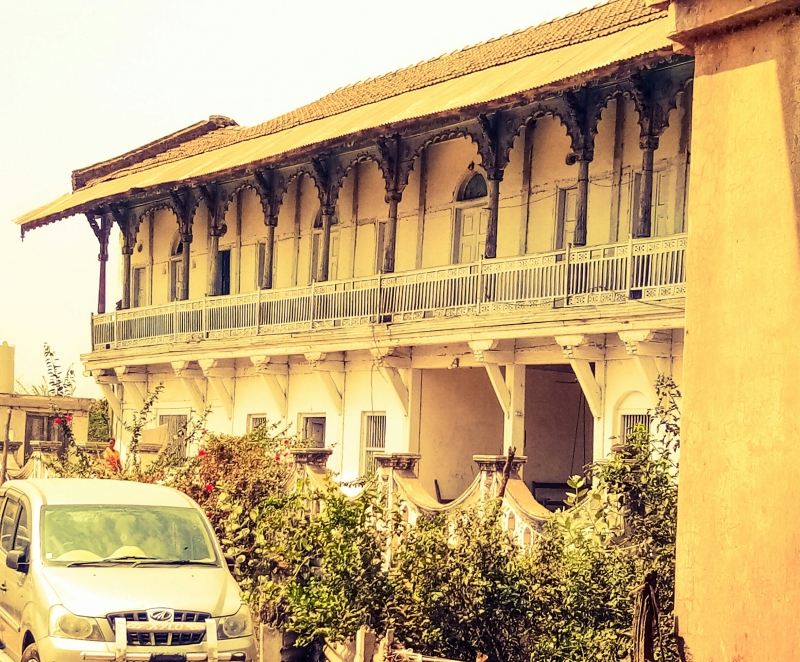
In the modern era, Gad Boriad is located within the Chhota Udepur district of Gujarat. The royal fortress and traditional heritage sites remain symbols of the region's historical legacy. The descendants of the ruling family continue to preserve their cultural traditions, participating in local community welfare, religious festivals, and historical preservation efforts in Gujarat.
Genealogy
- Rana BHARATSINHJI, Thakore Sahib of Gad Boriad, born , married and had issue.
- Thakore Sahib Chandrasinhji Bharatsinhji (qv)
- Thakore Sahib CHANDRASINHJI BHARATSINHJI, Thakore Sahib of Gad Boriad 1884/-, born , succeeded 16th November 1884; married and had issue.
- Thakore Sahib Omkarsinhji Chandrasinhji (qv)
- Kunwar Motisinhji Chandrasinhji, married and had issue.
- Kumari (name unknown) [Thakurani Chauhaniji Sahiba of Pindarda], married Thakur Ranjit Singhji of Pindarda.
- Thakore Sahib OMKARSINHJI CHANDRASINHJI, Thakore Sahib of Gad Boriad -/1934, born , married and had issue. He died .
- Thakore Sahib Randhirsinhji Omkarsinhji (qv)
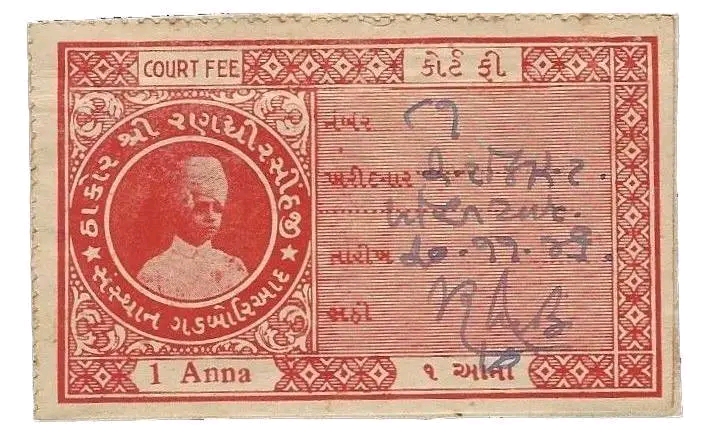
- Thakore Sahib RANDHIRSINHJI OMKARSINHJI, Thakore Sahib of Gad Boriad 1934/-
- Thakorani Vijay Kunvar, married (as his second wife), Thakur Saheb Chhatrasinghji Mansinghji of Nasvadi.