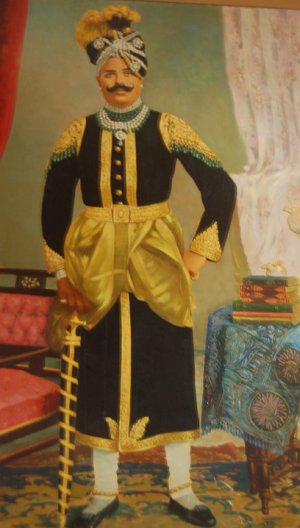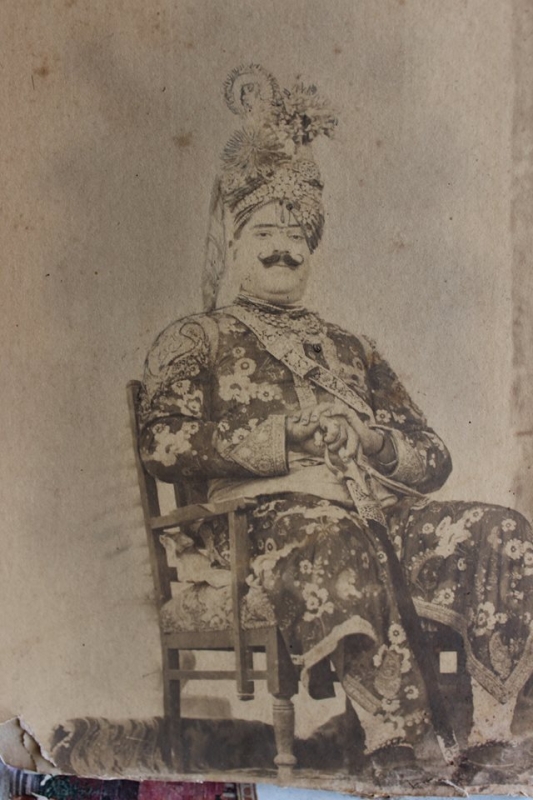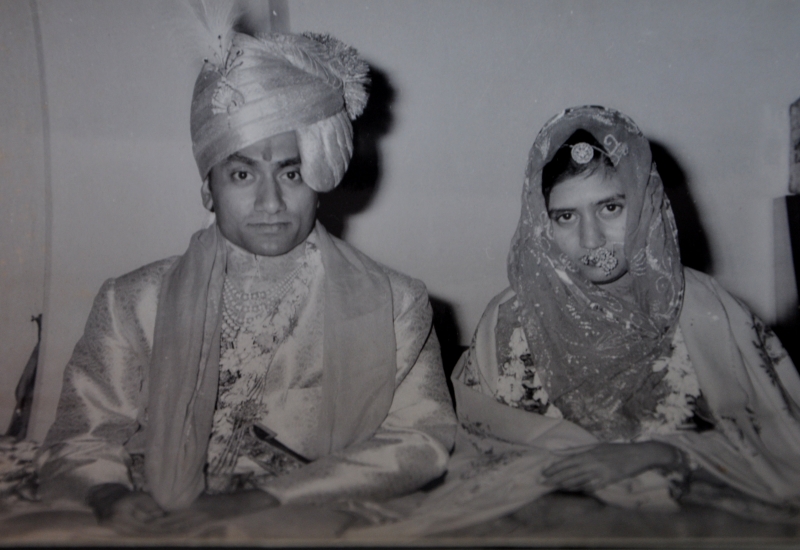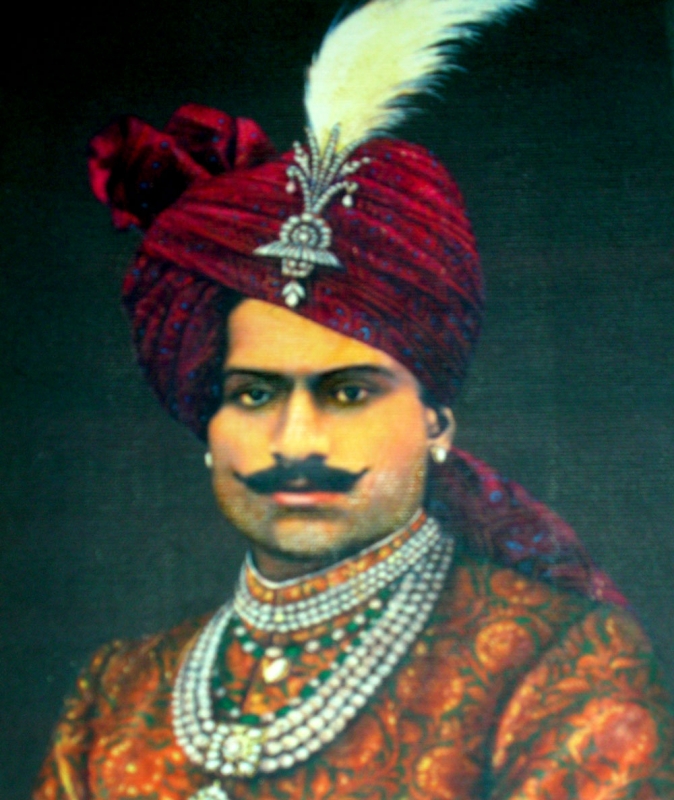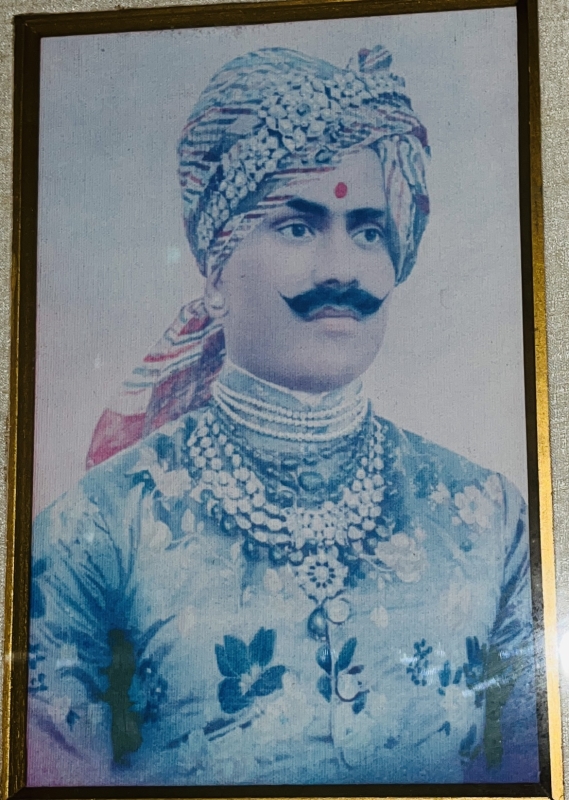
Present Head
- Baisa Bhumika Kumari Singh, educated at Daly College, Indore, at the Convent of Jesus and Mary, Shimla (graduate) and Sophia College, Mumbai (post-graduate), married Rajkumar Akshay Singh of Pawayan on 18th April 2018.
History
The family of Bidwal is descended from Maharaj Udai Singhji of Jodhpur (popularly known as Mota Raja Udai Singh). Maharaja Udai Singhji's 4th son, Maharaj Dalpat Singhji, was granted the Balaheda (Baluhenda) Pargana in Marwar. His eldest son, Mahesh Dasji, succeeded him and became the progenitor of the royal houses of Ratlam, Sailana, and Sitamau. Dalpat Singhji's third son, Maharaj Fateh Singhji, was the founder and first Thakur of Bidwal, establishing the Fatehsinghot subclan of the Rathore dynasty, of which Bidwal remains the head-house.
Origin and Foundation of Bidwal Thikana
During the Mughal expansion and subsequent reorganizations of territories in Central India, the descendants of Maharaj Fateh Singhji migrated to the fertile region of Malwa. They carved out an estate centered at Bidwal (situated in the modern-day Dhar district of Madhya Pradesh). As Fatehsinghot Rathores, the rulers maintained strong matrimonial and political ties with other prominent Rajput principalities of Central India and Rajputana.
The Maratha Expansion and Guaranteed Status
During the 18th century, the Maratha Empire expanded into Malwa under the Peshwas, leading to the establishment of the Dhar State by the Puar (Pawar) dynasty. Amidst these geopolitical shifts, the Rathore Thakurs of the region, including those of Bidwal, Multhan, and Kachhi-Baroda, fiercely defended their territories. To pacify the region, the British East India Company intervened in the early 19th century.
Under the pacification policies mediated by Sir John Malcolm in 1818, Bidwal was recognized as a "Guaranteed Thikana" (feudatory estate of Dhar) under the Bhopawar Agency (later part of the Central India Agency). While Bidwal acknowledged the suzerainty of the Dhar State and paid a fixed annual tribute (tanka), its internal sovereignty was protected and guaranteed by the British Crown. More details on the historical structure of such guaranteed estates can be found in the historical records of the Dhar State.
Administrative Powers and Insignia
As a premier Thikana of the region, Bidwal enjoyed an autonomous status that was rare for estates of its size. The Thakur of Bidwal exercised full civil and criminal judicial powers within his territory. The estate maintained its own independent police force, judicial court, and jail administration, rendering it largely self-governing in local matters.
Furthermore, the Thikana possessed full revenue-collecting authority over its villages. As a symbol of its high status and royal privilege, Bidwal was granted the right to carry its own Murtab (state insignia and standards) during state processions and official ceremonies, signifying its noble lineage directly linked to the royal house of Marwar.
Post-Independence and Modern Era
Following India's independence in 1947, the last ruling Thakur of Bidwal acceded to the Union of India. In 1948, the Thikana, along with the parent state of Dhar, was merged into the newly formed state of Madhya Bharat. This territory was subsequently integrated into the state of Madhya Pradesh in 1956 under the States Reorganisation Act.
Today, the legacy of the Bidwal Thikana is preserved through its historic fort, local temples, and the cultural heritage of the Fatehsinghot Rathores in the Malwa region.
References and External Sources
- History of the Dhar State and its feudatories: Dhar State - Wikipedia
- Rathore Dynasty history and migrations: Rathore Dynasty - Wikipedia
- Archival records on Central India Agency estates: Digital South Asia Library - Imperial Gazetteer of India
Genealogy
- Thakur JASWANT SINGH, Thakur of Bidwal 1886/- , born , educated at Daly College, Indore till 1898; Head of the Fatehsingot clan, married a niece of the Maharao of Bundi, and had issue.
- Thakur Saheb Dule Singhji, educated at Daly College, Indore; married 1916 at Mandawa, Shrimant Thakurani Saheba Ballabh Kunwarji, daughter of Thakur Inder Singh of Mandawa-Senior, and his first wife, Thakurani Suraj Kanwar, and had issue.
- Thakur Prithviraj Singh (qv)
- Kunwar Birendra Singh
- Thakur Bhom Singh, educated at Daly College, Indore, granted the village of Gajnod.
- Thakur Saheb Dule Singhji, educated at Daly College, Indore; married 1916 at Mandawa, Shrimant Thakurani Saheba Ballabh Kunwarji, daughter of Thakur Inder Singh of Mandawa-Senior, and his first wife, Thakurani Suraj Kanwar, and had issue.
- Thakur PRITHVIRAJ SINGH, Thakur of Bidwal 1952/2009, born at Bidwal, educated at Daly College, Indore, Honourary A.C. Khandwa Nimar, India, married 15th February 1945 at Danta-Ramgarh, Rajasthan, Thakurani Shrimant Daulat Kunwarji, daughter of Thakur Ganga Singh of Danta, and had issue. He died .
- Thakur Narendra Singh (qv)
- Baiji Lal Shobha Kumari [Rani Shobha Kumari of Kutch], married Maharaj Shri Ghanshyamsinhji Zorawarsinhji Jadeja of Kutch, and has issue.
- Thakur Ratan Singh, educated at Daly College, Indore; married Thakurani Kalpana Kumari from Kunda in Bihar, and has issue, three sons.
- Lt. Col. Kunwar Dhananjai Singh, educated at Daly College, Indore, at the National Defence Academy, Khadakwasla and then IMA, Dehradun. Married to Kunwarani Divya Kumari, daughter of Th. Prithvi Raj Singh and Thakurani Shobha Kumari of Kunadi.
- Kunwar Dhruv Singh, educated at Daly College, Indore and at Simbiosis College, Pune (B.Com.), presently an elected member of Janpad Panchayat from Bidwal, Advocate of the high court and a permanent member of the High Court Bar Association Indore (MP); married Kunwarani Mumal Shekhawat, daughter of Th. Dilip Singh Shekhawat and Thakurani Chandrika Kumari of Chhapoli (Rajasthan) and has issue, one son.
- Bhanwar Siddharth Singh Rathore
- Bhanwar Baisa Ivanshika Singh
- Kunwar Dharamveer Singh, educated at Daly College, Indore and is presently (2008) studying Law at I.L.S., Pune.
- Thakur NARENDRA SINGH, Thakur of Bidwal (see above)