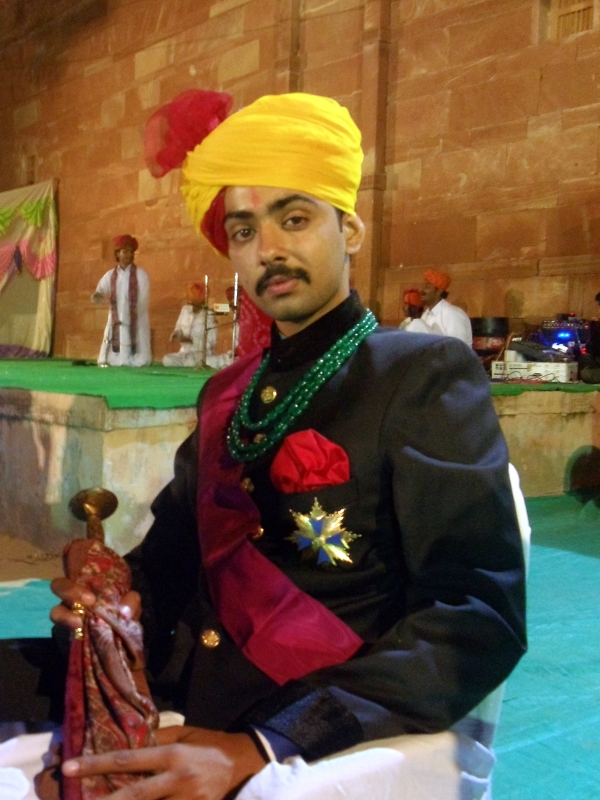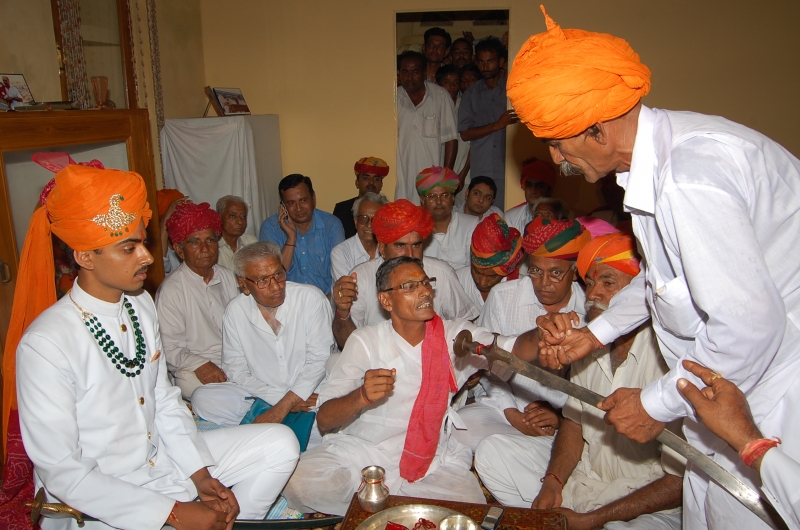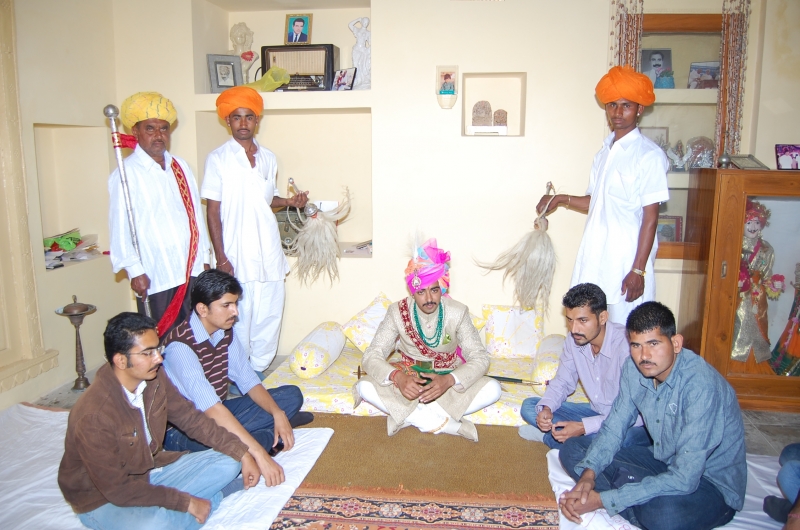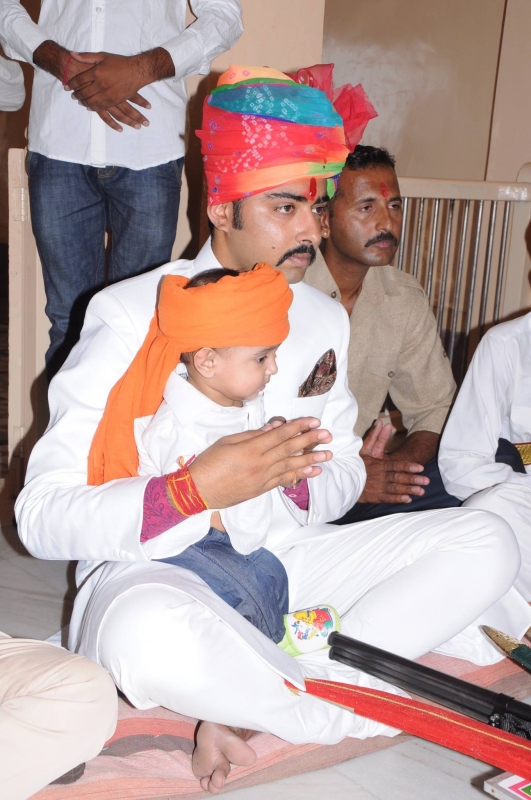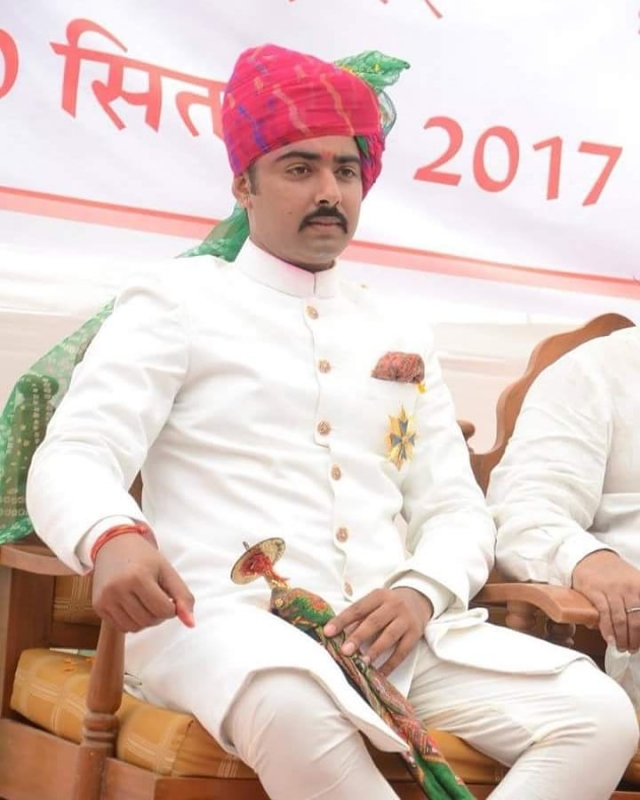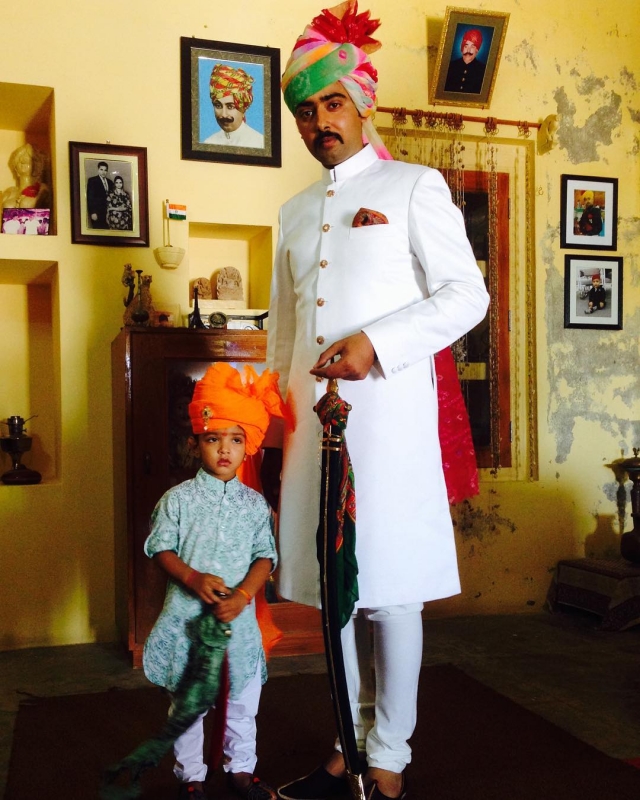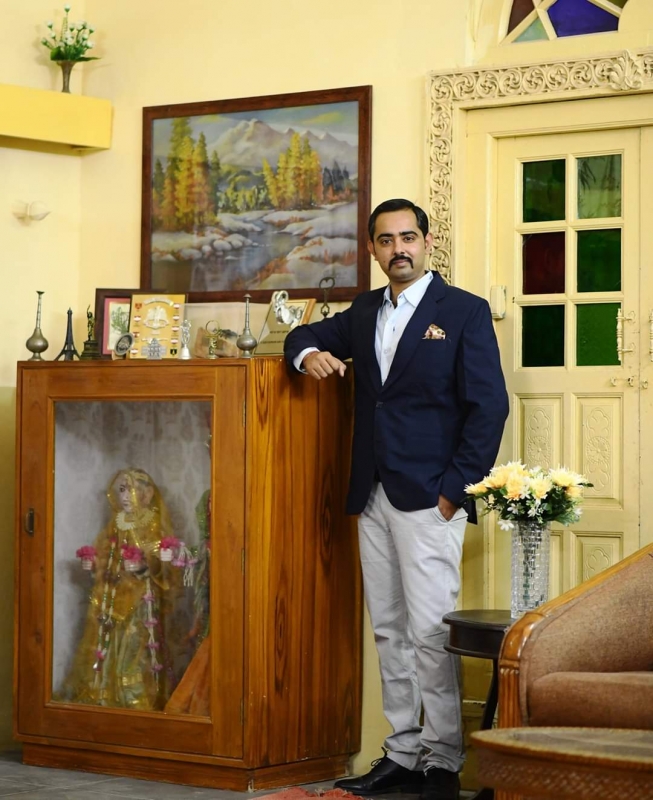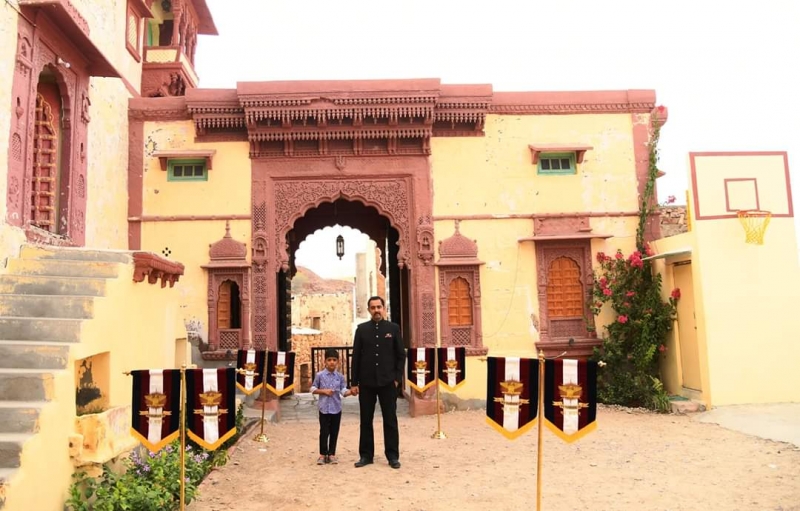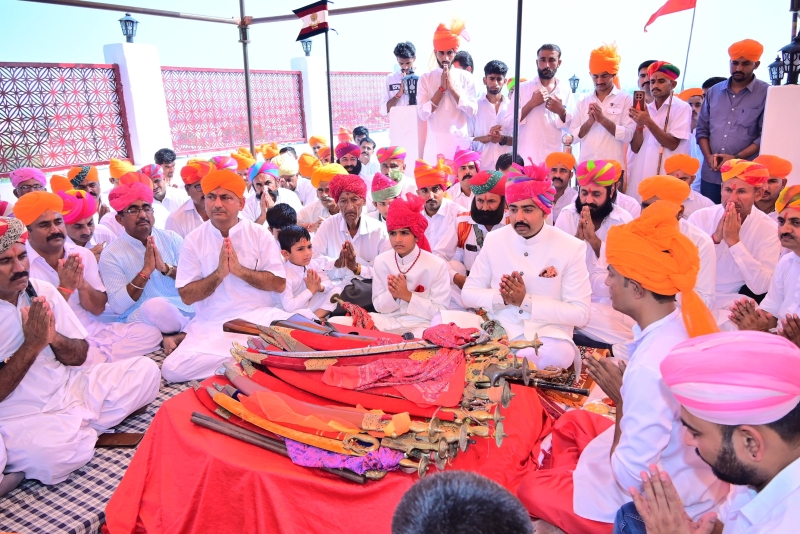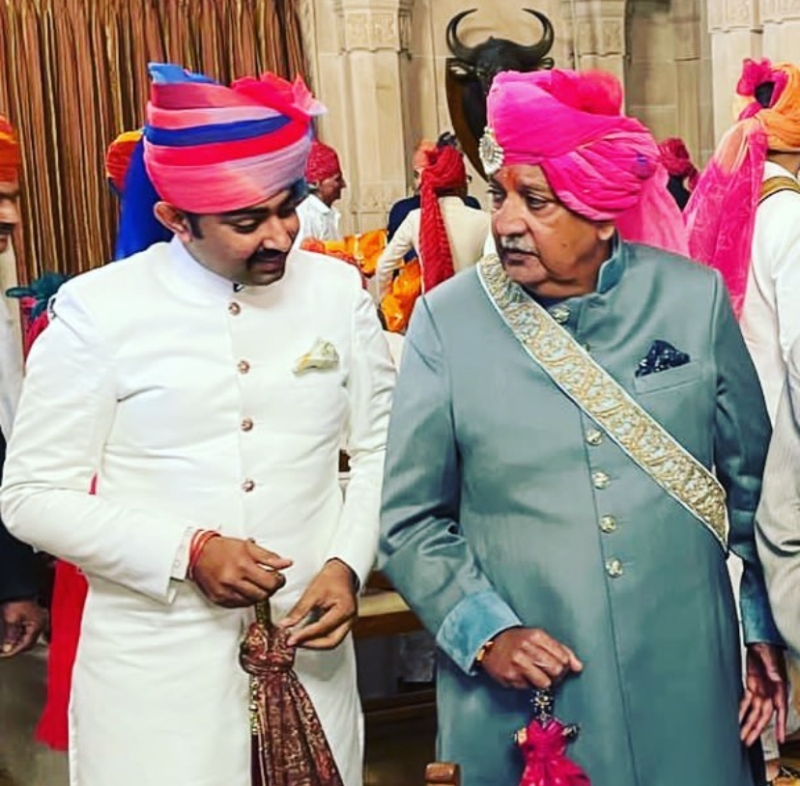
Present Head
- Dhruvraj Singh Rathore, born .
History
Foundation and Origin of Rathore Rule
The history of the Rathore dynasty in the Barmer region (historically known as Mallani) is deeply intertwined with the legacy of Rawat Mallinath, a celebrated 14th-century warrior-saint of Rajputana. The political consolidation of the Rathores in this arid frontier gained momentum when Rawat Lunka and his brother Rawat Mandalak marched towards Juna, an ancient settlement located about 25 kilometers from the modern city of Barmer. Juna was then under the control of the Chauhan clan. In a decisive conflict, the Rathore brothers defeated the Chauhan rulers, annexed the territory, and established Juna as their capital, marking the formal inception of the Mahecha Rathore hegemony in the region.
The Shifting of Capital and Foundation of Barmer Garh
The capital remained at Juna for several generations until the advent of Rawat Bhima, a formidable ruler and strategist. Recognizing the strategic and defensive advantages of the surrounding rocky hills, Rawat Bhima decided to shift the seat of power. In 1552 AD, he founded the present-day city of Barmer and relocated the capital from Juna. To secure the new settlement against external invasions, he constructed a hilltop fortress known as Barmer Garh (also referred to as the Barmer Fort). The fort, perched protectively atop a hillock, overlooked the growing town and served as a symbol of Rathore sovereignty and defense for centuries.
The British Era and the Status of Mallani
During the colonial era, Barmer was the principal seat of the Mallani district within the princely state of Jodhpur State (Marwar). The local chieftains, known as the Rawats of Barmer, maintained a fiercely independent disposition. Because of constant border disputes, local feuds, and law-and-order challenges, the British government placed the Mallani region under the direct administration of a British Superintendent in 1836. This arrangement continued for decades until the administration was gradually restored to the Jodhpur Darbar, although the Rawats of Barmer retained considerable local autonomy, revenue rights, and judicial powers over their estates. Historical accounts of this unique administrative setup can be found in the Imperial Gazetteer of India.
Post-Independence and Modern Era
Following India's independence in 1947, the Jagir of Barmer was integrated into the United State of Rajasthan. The princely privileges and jagirdari land systems were officially abolished with the passage of the Rajasthan Land Reforms and Resumption of Jagirs Act in the 1950s. Today, Barmer has evolved from a historic desert outpost into a thriving industrial and cultural hub, renowned worldwide for its rich handicrafts, traditional wood carvings, block printing, and extensive oil and gas reserves in the Basin. Despite these modern transitions, the lineage of the Rawats of Barmer continues to hold immense social and cultural respect among the local population, actively participating in patronizing traditional festivals and preserving the region's historical heritage. For more detailed geographical and administrative history, readers can refer to the Official Website of Barmer District.
Genealogy
- RAO SALKHA (Rao of Kher)
- RAWAL MALLINATH (FOUNDER OF MAHECHA CLAN)
- RAWAL JAGMAL (Rao of Malani)
- RAWAT LUNKA (BARMER). He attacked Juna with help of his elder brother Rawal Mandalak which was under Chauhan ruller Mudha ji and made his capital, his descendents are known as Barmera’s.
- RAWAT SHEKHA
- RAWAT JAITA
- RAWAT RATOJI
- RAWAT BHIMA (FOUNDER OF PRESENT BARMER CITY)
- RAWAT KALYANMAL
- RAWAT DUDAJI
- RAWAT RAM SINGH
- RAWAT TEZPAL SINGH
- RAWAT BHARO JI
- RAWAT LALCHAND JI (qv)
- SAHIB JI
- KISHAN JI
- PABOO JI
- KHEMO JI
- MUK JI
- DEVKARAN JI (Thakur’s of Jalipa)
- AADO JI
- Bhabhut Singh
- Peerdan Singh
- Bhakat Singh
- Deep Singh
- Narpat Singh
- Chandan Singh
- Vijay Singh
- Gajendra Singh
- Tribhuwan Singh (Adopted by Rawat Umeed Singh)
- Abhimanyu Singh
- Ummed Singh
- Deraver Singh
- Deep Singh
- Bhabhut Singh
- AADO JI
- RAWAT LALCHAND
- Man Singh (qv)
- Kan Singh
- Padam Singh
- Bhabhut Singh, adopted by Rawat Dal Singh ji.
- Padam Singh
- RAWAT MAN SINGH
- Dal Singh (qv)
- RAWAT DAL SINGH
- (A) Bhabhut Singh (qv)
- RAWAT BHABHUT SINGH
- RAWAT PANNEY SINGH
- RAWAT BAKIDAS
- RAWAT JAWAHAR SINGH
- RAWAT HEERA SINGH
- RAWAT RATAN SINGH
- RAWAT UMMED SINGH (Ex-Member of the Rajasthan Legislative Assembly from Barmer between 1962-1967, and the Sheo constituency in 1985-1990. Rawat Ummed singh Ji was also considered as political, cultural, philanthropical and religious icon in Barmer, Rajasthan.)
- RAWAT TRIBHUWAN SINGH (see above)