History
The estate of Bagore was granted to Kunwar Nath Singh, the fourth son of Maharana Sangram Singhji II of Udaipur. Belonging to the Ranawat clan of the Sisodia dynasty, the rulers of Bagore held a highly prestigious status within the Mewar State, serving as one of the premier noble houses (Babajis) of the realm.
Origin and Foundation
The Thikana of Bagore was established in the early 18th century when Maharana Sangram Singh II (who ruled Mewar from 1710 to 1734) bestowed the estate of Bagore upon his fourth son, Maharaj Nath Singh. The estate was located in the Bhilwara region of Rajasthan. The rulers of Bagore, as close blood relatives of the ruling Maharanas of Udaipur, wielded significant political and military influence in the court of Mewar.
The Bagore Lineage and Succession to the Mewar Throne
The historical significance of the Bagore Thikana is uniquely marked by its role in preserving the royal lineage of Mewar. During the 19th century, when successive Maharanas of Udaipur died without leaving direct male heirs, the Sisodia dynasty repeatedly looked to the noble house of Bagore to provide successors. Four prominent rulers of Udaipur were adopted from the Bagore branch:
- Maharana Sardar Singh (ruled 1838–1842): Born as the son of Maharaj Shivdan Singh of Bagore, he succeeded Maharana Jawan Singh.
- Maharana Swarup Singh (ruled 1842–1861): The biological brother of Sardar Singh and another son of Maharaj Shivdan Singh of Bagore, he succeeded his brother to the throne.
- Maharana Shambhu Singh (ruled 1861–1874): The grandson of Shivdan Singh and son of Maharaj Shardul Singh of Bagore, he was adopted by Swarup Singh to preserve the lineage.
- Maharana Sajjan Singh (ruled 1874–1884): The son of Maharaj Shakti Singh of Bagore, he was adopted to succeed Shambhu Singh and went on to become one of Mewar's most progressive reformers.
Bagore-ki-Haveli and Cultural Legacy
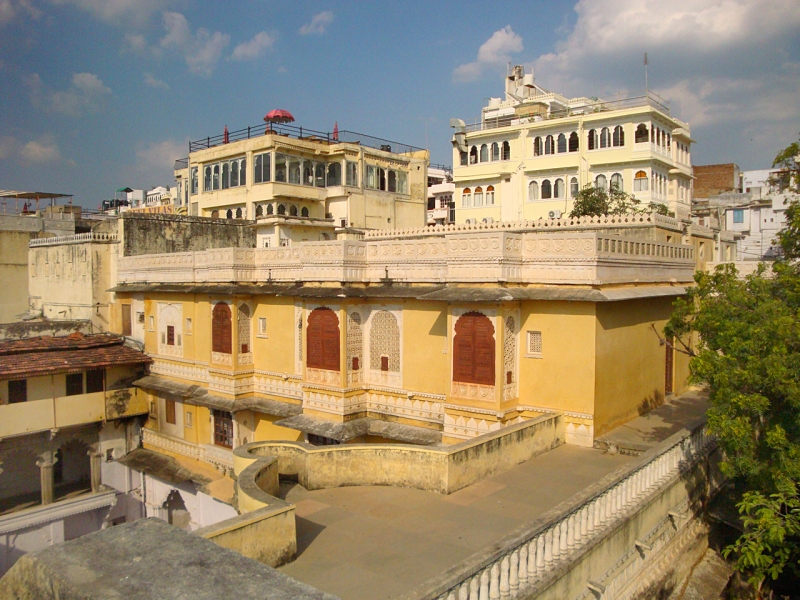
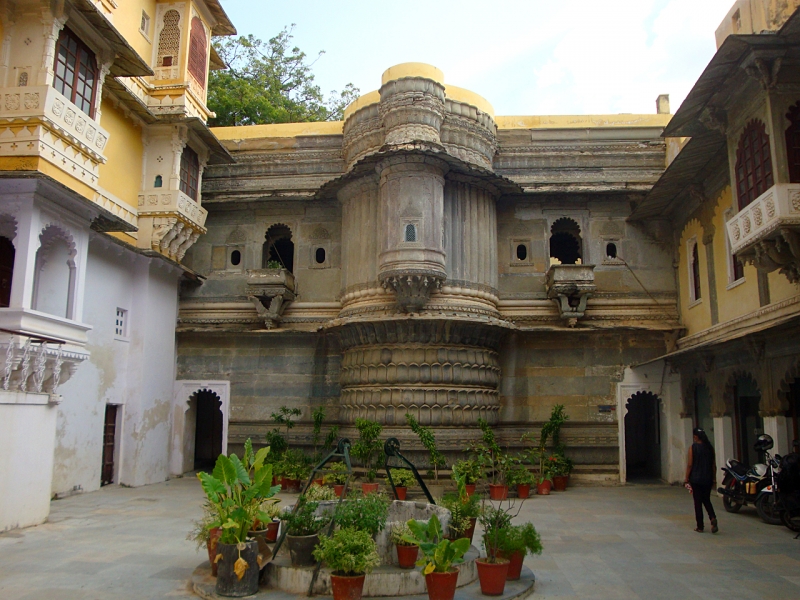
While the Thikana of Bagore remained their ancestral fief, the family is globally remembered today for the magnificent Bagore-ki-Haveli, a grand mansion situated on the waterfront of Lake Pichola at Gangaur Ghat in Udaipur. The haveli was originally built between 1751 and 1778 by Amar Chand Badwa, the Prime Minister of Mewar. Following his death, the mansion came under the ownership of the Mewar State and was subsequently granted to Maharaj Shakti Singh of Bagore, who added the iconic triple-arched gateway (Tripolia) and expanded the structure, giving the monument its modern name.
Post-Independence and Modern Era
Following India's independence in 1947 and the subsequent integration of the princely states, the estate of Bagore was merged into the state of Rajasthan. For several decades after independence, Bagore-ki-Haveli fell into disrepair. However, in 1986, the mansion was handed over to the West Zone Cultural Centre, which meticulously restored the property. Today, it stands as a prominent museum showcasing Mewar's royal costumes, traditional puppets, modern art, and historical artifacts, keeping the legacy of the Bagore Ranawats alive for visitors from around the world.
Genealogy
- Maharaj Shri NATH SINGH, 1st Thikanedar of Bagore -/1764, married and had issue. He died .
- Maharaj Shri Bhim Singh (qv)
- Maharaj Surat Singh, he adopted Kunwar Rup Singh of the Hita jagiri family (descendants of Rana Jagat Singh I).
- (A) Maharaj Rup Singh, he was granted the Jagir of Netawal; married and had issue.
- Maharaj Bhagwant Singh, he adopted Kunwar Gulab Singh of the Hita jagiri family.
- (A) Maharaj Gulab Singh, he was granted the Jagir of Peeladhar; married and had issue.
- Maharaj Zalim Singh
- Maharaj Bakht Singh
- Maharaj Shri BHIM SINGH, 2nd Thikanedar of Bagore 1764/-, married and had issue.
- Maharaj Shri Shivdan Singh (qv)
- Maharaj Shri SHIVDAN SINGH, 3rd Thikanedar of Bagore, married and had issue.
- Kunwar Sardar Singh, he was adopted by Maharana Jawan Singhji Bahadur, and succeeded as Maharana Sardar Singhji Bahadur, 27th Maharana of Udaipur.
- Kunwar Sajan Singh, died young.
- Maharaj Shri Sher Singh (qv)
- Kunwar Swarup Singh, he was adopted by Maharana Sardar Singhji Bahadur, and succeeded as Maharana Swarup Singhji Bahadur, 28th Maharana of Udaipur.
- Maharaj Shri SHER SINGH, 4th Thikanedar of Bagore, married and had issue.
- Maharaj Sardul Singh, he failed to succeed his father because of his unsuccessful attempt to assassinate his uncle, Maharana Swaroop Singhji Bahadur of Udaipur, married and had issue. He died in prison.
- Kunwar Shambhu Singh, he was adopted on 23rd October 1841, by Maharana Swarup Singhji Bahadur of Udaipur, and succeeded as HH Maharana Shambhu Singhji Bahadur, 29th Maharana of Udaipur.
- Kunwar Shivbagh Singh, died young.
- Maharaj Shri Samrath Singh (third son) (qv)
- Maharaj Shri Shakti Singh (fourth son) (qv)
- Maharaj Shri Sohan Singh (qv)
- Maharaj Sardul Singh, he failed to succeed his father because of his unsuccessful attempt to assassinate his uncle, Maharana Swaroop Singhji Bahadur of Udaipur, married and had issue. He died in prison.
- Maharaj Shri SAMRATH SINGH, 5th Thikanedar of Bagore, died 1869.
- Maharaj Shri SOHAN SINGH, 6th Thikanedar of Bagore, he rebelled in 1875, and was exiled to Benares, whereupon the state was confiscated and made khalsa; married Rani Sringar Kanwar, daughter of Raj Sahiban Hamir Singhji of Bhimana, a younger son of Maharao Shri Sheo Singhji of Sirohi.
- Maharaj Shri SHAKTI SINGH, 7th Thikanedar of Bagore fl.1878, married (a), Rani Roop Kanwar, second daughter of Maharaj Sardul Singhji of Gangwana (see Ralawata), and his wife, Rani Sahiba Shirngar Kunwar, had issue, one son, married (b), Rani Swaroop Kunwar, third daughter of Maharaj Sardul Singhji of Gangwana, and his wife, Rani Sahiba Shirngar Kunwar, and had issue.
- Kunwar Sujan Singh, died young.
- Kunwar Sajjan Singh, he was adopted by HH Maharana Shambhu Singhji Bahadur of Udaipur, and succeeded as HH Maharana Sajjan Singhji Bahadur, 30th Maharana of Udaipur.